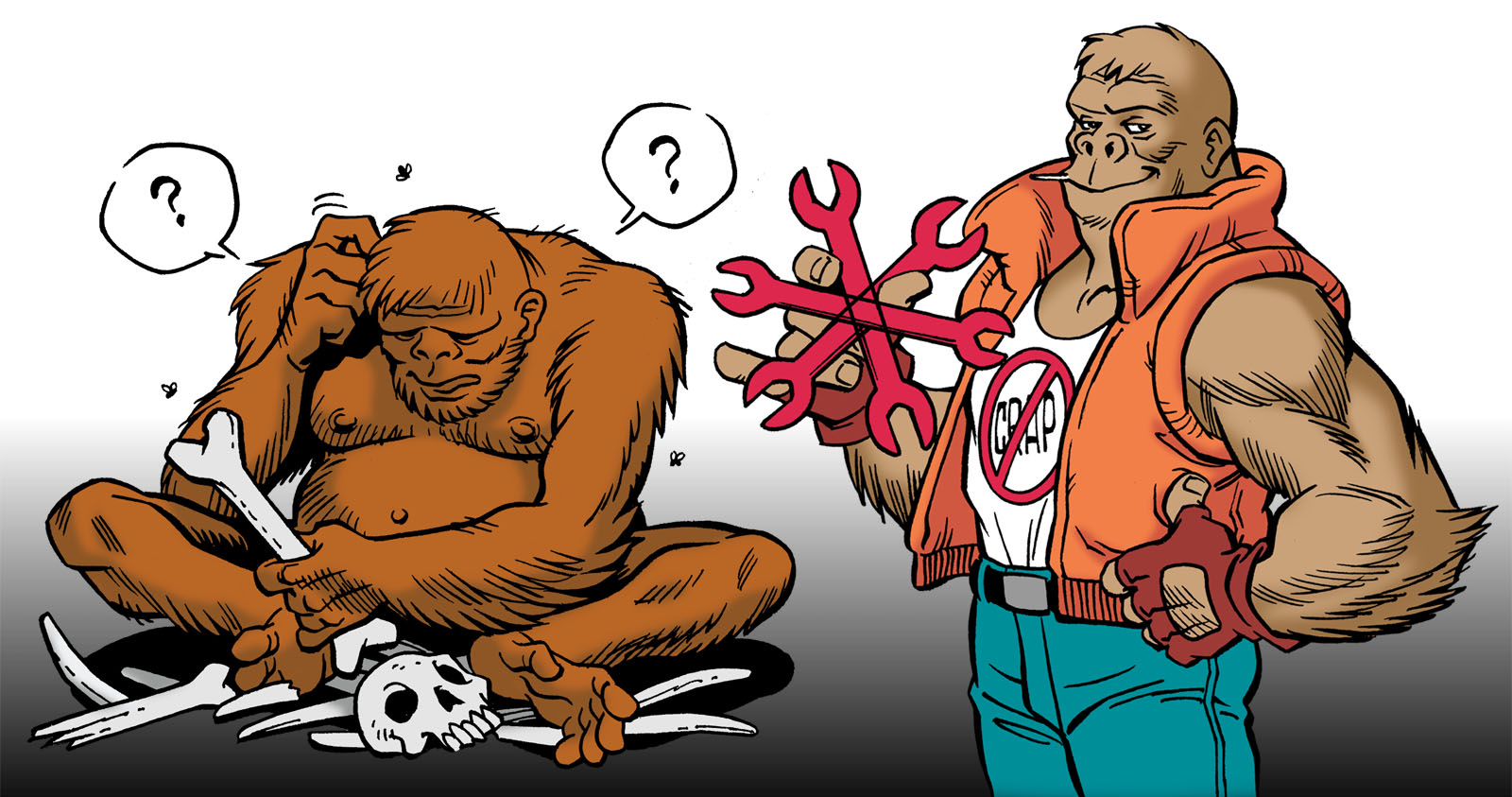
Grease Monkey Book 2, 2000-2009
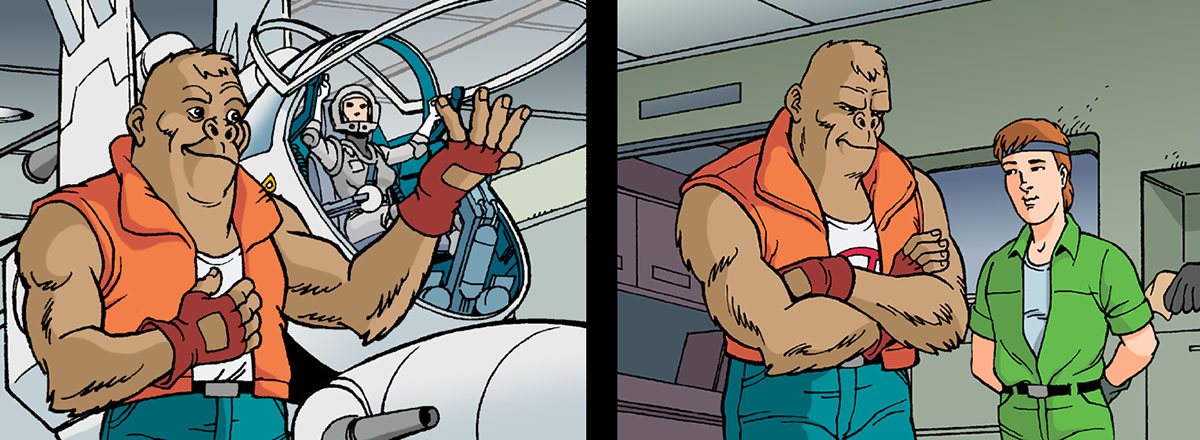
Grease Monkey Book 2 started out as an animation pitch. How did it end up as an online graphic novel instead? The explanation will tell you things about the business of both animation and graphic novels.
The story of this project also interweaves with what I wrote last time about Book 1, so it will tell you things about how projects evolve in ways you can’t always predict.
Let’s tune into the adventures of a 30-year old Tim Eldred at the point where my comic book career was just about to transform into an animation career. In 1995, I’d landed a publishing deal for the first Grease Monkey comics with Kitchen Sink Press. Part of what motivated them to take it on was a desire to get a TV animation project underway. They’d already accomplished this by turning a comic titled Xenozoic Tales into a 1993 cartoon called Cadillacs and Dinosaurs, and they thought Grease Monkey was a good candidate for the next round.
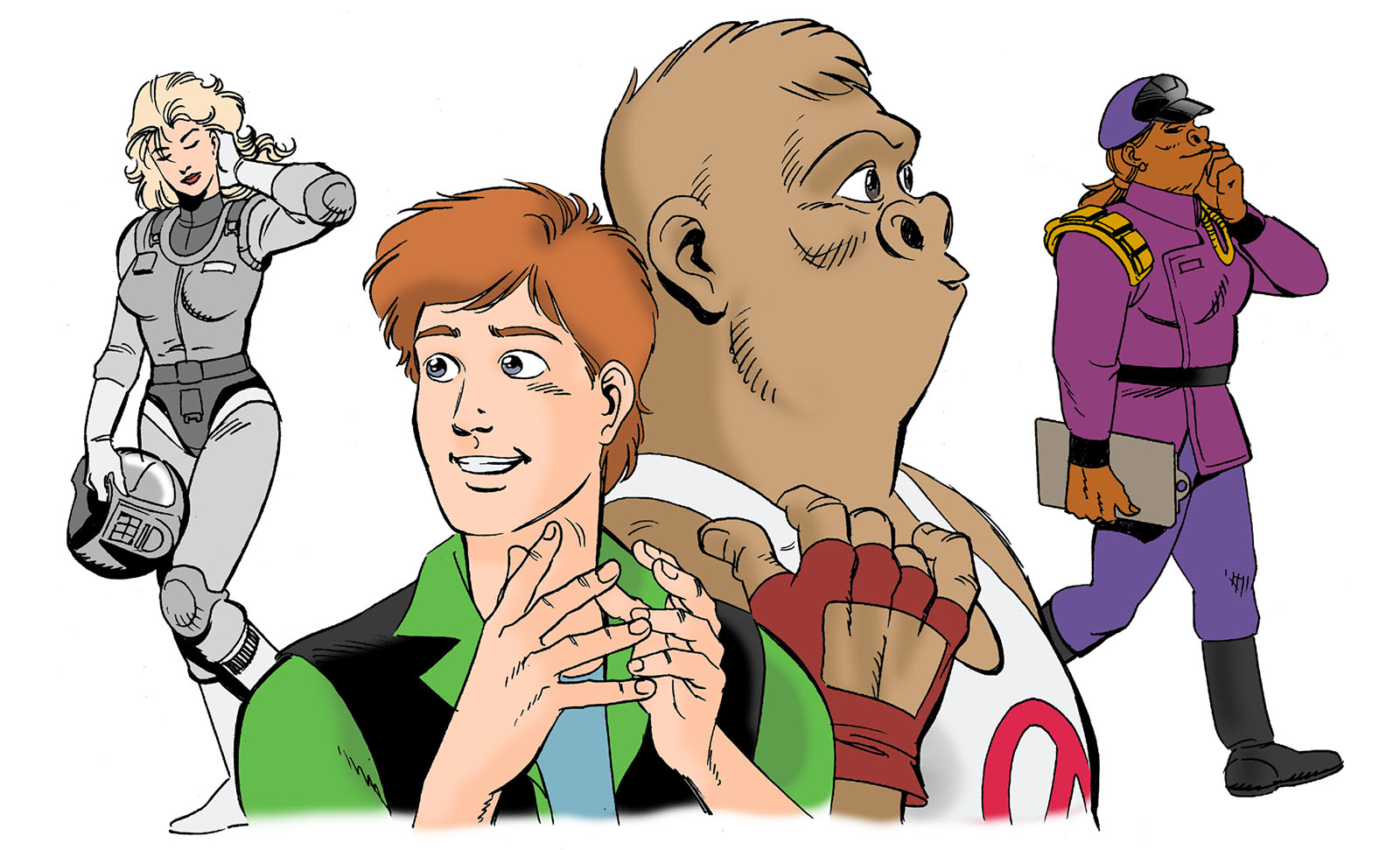
Kitchen’s Hollywood representative was a producer named Brad Neufeld. He put me together with an experienced animation agent named Ellen Vein (of The Gotham Group) who found us an experienced animation writer named Jymn Magon. He read my comics and hatched some ideas for a TV version. I initially thought we could just adapt my stories, but everyone wanted something with combat action in it. I needed some convincing, since I’d conceived Grease Monkey as a relationship story with a “military readiness” backdrop rather than a full-up war story with pew-pew laser fights. This was 1995, and the prevailing view of what sort of cartoons kids would watch leaned heavily toward the pew-pew. So I had a decision to make.
I could either be precious about it and take my ball home, or I could let this play out and learn some things from it. I figured the comics would always be under my control and I could make whatever I wanted, so the cartoon could be something else. Once I got past that, I went full-bore into collaborating with Jymn on the story bible and working up a catalog of designs.
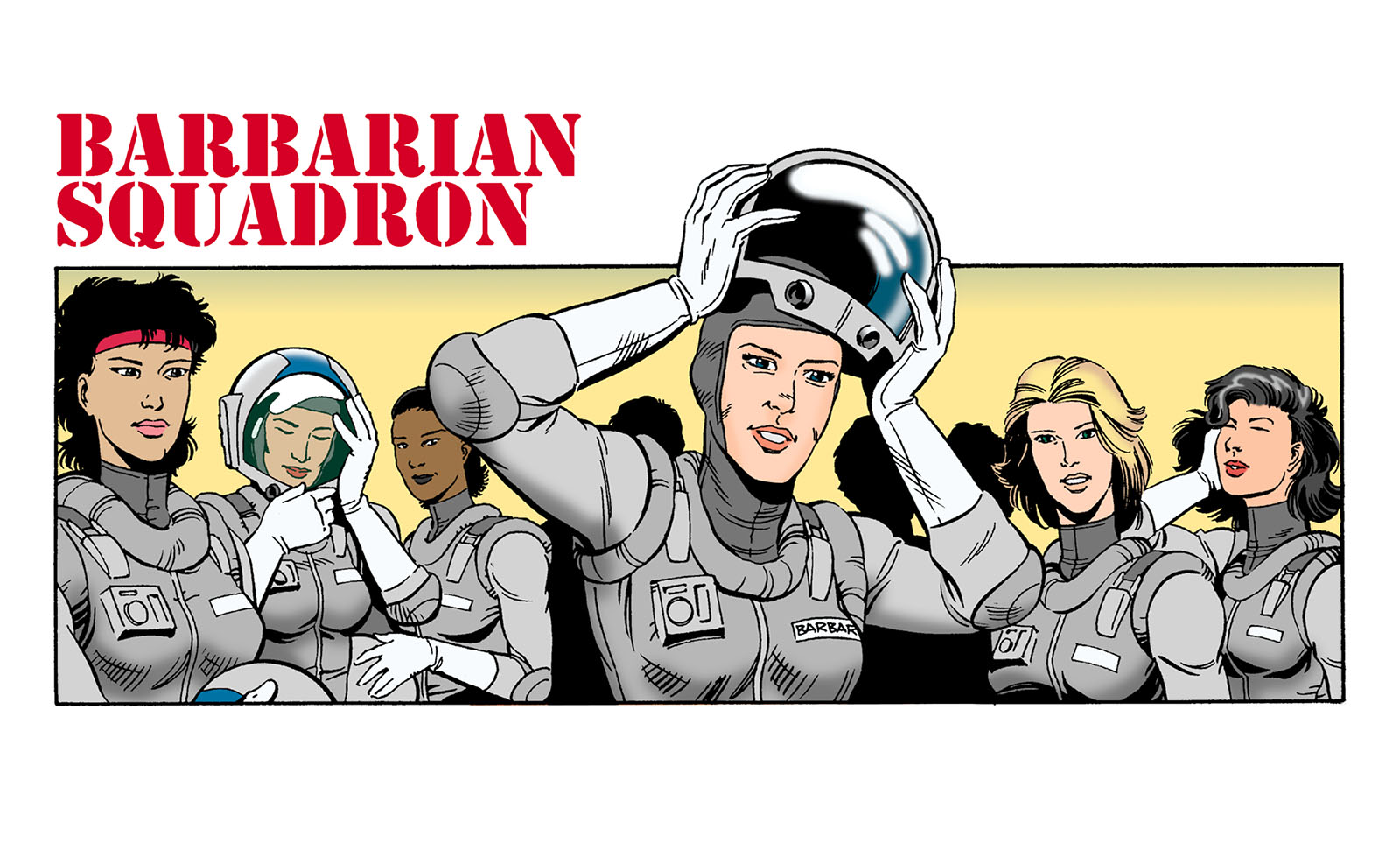
What came out of that was quite expansive; a huge backstory, lots of new characters, aliens, and hardware. I created a bunch of pinup-type art to showcase the main cast and a few sample scenes. Developing all of this gave me the emotional buy-in I needed, and I started to see it as the legit future of Grease Monkey. The next step was to see if Hollywood agreed.
With Ellen Vein and The Gotham Group as our spearhead, Grease Monkey was pitched as an animated TV series to several networks and studios. They all turned it down until we got to the last one on the list, MCA/Universal, where Producer Ralph Sanchez took a shine to it, particularly the artwork on my presentation boards. Based on what he saw, he offered me a job on a series he had in development called Wing Commander Academy (based on a PC game starring Mark Hamill).
The timing couldn’t have been better. Things were getting rough in the comics industry because not enough had been done to broaden the audience, and animation was my next logical stomping ground. I didn’t have any practical experience in storyboarding, but Ralph and Universal took a chance on me anyway, and I didn’t let them down. I ended up storyboarding several episodes of WCA and serving as a character designer for the series during the summer of 1996. The show debuted on USA Network that fall, and it gave me my first official screen credits. (Read much more about it here.)
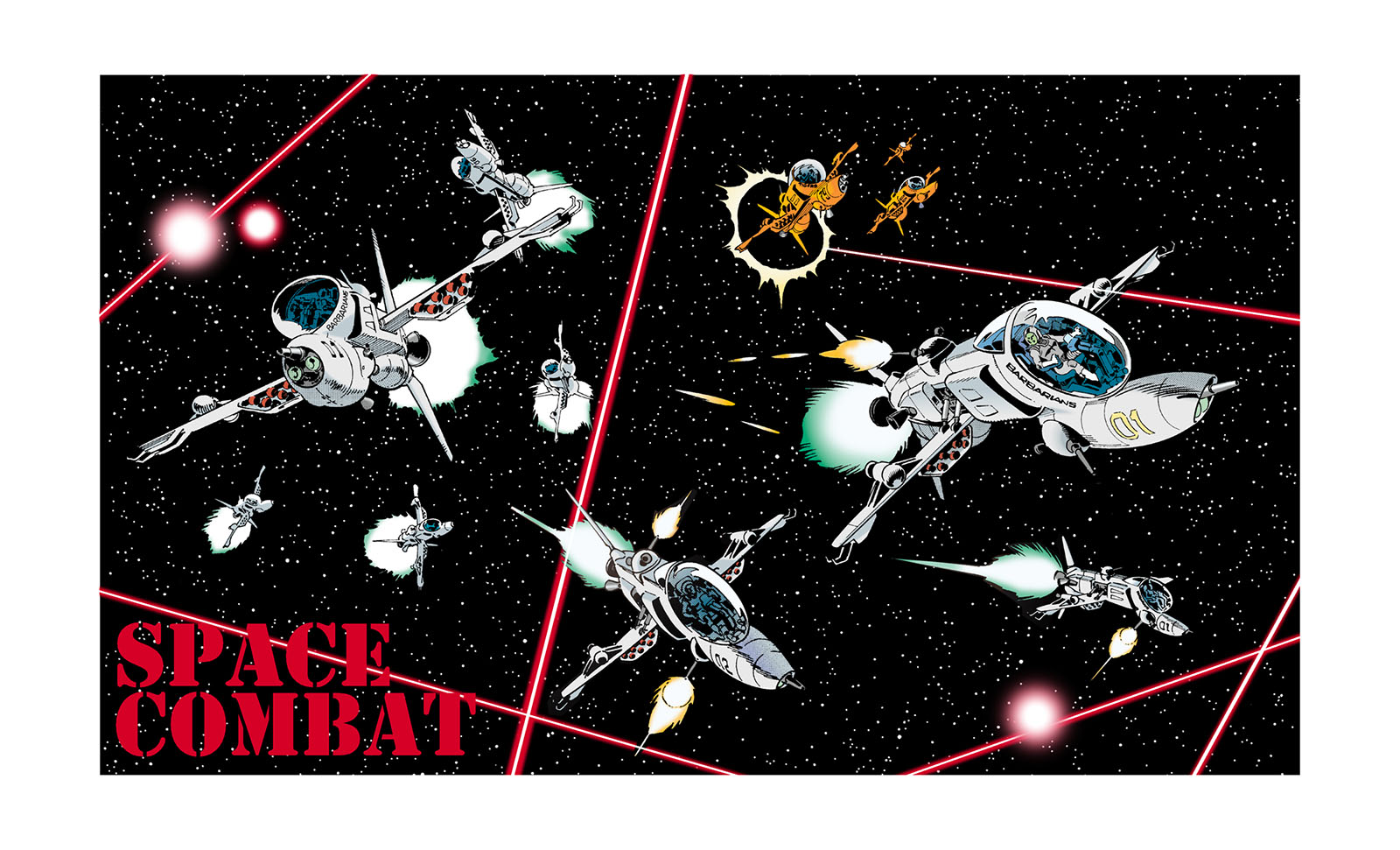
But what about Grease Monkey? After Ralph set things up for Wing Commander Academy, he jumped over to another studio called Film Roman and engineered a development deal there. This inspired me to get back into writing mode, so I wrote the rest of Book 1 while waiting to see what would happen next. Being in development was one thing; being picked up for production was another. All I can remember is that the deal expired without the show being optioned. So now it was all back in my hands. My collaborators all drifted away, but I couldn’t be unhappy about getting a whole new career out of the experience.
Thanks to my newfound agent Ellen Vein, Wing Commander led directly to my next gig at Columbia/Tri-star TV animation. One look at Grease Monkey convinced Supervising Director Audu Paden that I had the chops he needed, so I signed on as a storyboard artist for Extreme Ghostbusters at the end of 1996. In a few months, I found myself promoted to a director position, and the show premiered in September 1997.
The big leap forward with Extreme Ghostbusters was the “animatic.” It’s a common term now, but in case you need to know, this is a slideshow version of a storyboard. All the drawings are imported into a software program (back then it was Adobe Premiere) and combined with sound to make a rough version of a show. A year or two earlier, desktop computing power couldn’t have handled that workload. But now it could. Just barely. Once I saw how it was done, I asked myself, why not make a Grease Monkey animatic and use it to pitch the series again? I had everything I needed, including friends who could supply the voices. The only thing I lacked was a sense of what a monumental undertaking it would be.
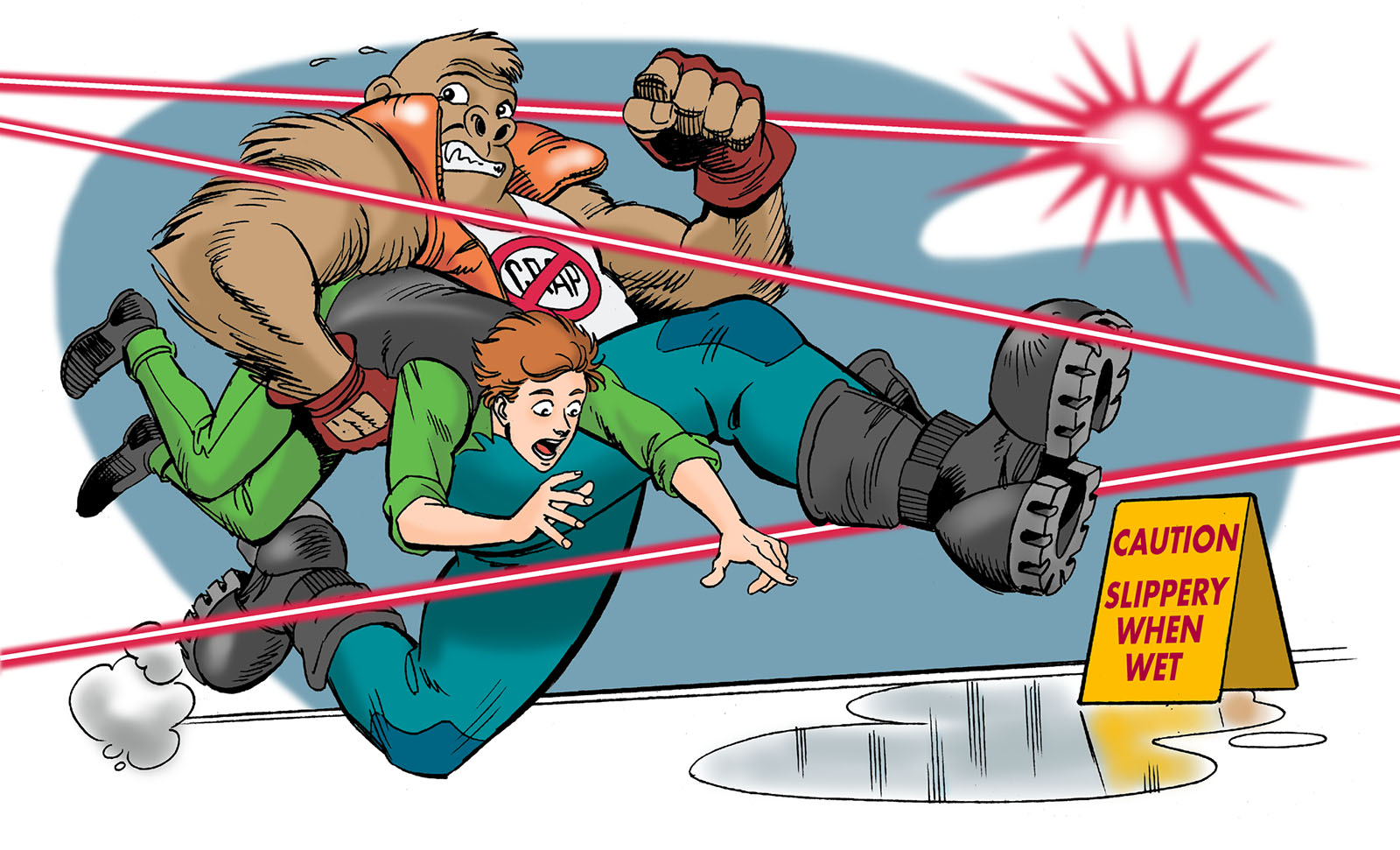
In the fall of 1999 I wrote a script for a Grease Monkey pilot film entitled All You Need is Love. I thought it would run about 5 minutes and I could make the whole animatic – start to finish – in a month or two. The script actually timed out to about 7 minutes, so I figured maybe three months. Then I started drawing and the thing just kept growing. The more I worked on it, the more I added. I also decided to do it in full color, which meant even more production time. In the end, it required over 2,000 drawings, took 6 months to make, and totaled 17 minutes of screen time…just 5 minutes shy of a standard made-for-TV episode.
All You Need is Love wrapped in July 2000, and a month later I got going on a second short entitled Black Holes Suck. It was more fully animated than the first film, and although it totaled only 6 minutes, it took another 6 months to finish. But both of these animated visions really exist and you can watch them here! Now I could march into a Hollywood studio, shove a tape into a VCR, and say “look – here’s my show!” Did it work? Of course not. Why? Lousy timing.
When I pitched Grease Monkey in 1996, the animation industry was pretty unstable. A lot of studios were being bought by other studios, or management was changing, or execs were just too scared to start anything new. The year 2000 was also pretty unstable. The biz was shrinking again (turns out it usually is) and everyone wanted wacky comedy shows like the ones that were successful the year before. I tried internet companies, but they only wanted adult (i.e. shock-humor or soft-porn) cartoons. Once again, Grease Monkey was a misfit. The odd thing was, everyone outside Hollywood loved my cartoons and wanted more. The guy who said “nobody in Hollywood knows anything” must have gone through something like this.
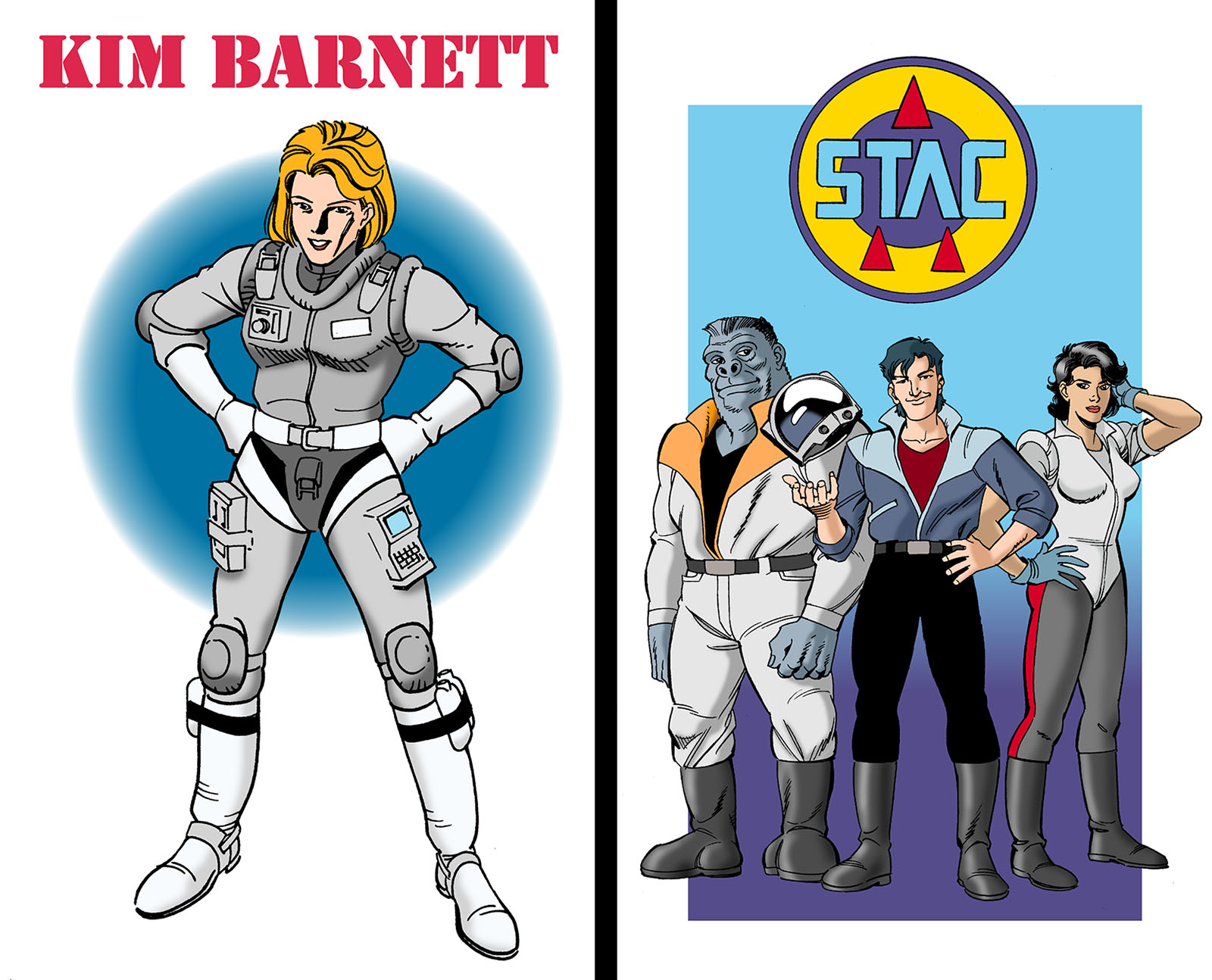
One more thing occurred during the whole cartoon-making experience. Thinking that Grease Monkey could also be pitched as a feature film, I decided to write a screenplay for one. This was easier than it sounds, since I already had the material from the ’96 animation pitch to fall back on. All You Need is Love worked perfectly as an opening act, so I just took off from there and started writing. This took about a month, and in late July of 2000 I finished a 95-page first draft.
Then I had to decide what to do with it. I could either turn the whole thing into an animatic and pitch it as a movie, or draw it as Grease Monkey Book 2. Either choice would lead to a lot of work. The deciding factor was what kind of experience I wanted to have while doing it.
Any time you have to team up with other people to get something made, the first requirement is compromise. As the cost goes up, the compromises go up with it. As an active participant in the TV cartoon biz, everything I’d learned on the job told me it wouldn’t end well. Even if the concept had enough juice to catch someone’s eye, there’s no way they’d buy a script and not (ahem) monkey around with it. The thing about working on TV cartoons is that you get a lot of revision notes. Good revision notes improve the material. Bad revision notes just make it different. Guess which kind is more common.
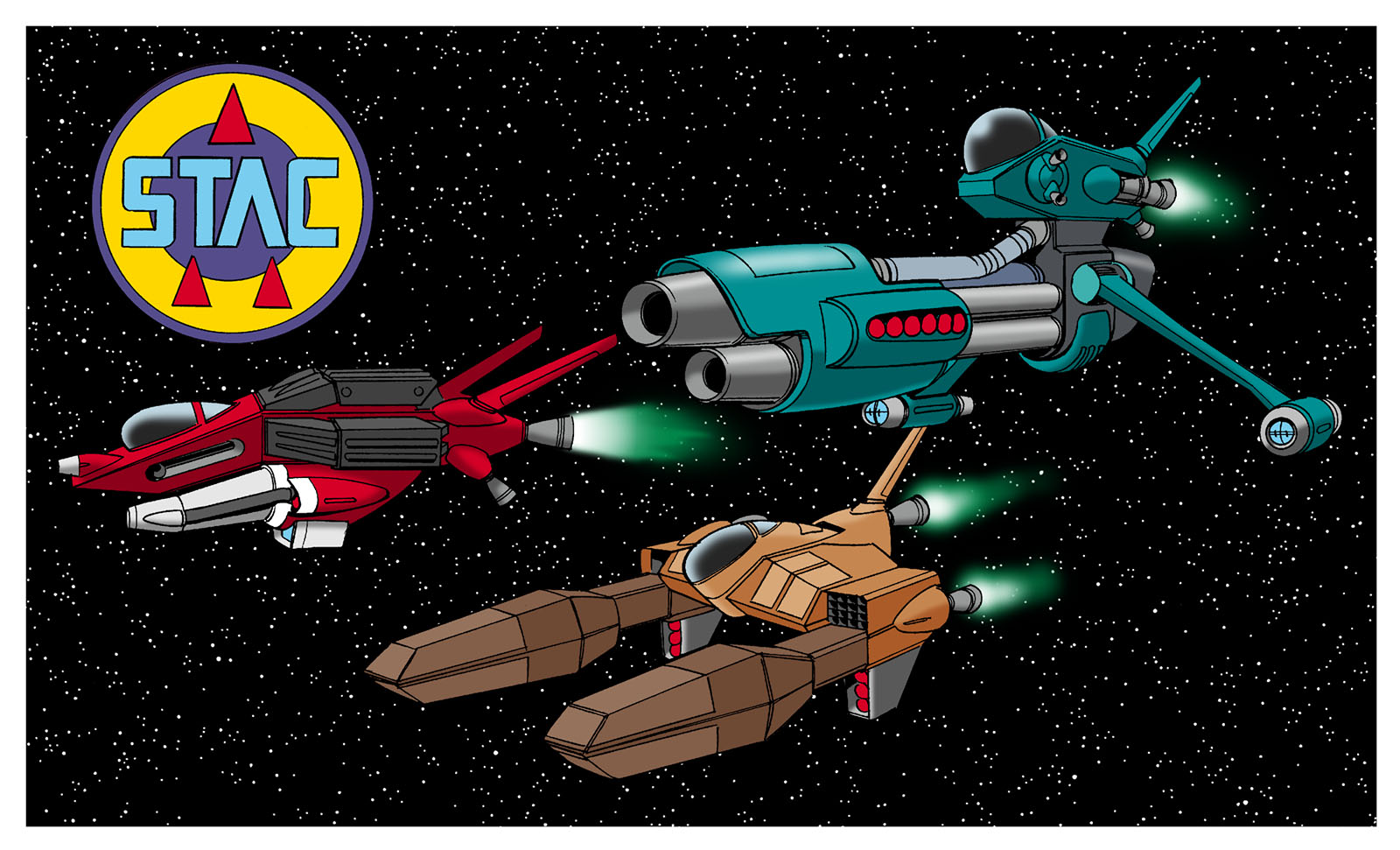
Option A was to submit to a process that would probably break my heart. Option B was to keep it to myself and make it exactly the way I wanted. Framing it that way made the choice easy. Book 2 was the way to go. When the word came down in 2003 that Tor was going to publish Book 1, I took it as a sign and got started. From there all the way through August 2005, I got the whole thing roughed out. Then I got another thing going and put it aside for a bit. The other thing was my first webcomic, a series called Star Blazers Rebirth. More about that another time.
One of the side benefits of getting Book 1 published by Tor in 2006 was that they funded a website for it. After it left the launch pad, it was up to me to maintain it on my own dime. As 2006 rolled into 2007, I was in need of some new material to keep the site going, and Book 2 was the obvious way to do it. When Star Blazers Rebirth wrapped up in the summer of ’07, I decided Grease Monkey Book 2 (now titled A Tale of Two Species) would take its place.
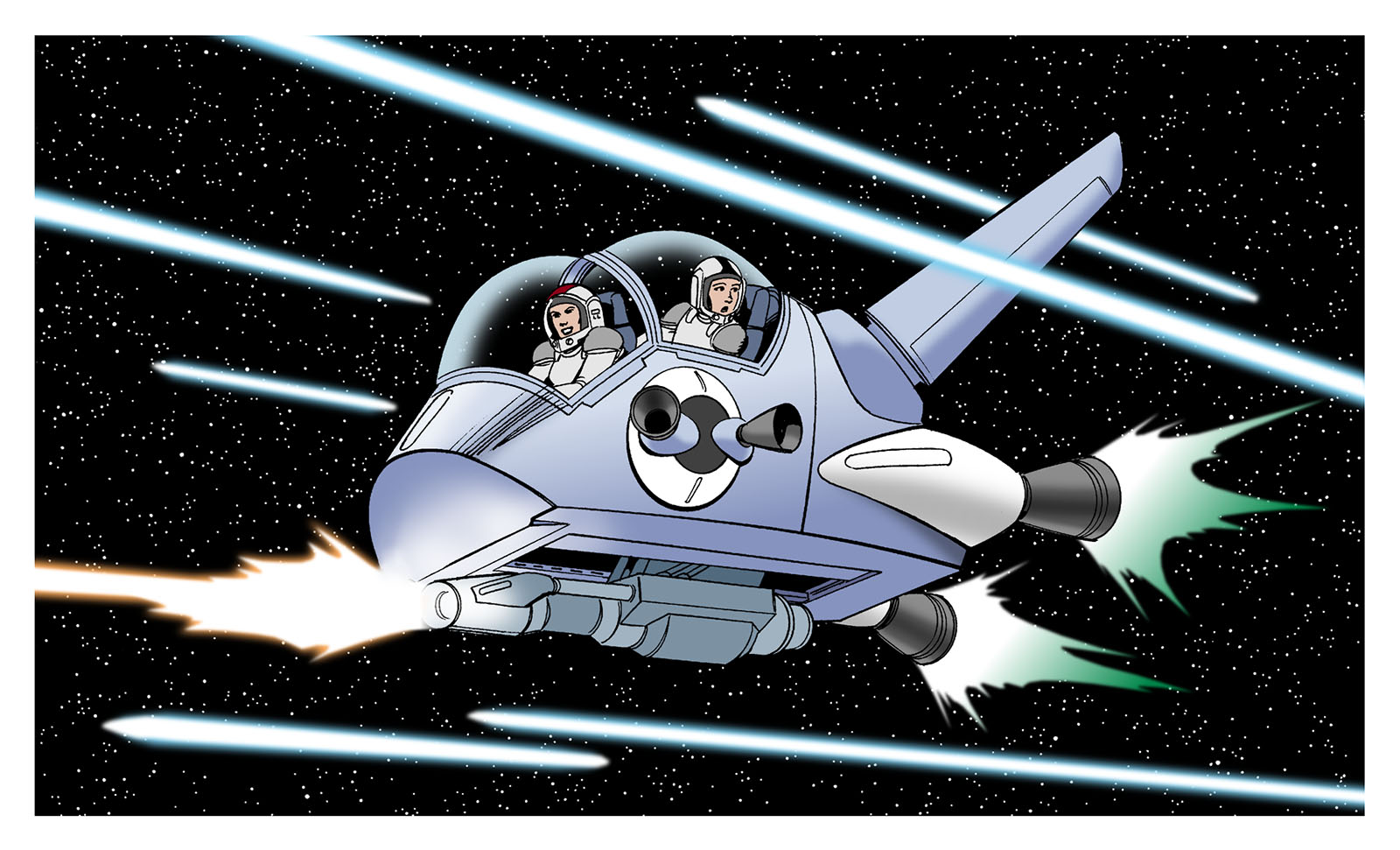
Unlike Book 1, it was a single story instead of a series of episodes. But rather than draw all 200-plus pages before showing anyone, I decided to break it up into smaller pieces (12-15 pages each) and post them monthly. This took about a year and a half, during which time Book 1 earned a profit, won two awards, and went to paperback. But Tor expressed no interest in a followup.
Clearly, I was on my own again. But I was used to it. The day job paid the bills and gave me the freedom to NOT turn Grease Monkey into a money-making enterprise. It’s amazing how much pressure that eliminates. When you do something for money, some level of your brain is always quantifying it; constantly thinking about how much an hour is worth, or how much you’ll make for drawing a page. In the worst case, it motivates you only enough to scratch out the bare minimum. You’ll hardly do your best under those conditions.
The entire Grease Monkey experience taught me that everything you do for love is going to come out better than what you do for money. I love writing and drawing, and I love these characters. That’s enough.
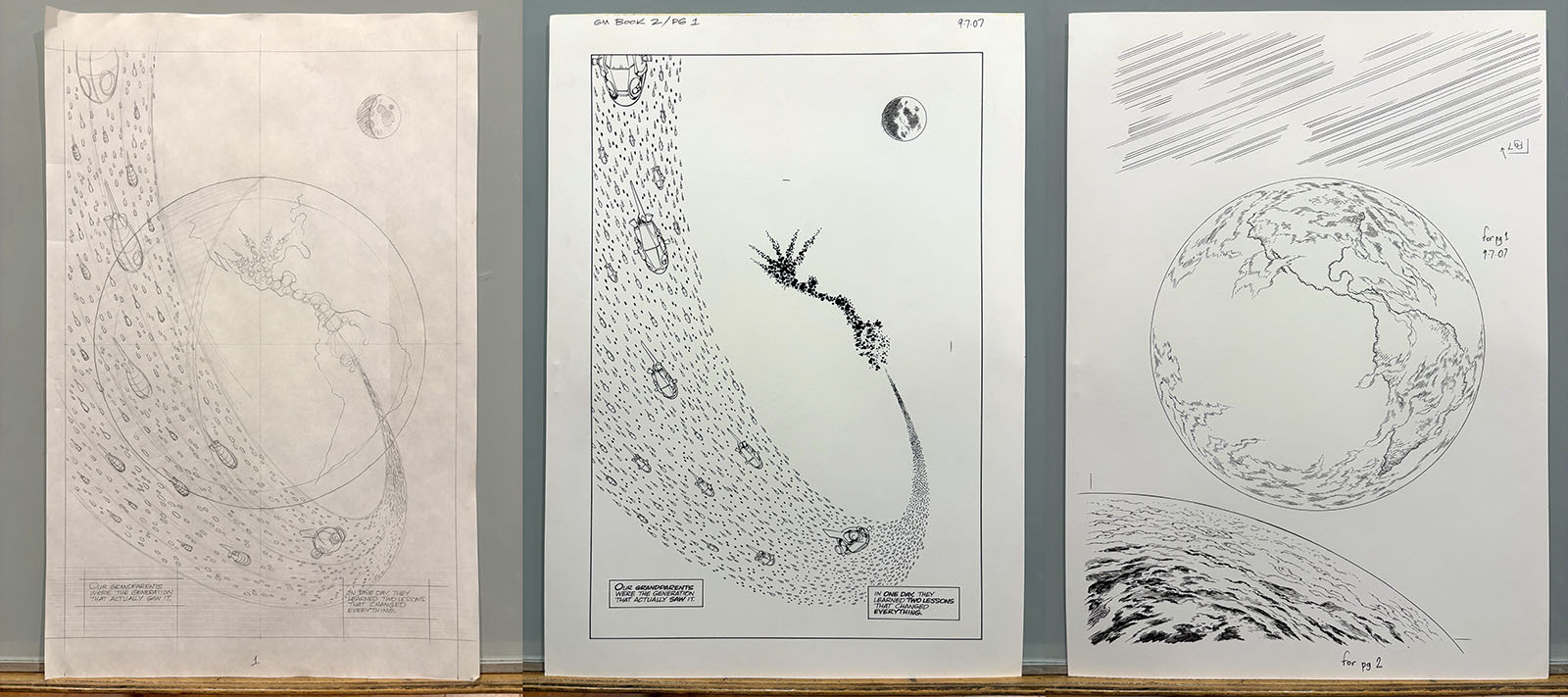
First page
The act of drawing the finished art began in September 2007 and ended in May 2009. Total page count was 229, and I posted it in 19 parts. Afterward, it was reconfigured into a 10-part “flip book” for more comfortable online reading.
One of my goals throughout was to draw a comic that felt like a movie. A lot of comics falter when they adapt movies; the page count is usually too short to do it justice. Even today, I remember this topic coming up in the first comic book class I ever took, all the way back in 1981. Someone griped that the comic book version of The Empire Strikes Back didn’t have nearly as much in it as the movie. That wasn’t quite true; all of the story content was there. What the person really meant was that it didn’t feel like the movie. It lacked scale.
The instructor’s response was, “Comics are a very limited medium.” He went on to talk about how comics can’t do what movies do, because of page limitations. That stuck in my head as soon as I heard it. And I thought, “Someday I’m going to prove him wrong.”
I was determined to do it with Book 2. It was structured like a big sci-fi movie culminating with a huge space battle. I’d evisioned a lot of specific, complex motion in the script. And I didn’t have to worry about compressing it all into a monthly comic book. A graphic novel could be as long as I wanted. I would show everything that needed to be shown. If one image ate up two whole pages, so be it. And MAN, did I enjoy making that happen.
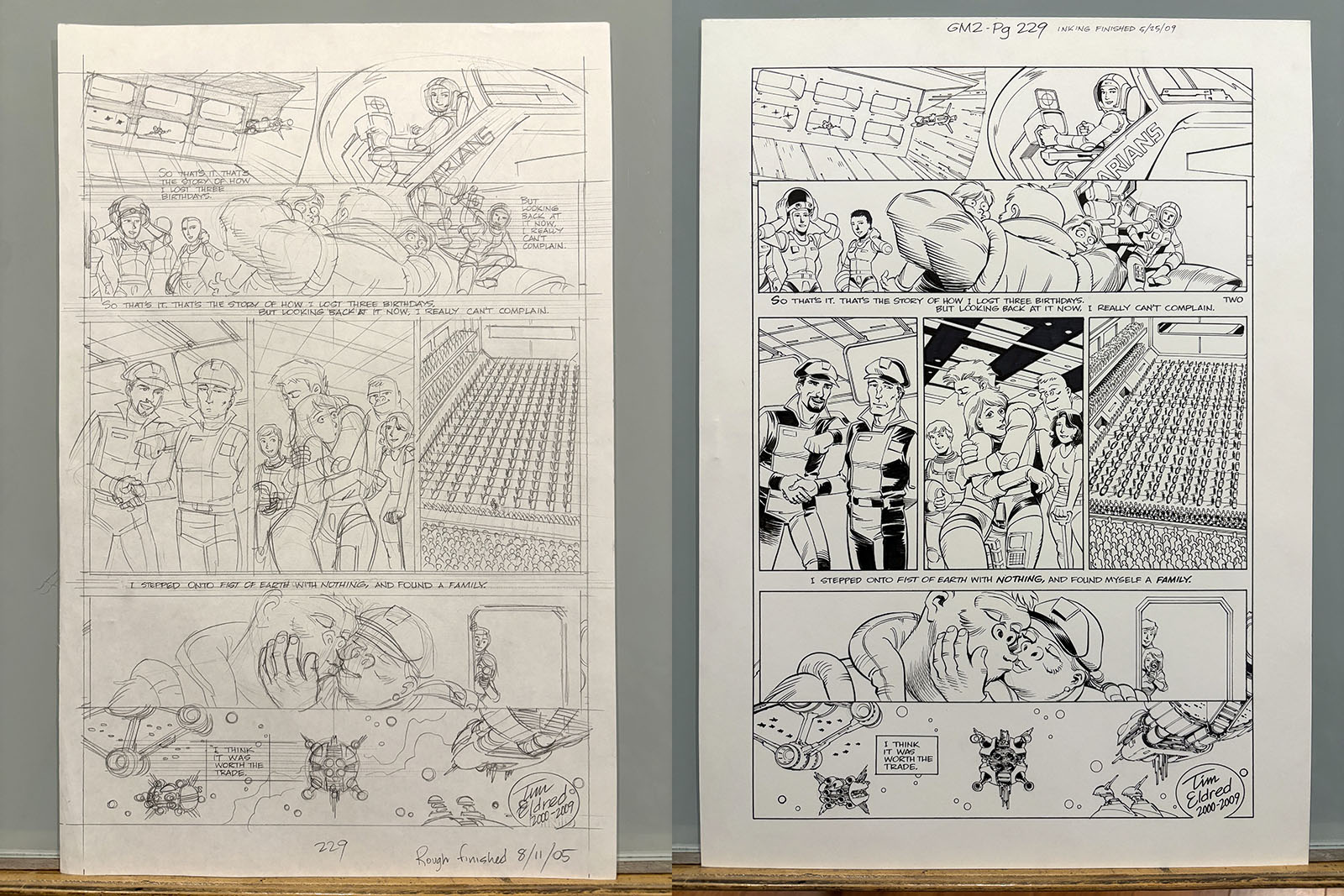
Last page
Something I enjoyed less, however, was having the whole story written before I drew the first page. I didn’t expect that.
Prior to this, I’d had a glorious experience on Star Blazers Rebirth. For that project, the writing was much more organic. I knew where I wanted the story to go, but I only wrote one chapter at a time before drawing it. While drawing, I would meditate on the next chapter and the bigger story beyond that. Ideas would flood in without warning, and I scrambled to jot them all down.
I didn’t know everything in advance, so I couldn’t wait to get to the next chapter and discover how it would come together. I first had that experience all the way back in 1987 when I started work on BROID, and it was incredibly energizing. I felt it again on Pitsberg, and now it’s driving The Last Blue Eagle.
The reason for this is simple: the most exciting part of any story is experiencing it for the first time. It’s the same for me as I hope it will be for a reader somewhere down the road. So my favorite parts of every project are the very beginning (hatching the ideas) and the very end (finishing them off). Every task between those points is some form of refinement. I still prefer it over any other job you could offer me, but it’s more mechanical than creative.
Honestly, a lot of Book 2 felt like that while I was drawing it, simply because the “idea phase” had been over with for years. It’s much more fun when the story and art evolve together and can still surprise you. Any project that teaches you exactly how your creativity is wired is a valuable one indeed.
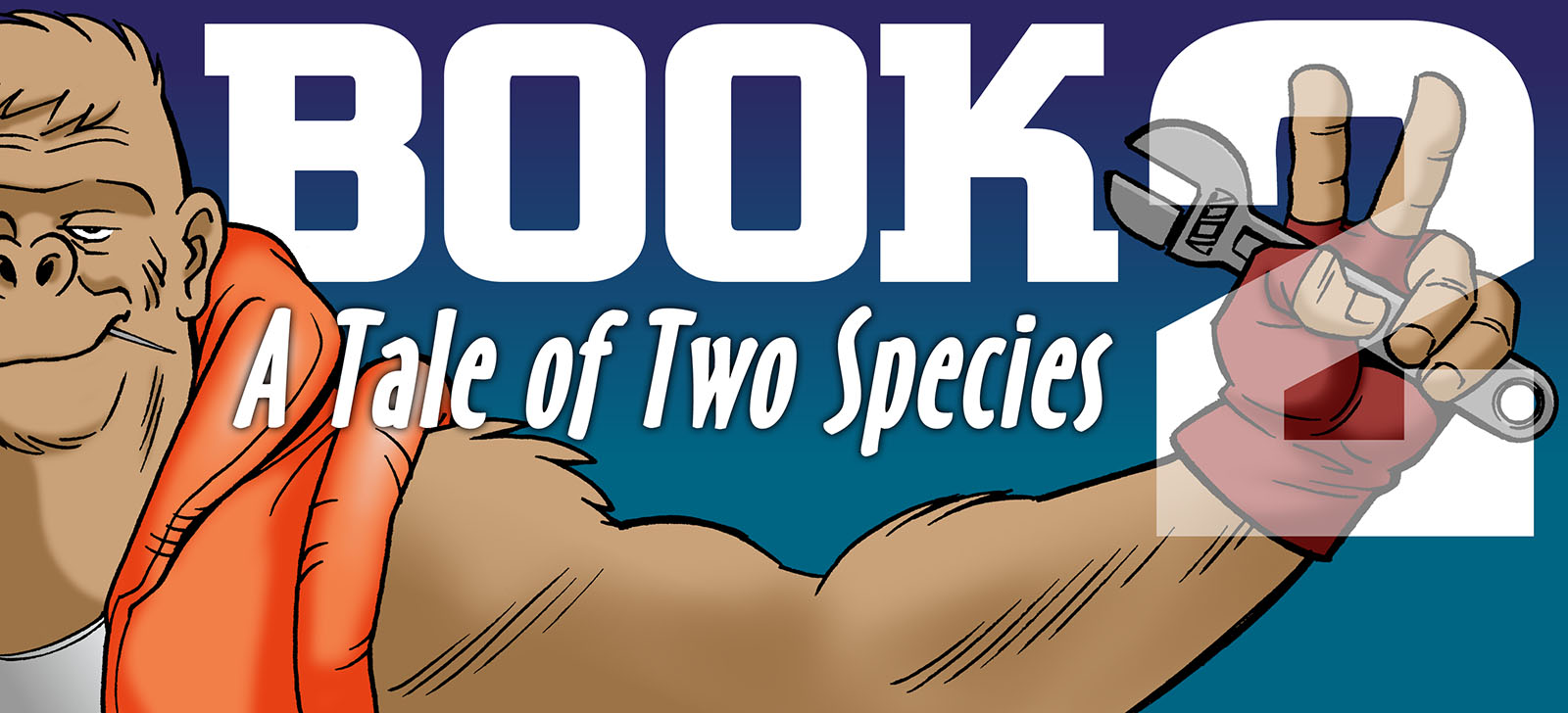
Read Book 2 from start to finish here
Afterword:
Looking back from almost 20 years later, I’ve gained a perspective on Book 2 that I couldn’t know at the time.
It wasn’t the last comic I drew on paper, but it’s the last one I thought might be published on paper. So I constructed every page the old-fashioned way, using the regular 10″ x 15″ format and drawing it in ink. I finished it digitally (with grey tones and special effects), but kept its “paper option” open. Who knows, maybe it will still go there.
Everything I’ve done since then has been built for online reading, and I’ve gone so far in that direction I may never come back. I went that way because the world of paper publishing became so problematic that I lost all desire to struggle against it. When I adopted 100% digital techniques on Pitsberg and discovered all the freedoms that were waiting there, I fell in love with comics all over again. As of this writing, that love affair continues with The Last Blue Eagle.
These stories could never have succeeded in the paper world, and I feel no pull to take them there. On the other hand, the pull to return to Grease Monkey has never left. I’ve got two more books in me and limited years to bring them to life, so the decision for what to do next is pretty easy.
I’m looking forward to it. Hope you are, too.