
The Webcomic Future, Part 1: Star Blazers Rebirth, 2005-2007
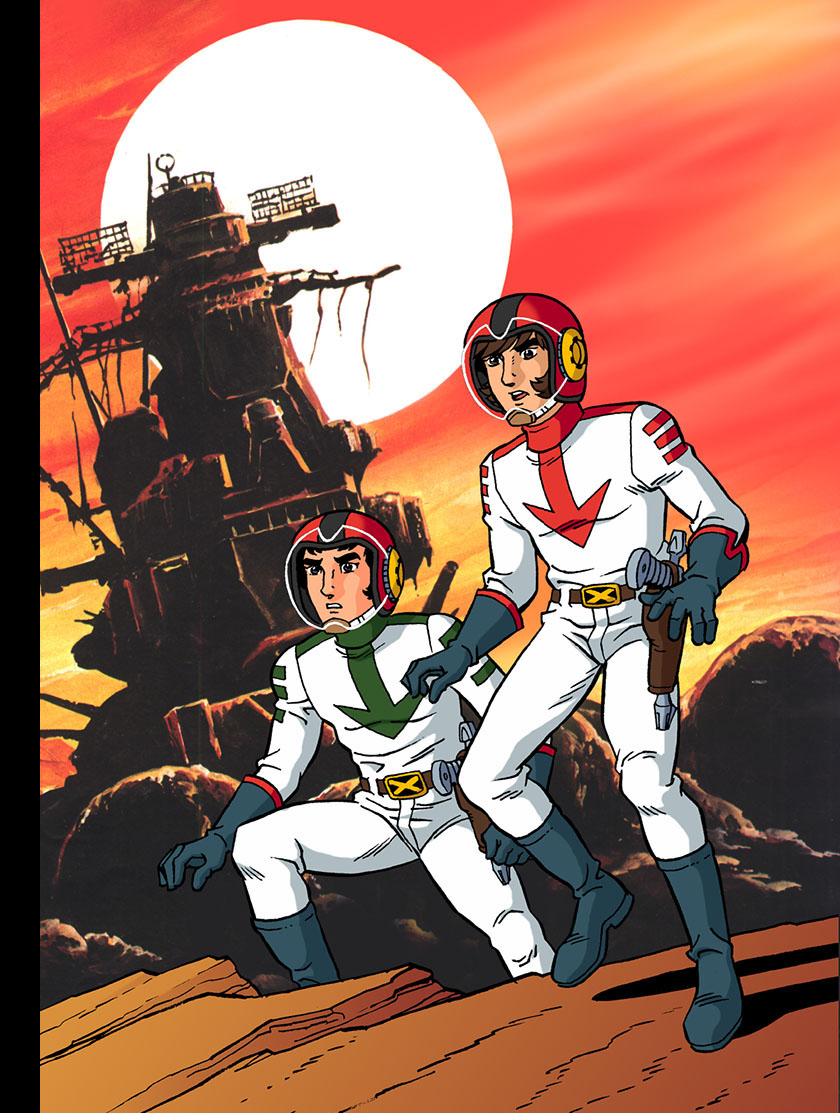
I can still remember the exact moment I crossed over.
The year was 2004, and Star Blazers had passed its 25th anniversary. What’s Star Blazers? Only the anime series that changed my life. It began as Space Battleship Yamato in Japan (1974) and came to American TV under a new name five years later. From the first time I watched it, I knew it was going to be my constant companion. It possessed me the same way it possessed its Japanese fans the first time they saw it. It filled me up with an insatiable urge to not only pursue a career in story-making, but also to curate this amazing series somehow, to make sure it wouldn’t be forgotten.
From 1980 onward, part of me would never be satisfied if I didn’t get to draw Star Blazers comics. I finally got that incredible opportunity in 1994 when my studio partners and I were hired by the US rights-holder Voyager Entertainment to create a series for them. (I’ve written about each issue here at ArtValt, so bon apetito.) However, my heart was broken in 1997 when the American comics industry imploded and sales dropped below viability, forcing the series to be canceled after issue 11.
I thought that was it for me and Star Blazers; a once-in-a-lifetime chance had come and gone. So I busied myself with an animation career and drew some other comics on the side. In 2000, Star Blazers came around again in a very unexpected way. Voyager Entertainment was releasing the original episodes on DVD and hired me to produce them. I’d never done anything like it before, but quickly figured out how to create packaging and bonus content. This became a nice side-gig for a few years, and led to deeper involvement when Voyager decided they wanted a website with an online store.
That website would need content to draw people in, so my duties expanded to include writing articles. It was called starblazers.com, and it went live in August 2002. The DVD work wrapped up in 2003, and I followed up with a documentary called The Making of an Anime Legend in 2004, which marked Star Blazers‘ 25th anniversary.
All that was setup for the moment I crossed over.
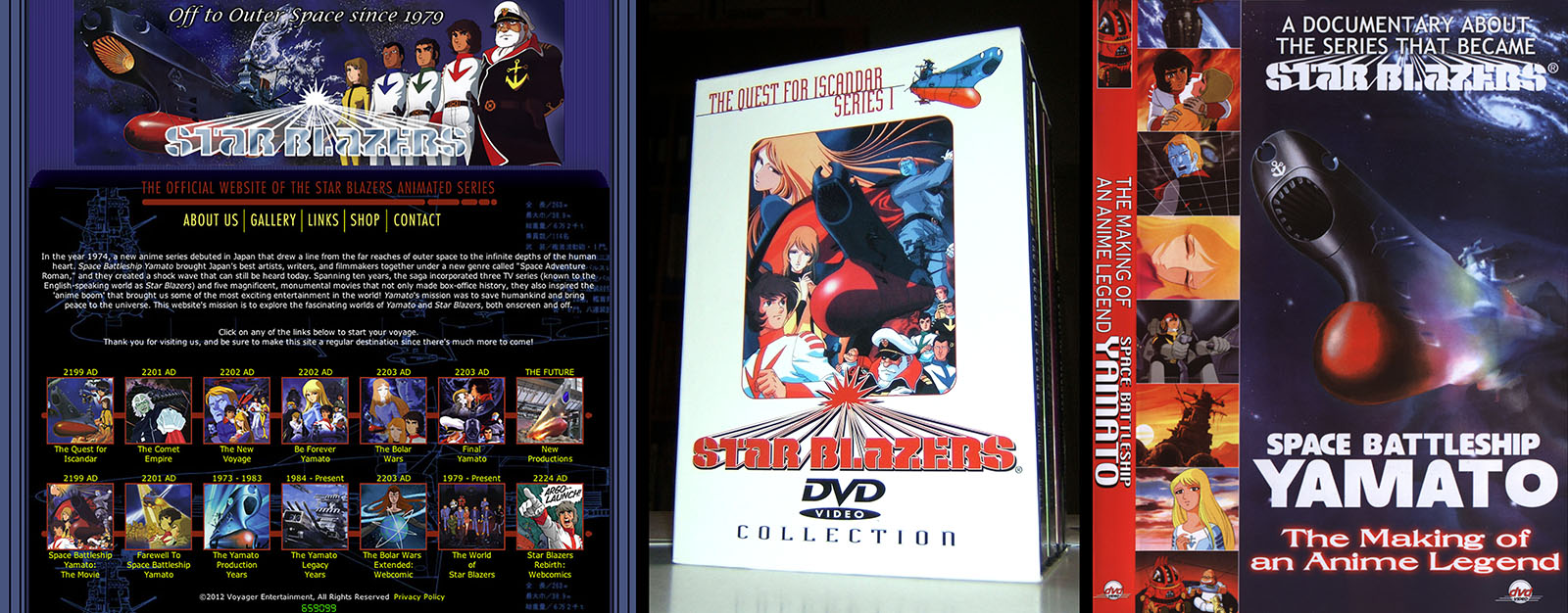
The fruits of my labor, left to right: website, DVD box set, documentary sleeve
I was in my car, rolling down the 101 freeway to another editing session for the documentary (oh yeah, I also edited it). I felt like there should be some other way to make the 25th anniversary even more special. What else could I do? I thought, it sure would be great to restart the comic book series, but that would cost a lot of money and take several months to get into stores even if the industry had recovered enough to support the thing.
But wait. We’ve got a website now. We don’t need stores.
And Voyager doesn’t need to spend more money. They’re already paying me to make content for the website.
In fact, we wouldn’t even have to print it on paper. I could post it on the site every time I finish a chapter. No shipping necessary.
With that realization, a sparkly new path into the future appeared before me: webcomics.
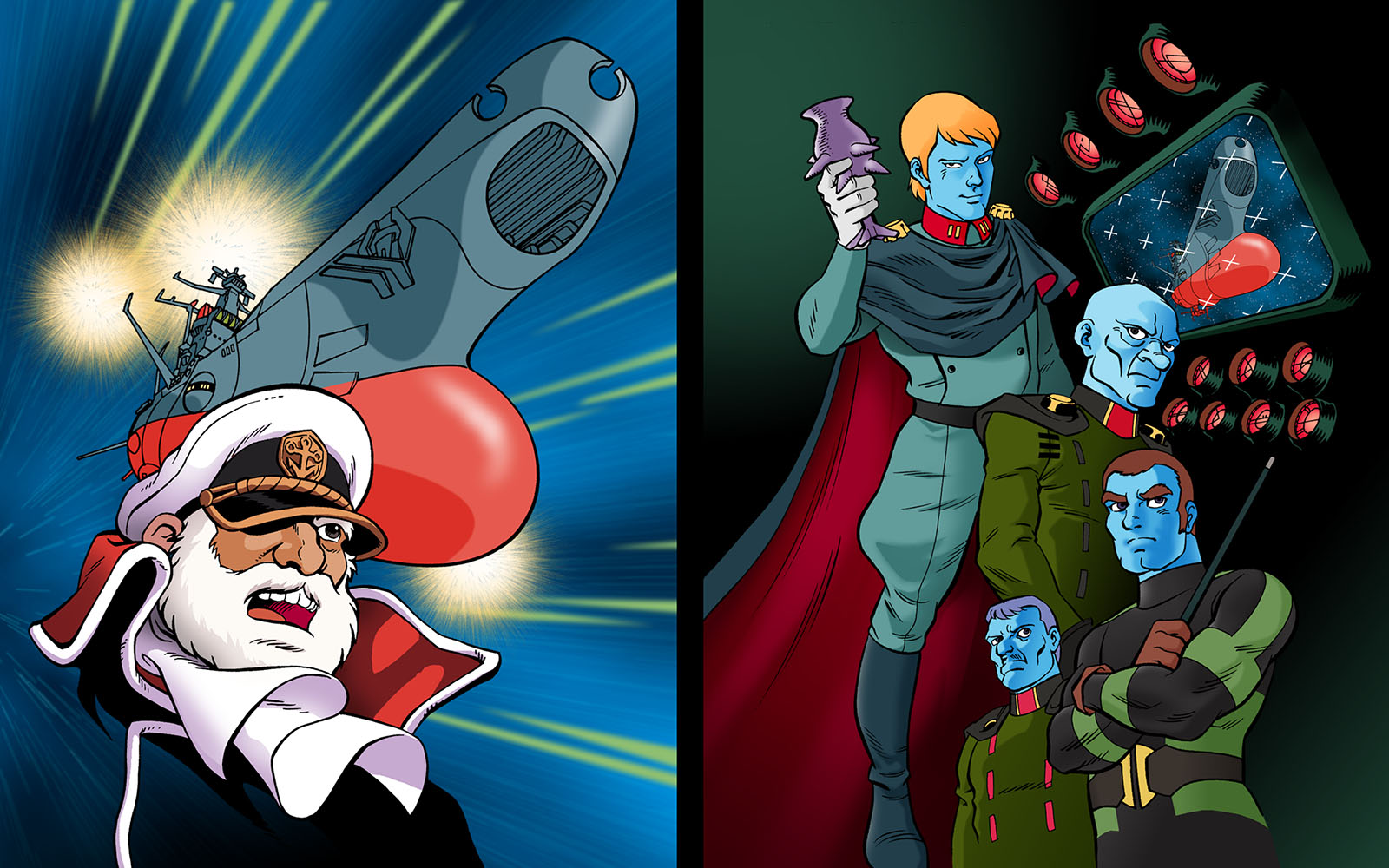
DVD sleeve art by me, 2001
Up to that point, all the frustration I’d ever had in the comic book business came down to one root cause: paper. We all love reading things on paper, don’t we? Paper is a tactile reminder that stories are made by people. Even a flimsy comic book has a permanence that pixels do not. Nevertheless, paper is the enemy.
Stay with me here. A comic book printed on paper is a physical product. It requires a supply chain. It takes up space. After printing it has to be shipped and stored and financed. Therefore, whatever gets printed on that paper can’t just tell a good story, it has to generate enough revenue to pay for itself several times over. A publisher and an editor are gatekeepers who decide what gets printed on that paper. Are they going to be brave and experimental? Are they going to take a chance on something that doesn’t come with a predictable margin of profit? Probably not. Even if they are brave and experimental, will the audience even hear about it? So more money has to be spent to promote it. Then readers have to actually find and buy all the issues.
As you can see, there are several consecutive hoops to jump through, each one getting progressively tighter. Back when comics were my full time job, I jumped through a lot of those hoops. In the end, the hardest was that last one. If you don’t make it through the final hoop, your comic book gets canceled before you can properly end it. That was a knife in the heart every time it happened, when I got through all the other hoops only to have a story get the axe before it was done. It started with my very first professional project (MECHA from Dark Horse) and not even Star Blazers was immune.
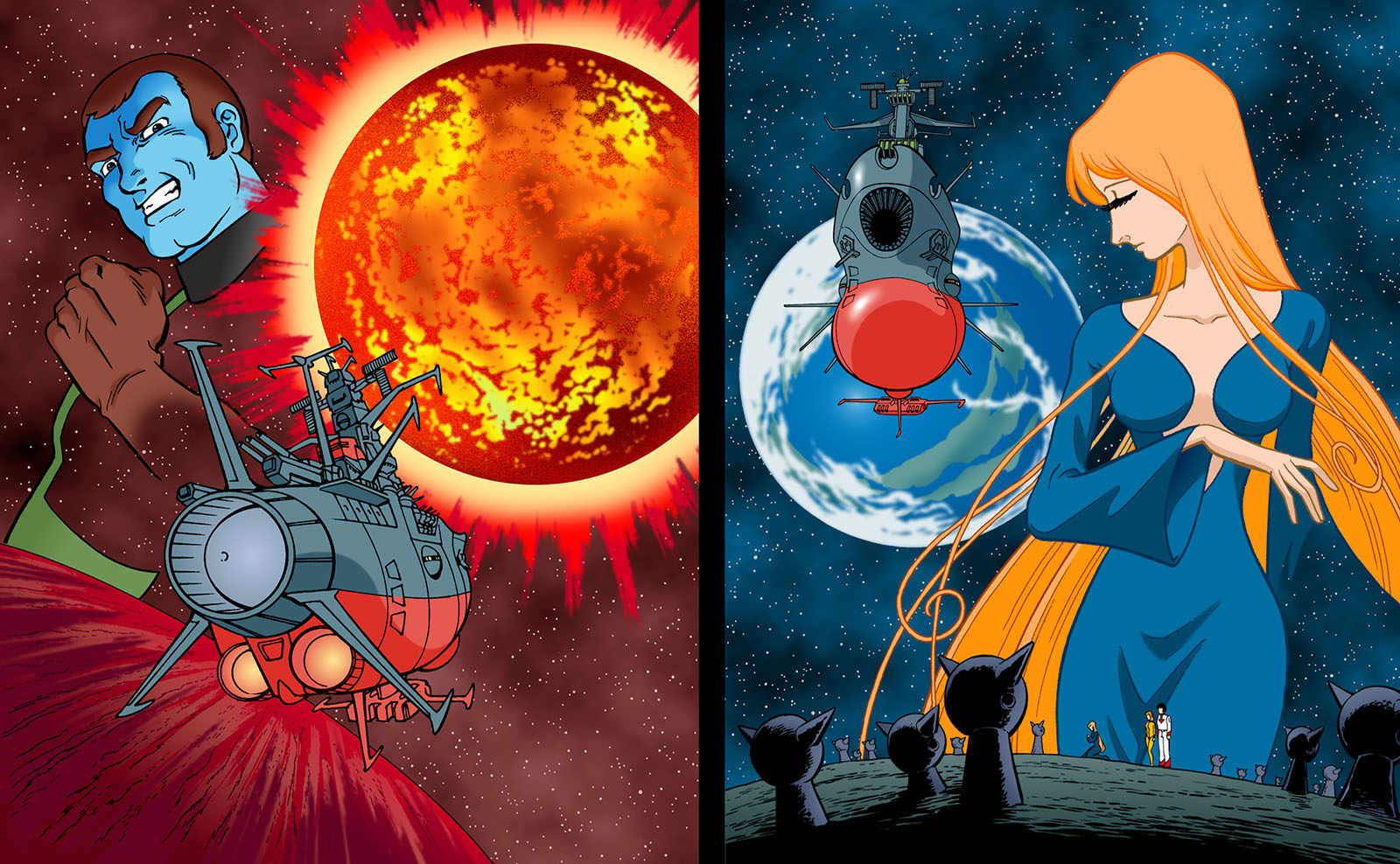
More DVD sleeve art, 2001
Remove paper from that process, and everything changes.
Without paper, you can jump over that entire series of hoops directly to the end point: the eyes of a reader.
There was a client for this Star Blazers project, since Voyager Entertainment was already paying me. It amounted to very little (about $50 a week), but I was lucky enough to have a TV animation career that took care of the bills. And Voyager felt no need for editorial oversight. I’d earned their trust over many years of service, so I never had to run anything by them for approval. And best of all, I could draw Star Blazers comics again.
An opportunity like that was exceedingly rare. I was literally the only person on Earth who had both the skill and the permission. Star Blazers was still a pretty big deal even after 25 years, having brought an entire generation into anime fandom. Whatever I was going to do with it had to be handled with respect and responsibility. Thus, it needed some legit DNA. Fortunately, I knew right where to find it.
Premature Rebirth
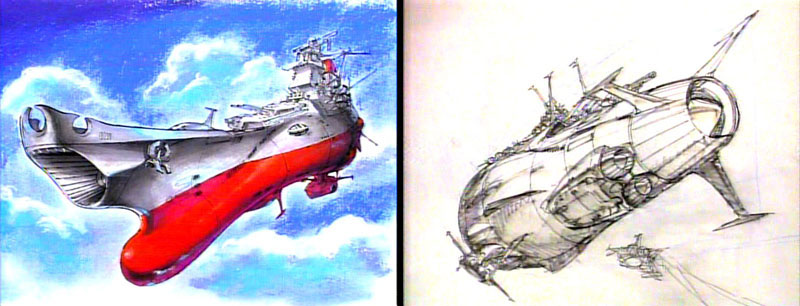
Development art, 1993
Back in 1993, after ten years of experimenting, the creator of Space Battleship Yamato (Yoshinobu Nishizaki) finally latched onto a way to bring the series back when he began developing a sequel movie set 17 years later. Scattered news reports started appearing in anime magazines from Japan. We American fans translated the title as Yamato Rebirth, and vibrated with anticipation.
Simultaneously, Nishizaki started a parallel project. It would be a direct-to-video series called Yamato 2520, which jumped much farther into the future, and Syd Mead was hired to help design it. Both projects were announced together, but 2520 debuted first, in early 1995. And…it flopped. Initial video sales were tepid, which ignited a series of funding crises that ultimately crashed the company. As a result, Yamato Rebirth never got off the launch pad.
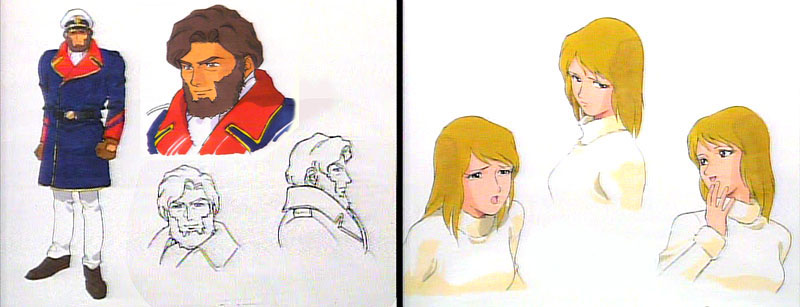
Based on what little we’d seen, Rebirth was the project I had most looked forward to. After my repeated experiences with stories being canceled, I had a sense of how tragic this must have felt for everyone involved. At the time it seemed impossible for that story to ever be told, and I could never have dreamed that I might get the chance to tell it myself. Ten years later, the chance had arrived. I decided to call it Star Blazers Rebirth.
Not having been at the table when Nishizaki and his crew conceived the story, I couldn’t pretend that my vision would precisely match theirs. To the contrary, I had only their initial concepts to build upon since no detailed plot or script had ever been made public. So, of course, I couldn’t ask for this to be seen as a legitimate entry into the Space Battleship Yamato saga (especially since I wasn’t authorized to create one). Star Blazers, on the other hand, was a somewhat different animal. When my Studio Go partners and I created the Star Blazers comic books back in the 90s, that was the approach we took. The Star Blazers continuity differed from Yamato and offered its own storytelling opportunities. I picked up that strategy and ran with it.
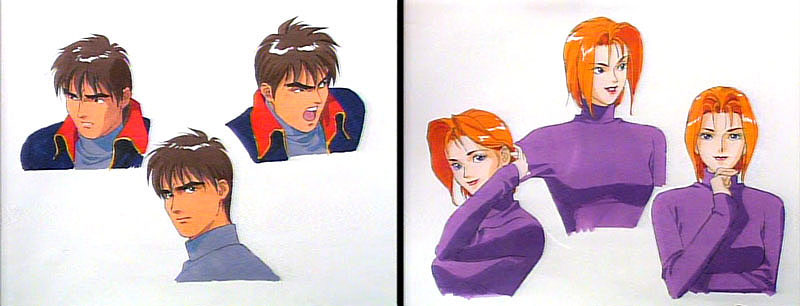
I fully admit that without the blessing of the home office in Japan, Star Blazers Rebirth was really just high-profile fanfic. But when the first chapter debuted on August 15, 2005, a LOT of fans showed up for the ride. And everything about it felt right. From the first moment I started jotting down ideas, this project had a grip on me that wouldn’t let go. I thought about it in every waking hour, resenting the time I had to spend on other work to make stupid money to pay my stupid bills.
I’d learned years earlier how to turn myself into a faucet and let the ideas just pour through me. Or, to use another analogy, tune in to a galactic radio station and write down everything I heard. It felt like this story wanted to be told and was using me to that end. It still took skill and discipline and effort, but it never felt like work. And a big part of that was simply not having the pressure of trying to sell it in stores. It could take up as many chapters as necessary, and wasn’t subject to cancellation. I’d waited my whole career for that kind of freedom, and here it was. All because I figured out a way to get the damn paper out of the supply chain.
What’s more, it would never go out of print. It took me two years to write and draw all 17 chapters (the equivalent of 10 comic books), and they’re still online here. Heck, it even got fan mail. That was entirely new for me, something else made easier by the internet.
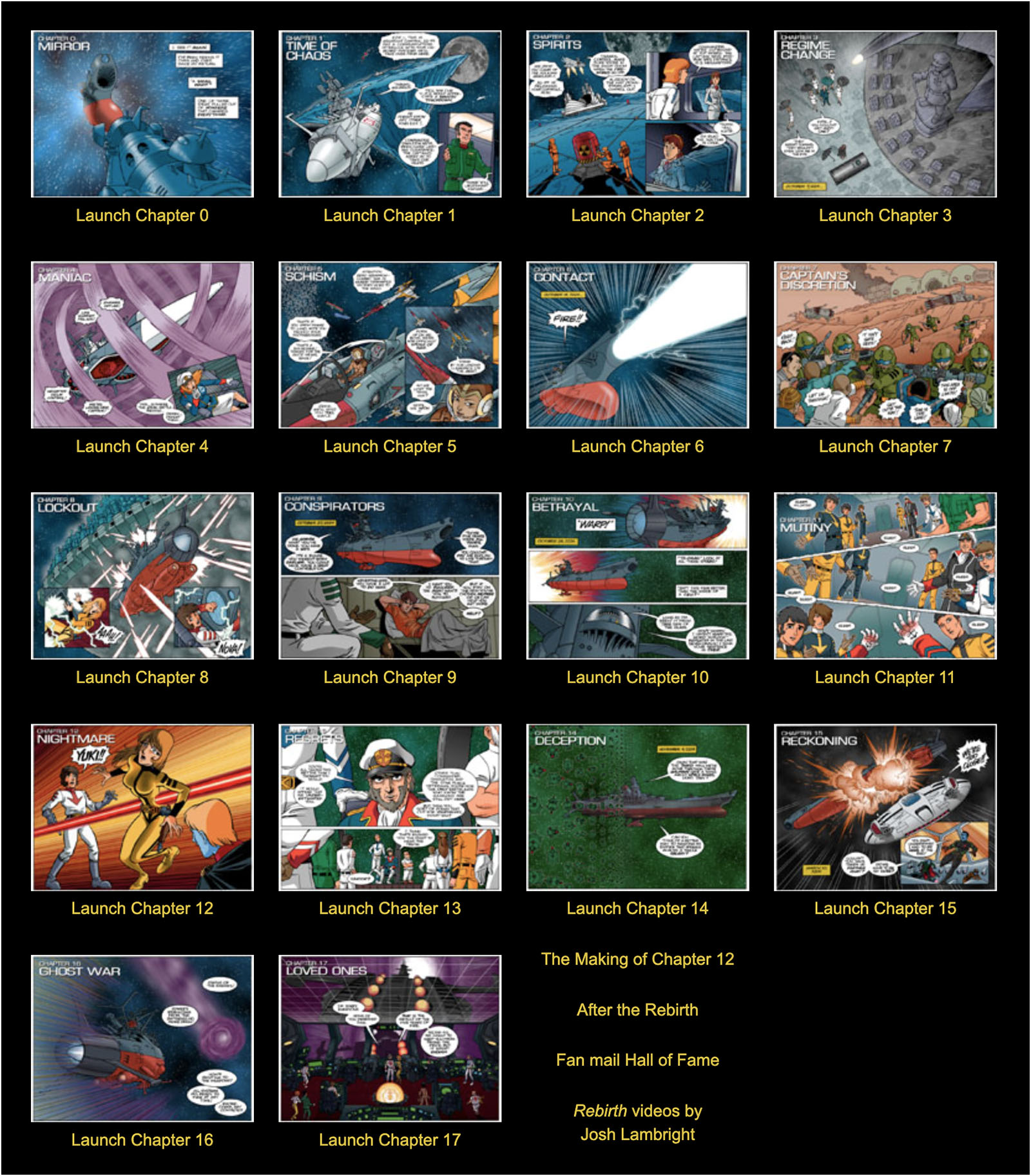
And then…
Eventually, against all odds, that Yamato movie did get made.
A year after I finished Star Blazers Rebirth, word leaked out from Japan that Yoshinobu Nishizaki was back at it, picking up where he left off in 1995. The movie went into production in 2008 to be released in theaters December 2009. I was there in Tokyo for the premiere, seeing Yamato on the big screen for the very first time. Of course, I was insanely curious to see how close it would get to my version. And, unsurprisingly, it wasn’t very close at all. Mine went deeper into the history and mythos of the saga, dredging up deep lore from Yamato and passing it through a Star Blazers filter. In the end, the two stories only shared starting points.
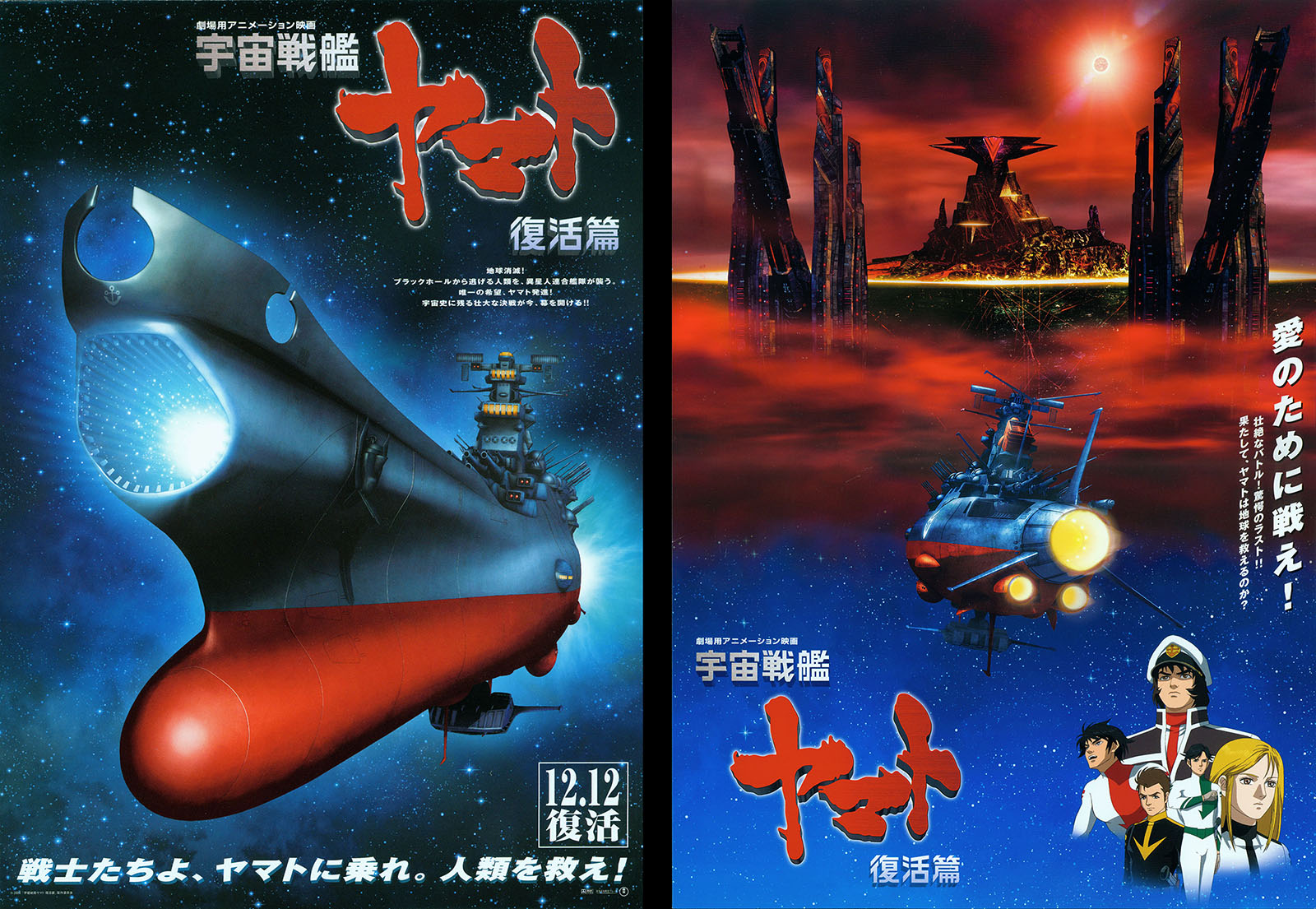
Yamato Resurrection promo, 2009
They also didn’t even share a title. I went with Rebirth, but in Japan they went with Resurrection. I was glad that this helped to give the two stories their own independent identity. I was also glad to learn that some fans in Japan had seen my version, managed to read it, and liked it a little better.
Yamato Resurrection was perfectly fine, but it didn’t look very deep into its own history. In an effort to attract new viewers after a 26-year gap, the barrier to entry was kept low. You didn’t have to know a lot of trivia to follow it. But my goal with Star Blazers Rebirth was to write the story I wanted to see, full of Easter eggs that rewarded you for paying attention.
Putting that into words now makes me realize that I had yet another level of freedom denied even to the original creator. His movie cost WAY more to make than my webcomic, so he had to make calculations based on marketability. As a longtime fan, I wished Resurrection had done more to reach the hearts of people like me. As a webcomic creator, I had the unexpected freedom to do what even Nishizaki could not.
As it turned out, it wouldn’t be the only time.
NEXT: Star Blazers webcomic #2: The Bolar Wars Extended
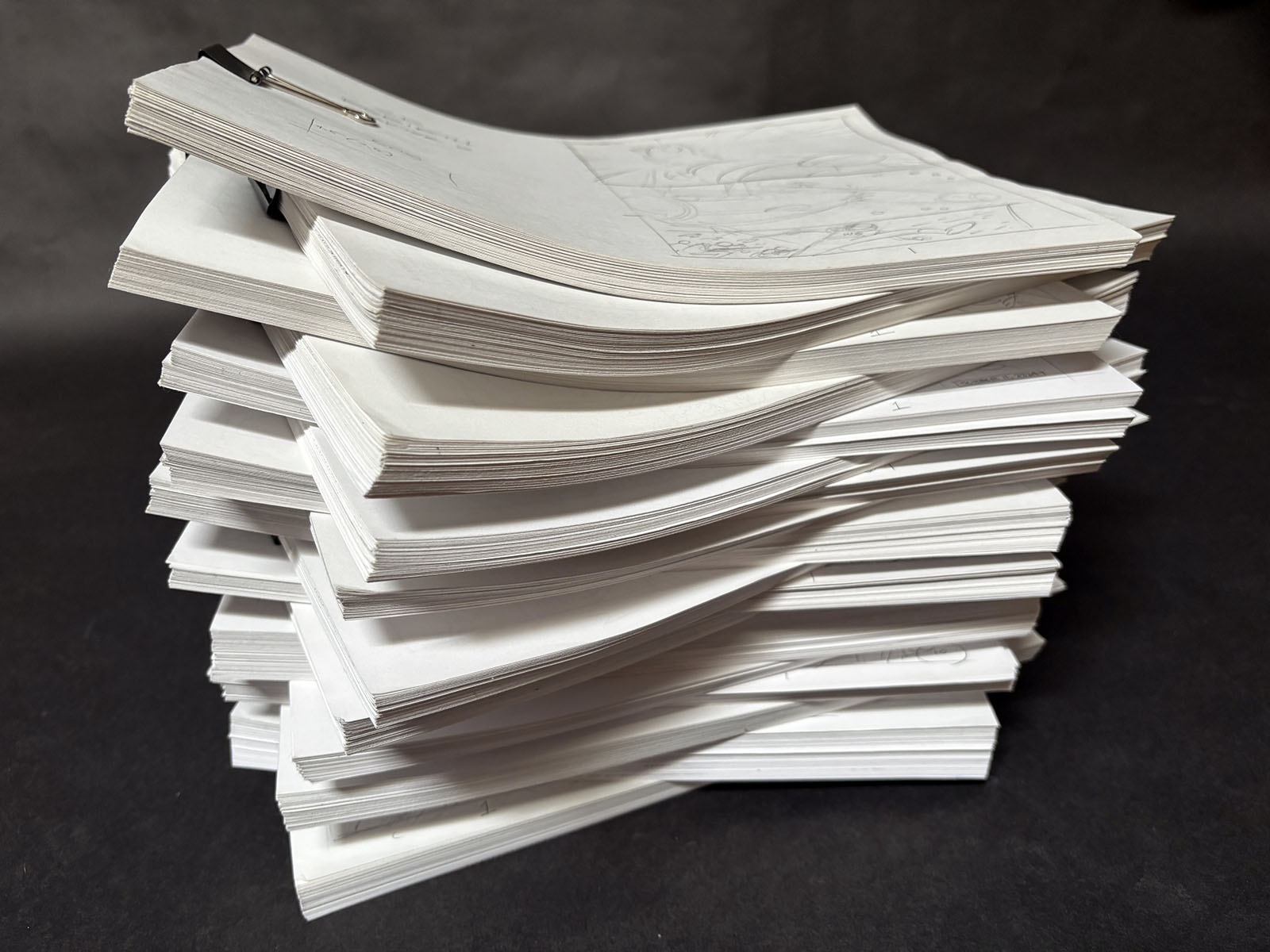
All the original art for Star Blazers Rebirth. Still got it.