
Comics go to the movies: The Dark Crystal
“Charm” isn’t a word I often use as a descriptor, because I reserve it for the work of just two people: Charles Shulz and Jim Henson. They both charmed me when I was a child, and earned my devotion for life.
Shulz showed me the simple power of drawing, which became my career. Henson showed me the simple power of authenticity, toward which I strive in everything I do. When I outgrew Sesame Street, there were the Muppets. And with the Muppets came spinoff works that crossed over into the world of drawing. But in that crossover, I quickly noticed when the authenticity was missing.
You’d think it would go the other way, but here’s a prime example: when a Muppets comic strip landed on the newspaper page (with Peanuts as a neighbor) in the fall of 1981, everything I liked about the Muppets was missing. Another example was Marvel’s adaptation of The Muppets Take Manhattan, which you can see in full here. And it’s not just the authenticity that’s missing; Henson’s craftsmanship was so specifically rooted in his authenticity that it simply could not carry over into drawings by someone else.
I sort of made that discovery on my own when (at age 14) I drew a comic book version of The Muppet Movie, which you can see in its entirety here. I did it as a Christmas present for my younger sister. But as soon as we had a copy of the movie itself, my pale imitation was instantly forgotten. It was a powerful lesson about what mattered.
When it was announced in 1981 that Henson and his muppeteers were shifting into the world of fantasy, advised and abetted by George Lucas and Gary Kurtz, I was prepared for something special. It would be the world’s first all-puppet, no-human feature film, and I was ready to see it as soon as it was announced. But first, of course, I read the comic book adaptation.
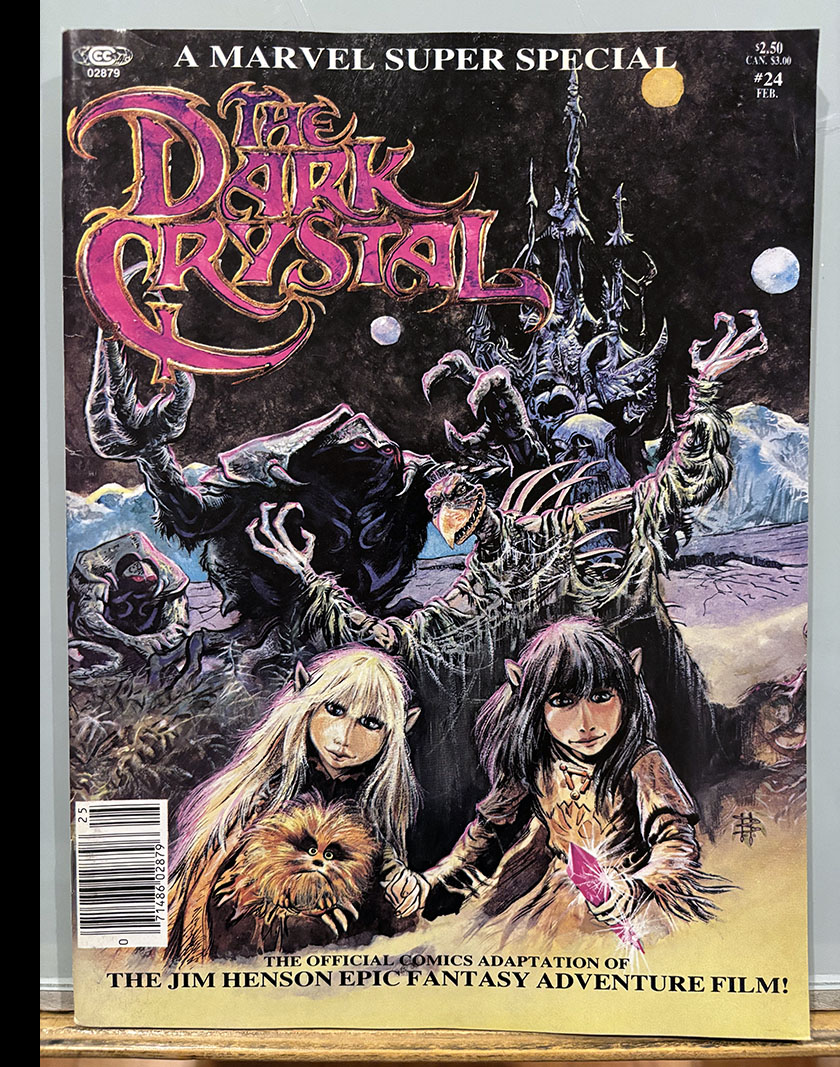
Marvel Super Special #24, adapting The Dark Crystal in magazine format, was published about a month before the movie arrived on December 17, 1982. In those days, I didn’t feel strongly about waiting for the movie if an adaptation was available earlier. (Big plot twists like “I am your father” were also shocking in a novelization, for example.) So when a Dark Crystal adaptation was on the shelves in advance of the film, I snapped it right up.
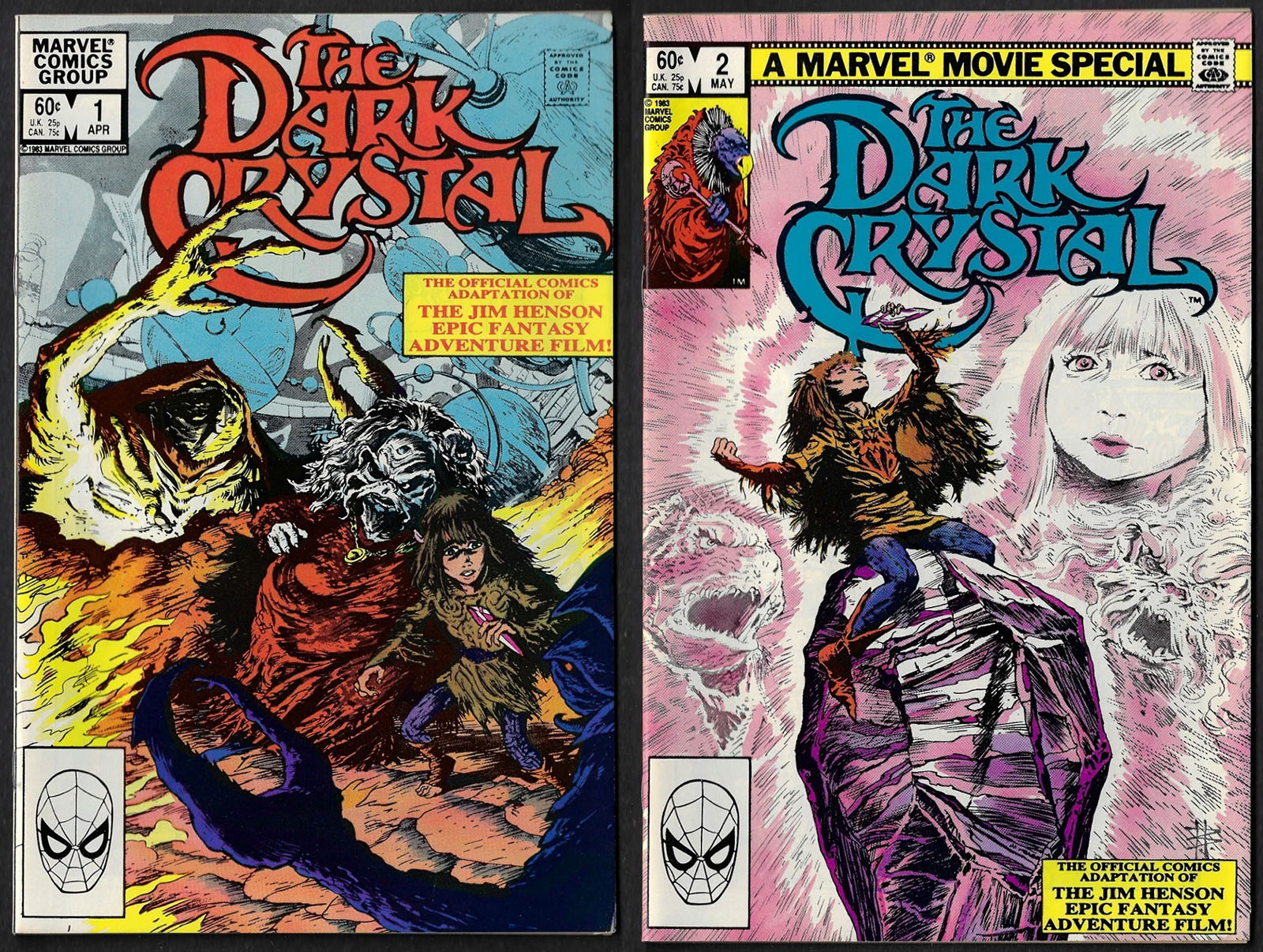
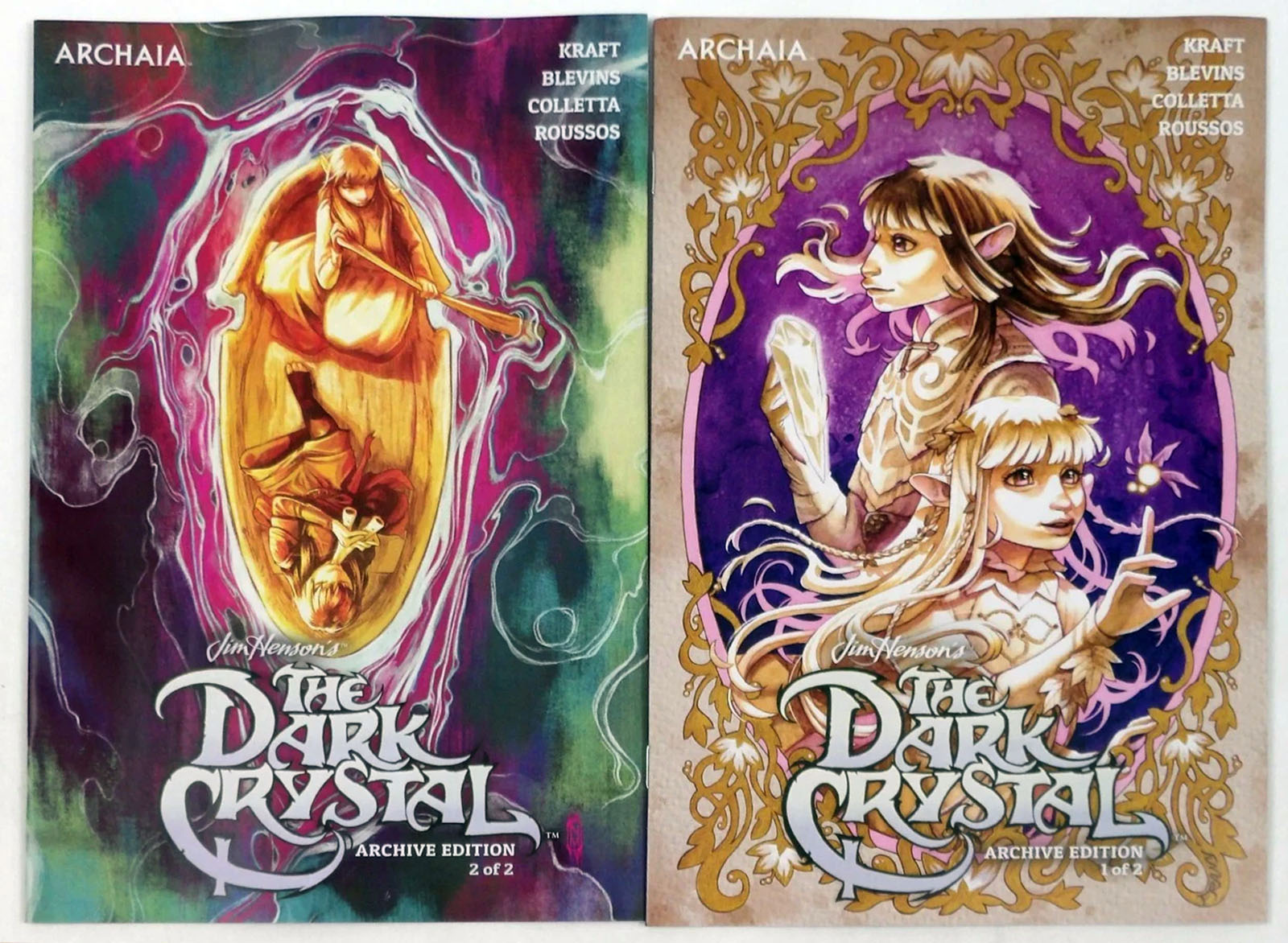
2-issue comic book version
My first reaction to the story was, “not much new here.” I saw the same exact sentiment in a couple movie reviews later on. The story was pretty standard fantasy fare. What made it special was – again – authenticity and craftsmanship: the art direction, puppetry, and performance techniques. So while the comic didn’t make a huge impression on me, the movie sure did. As with Blade Runner a few months earlier, the artistry of the film went so far beyond what we got on the printed page that there was almost no comparison.
Owing to the above, it won’t be productive to compare the comic to the movie since it lacked the qualities that could never be captured. So instead, let’s see what it managed to accomplish on its own.

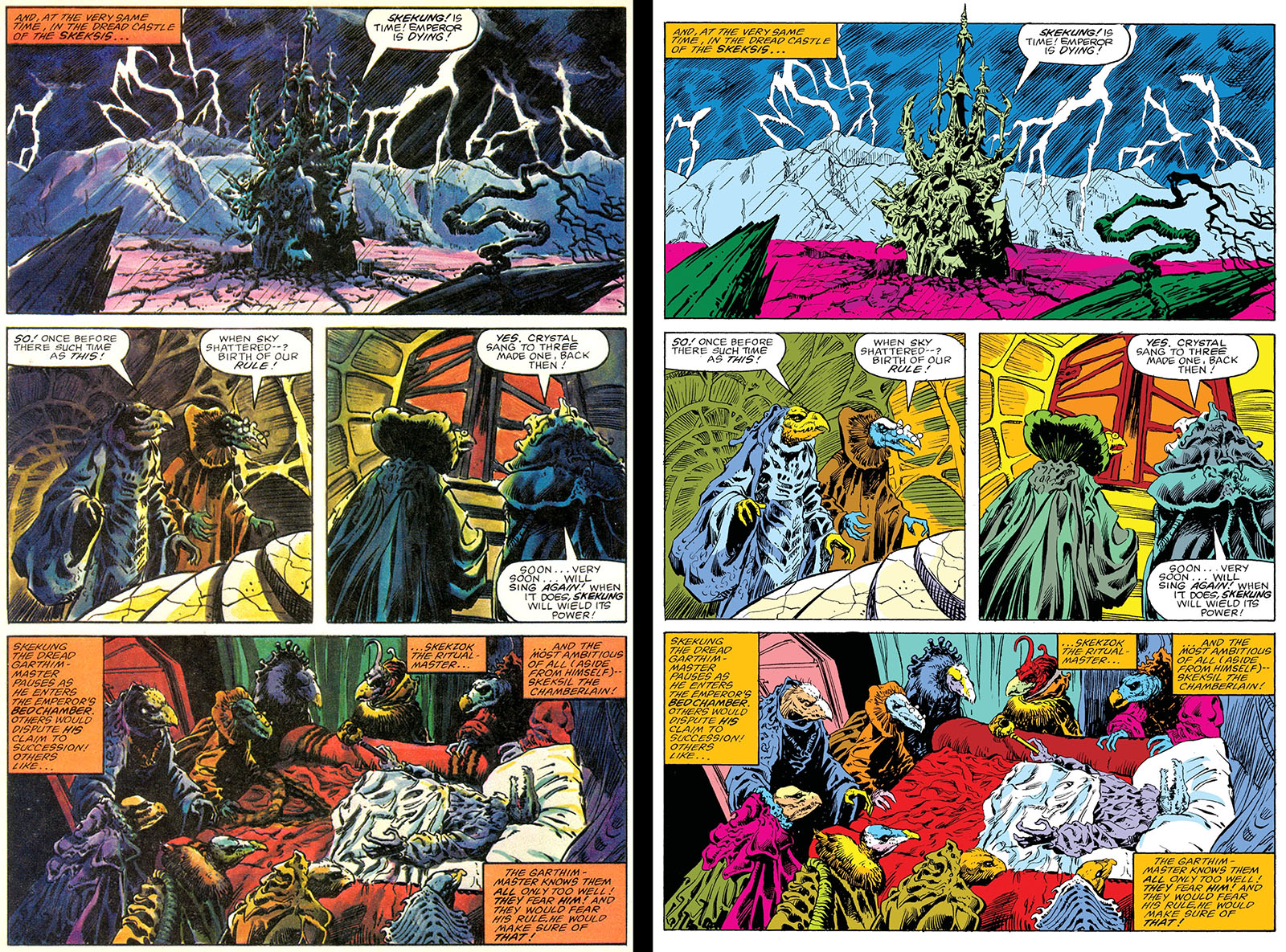
Super Special page at left, comic book page at right
Two things pop out for me. I’ll start with the smaller one.
An advantage comics have over movies is the availability of words. This gives them some of the strength of novels, which (of course) are formed entirely of words. There are plenty of words available to movies, but too many can undermine a visual presentation. This is why novels are always condensed or highly edited when adapted into films; dialogue no longer has to carry as big a load when you can transform some of it into sound and pictures.
How did this factor into The Dark Crystal adaptation? The greater availability of words added lore to the story that we didn’t get in the film. For example, each Mystic and each Skeksis had an individual name and personality. This could have been imparted on screen, but it would have added nothing to the experience. In fact, it would have accomplished the opposite, weighing the story down with more trivia than it required. But in the comic, this information added value.
In a movie, control of time belongs to the moviemaker. In a comic, control of time belongs to you, the reader. You can decide how much time you want to spend on a page or dwell on a factoid. There’s still a balance to be observed in writing a comic; the limits of physical space on a page discourages excessive word usage. But in The Dark Crystal, the balance is just right. You get enough lore along the way to add value and texture. The adaptation fares better because of it.
I should add that none of the lore was invented by Marvel’s writer, David Anthony Kraft. It was all developed for the film and maintained through spinoff literature.

The second thing that pops out is the use of full-process color.
To understand what that is, and why it’s a particular strength of this comic, it’s necessary to talk some shop. Hopefully that’s what you’re here for.
Comics generally have one penciler and one inker. In this case, the penciler was the very capable Bret Blevins. The inker, on the other hand, was the very controversial Vince Colletta. He was a mainstay at Marvel for one specific reason: he was fast. When you needed someone who was guaranteed to hit a deadline, Vince was your man. Unfortunately, he sometimes earned that reputation by under-inking. If there was too much detail in the penciling, he’d leave it out. Untold volumes of drawing never got to the printed page because Colletta decided not to ink it. But he always got a book in on time, and that’s what counted to the boss.
Rumor has it that Jack Kirby was once asked how he felt about Colletta’s habits on his own penciling and gave a typically magnanimous response: “He needs the work.”
Under ordinary circumstances, Colletta’s inking on The Dark Crystal would have been a deficit given the requirements of translating such a carefully-designed film to the page. But here’s the thing: in this case it was a bonus. Why? Because it left a lot of room for color. Less linework creates more open space for color to fill in what’s missing from the art. And color is absolutely what made this project shine.
I used the term “full process” earlier, and to communicate what that means I need to tell you how most comics were colored back in the 70s and 80s. Before the digital revolution, the color range was very limited, and the end results were seldom satisfying. The steps went like this: a colorist would apply pre-selected dyes to a copy of a finished page. This became a guide for a color separation team to create separate plates for printing. Click here for a very informative article that will tell you how they did it.
“Full-process color” differed from that by taking the colorist’s work and using photographic filters to separate the color instead of doing it by hand. It sounds easier, but it was more expensive. Not just because of the mechanics involved, but because the original color was fully painted with a much larger palette and took longer to do. The Super Special edition of The Dark Crystal, for example, required no less than eight colorists to paint all 48 pages in the time available. Someone probably fought for this. And man, was it worth it.
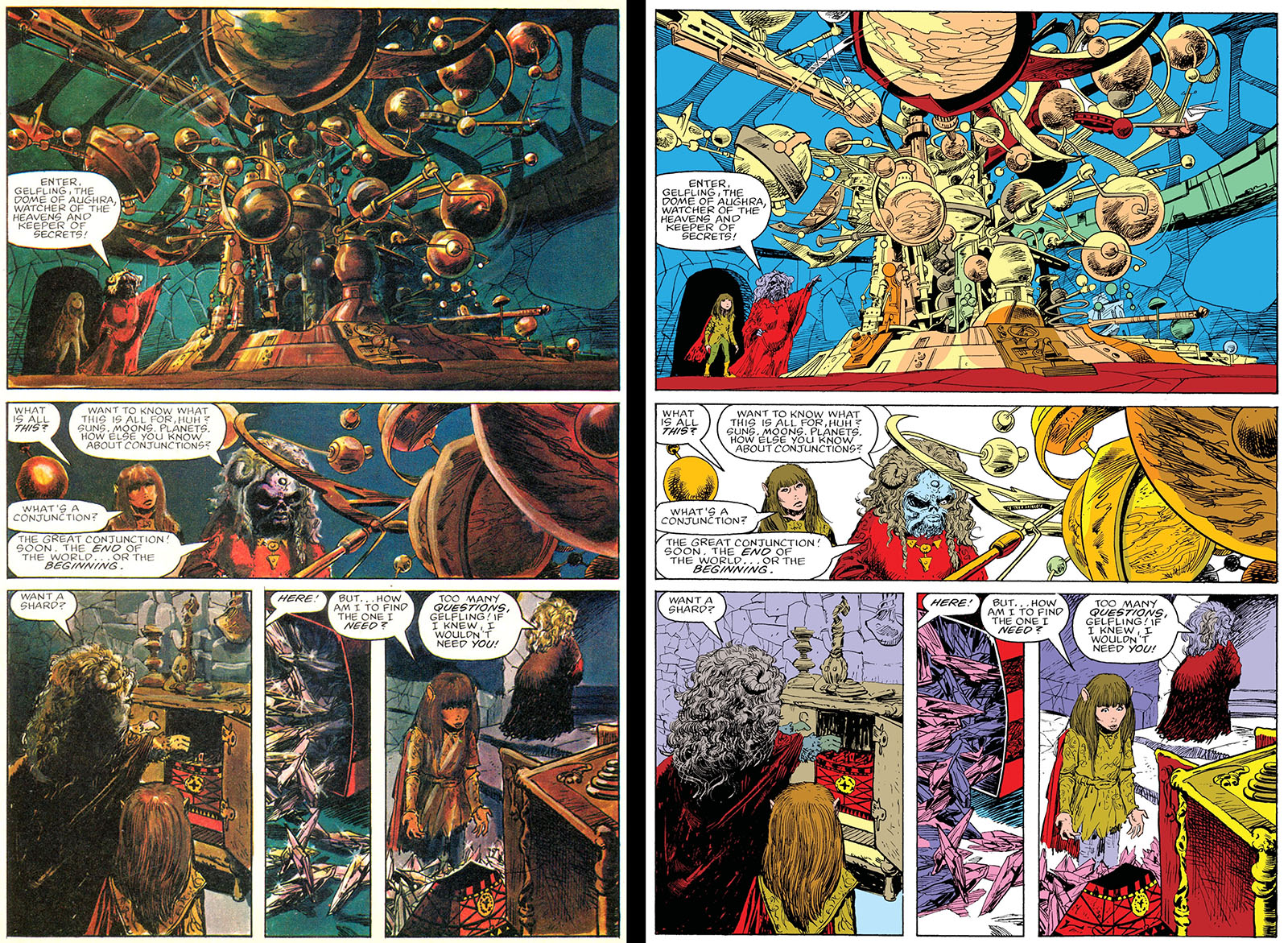
As if to help us appreciate the higher production values, Marvel provided an alternate version for comparison. Like most of their other movie adaptations at the time, they published this one in two formats: the Super Special magazine, and a 2-issue limited series in standard comic format. The 2-issue version had just one colorist (George Roussos) and went through the standard separation process. All you have to do is put pages side by side to see what a vast difference it made. (As you’ve seen above.)
For one thing, without the added texture of full-process painted color, the deficits of Vince Colletta’s inking are immediately apparent. Everything looks under-drawn. As a reader who used to groan every time I saw his name on a comic I was about to read, I was astonished to see how well his style meshed with a full-process color technique. I occasionally see that same meshing in modern comics with their infinite digital palette. Used properly, color can rescue cheap art the same way sound can rescue cheap animation (a topic for another day).
My conclusion: this adaptation could never truly do justice to the movie it derives from, but stands on its own for reasons that derive entirely from the process of making comics. This still makes it an impressive effort over 40 years later.
Read (and compare) the two editions in full here:
Marvel Super Special #24 | 2-issue version (2024 “Archive Edition” by Archaia)
Book Collection
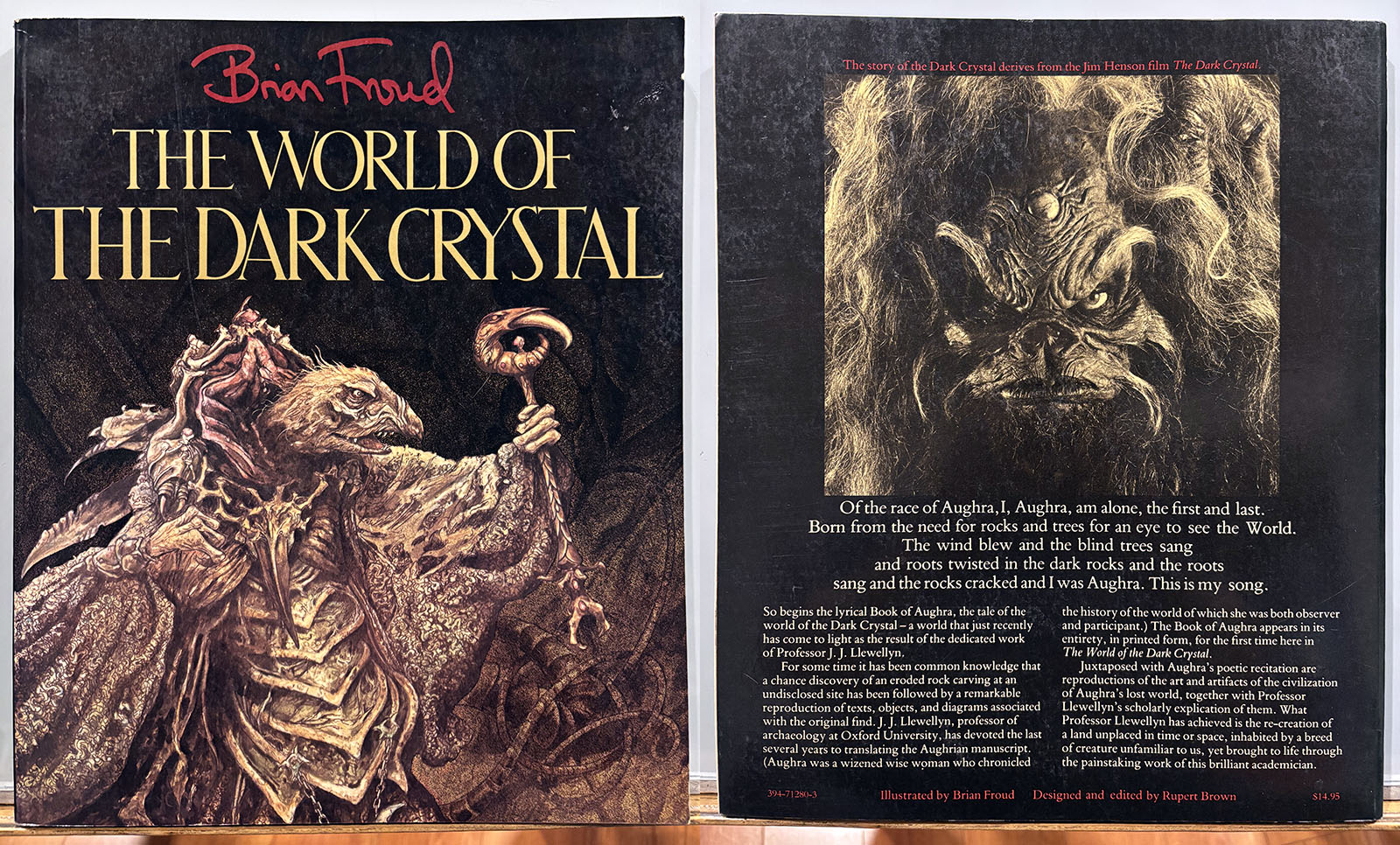
The World of The Dark Crystal
by Brian Froud
Henson Organization Publishing & Alfred A. Knopf (1982)
If you’ve got room on your shelf for only one Dark Crystal book, this is the must-have. It isn’t just a design collection; the text is written as a first-person narrative by Aughra, describing the world of Thra from her experience. Coupled with the art, it reveals the many layers of world building that support the movie.
Newer books
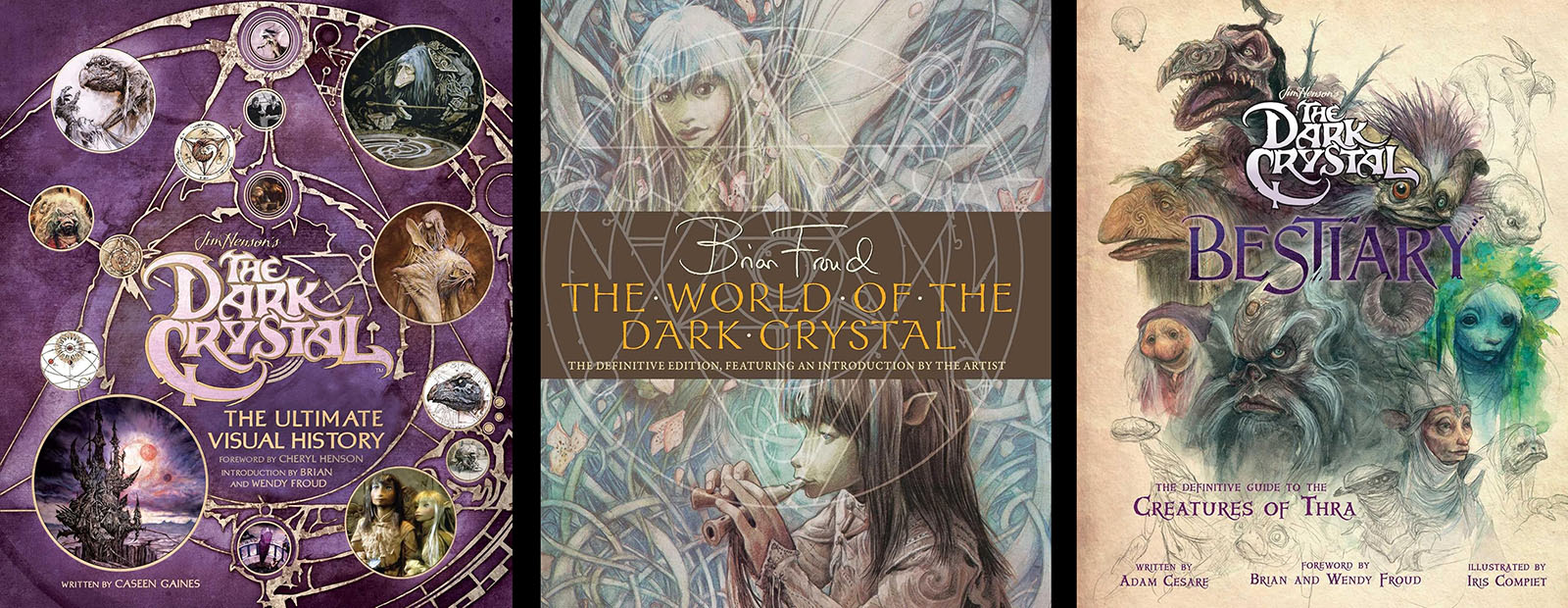
(2020 edition)
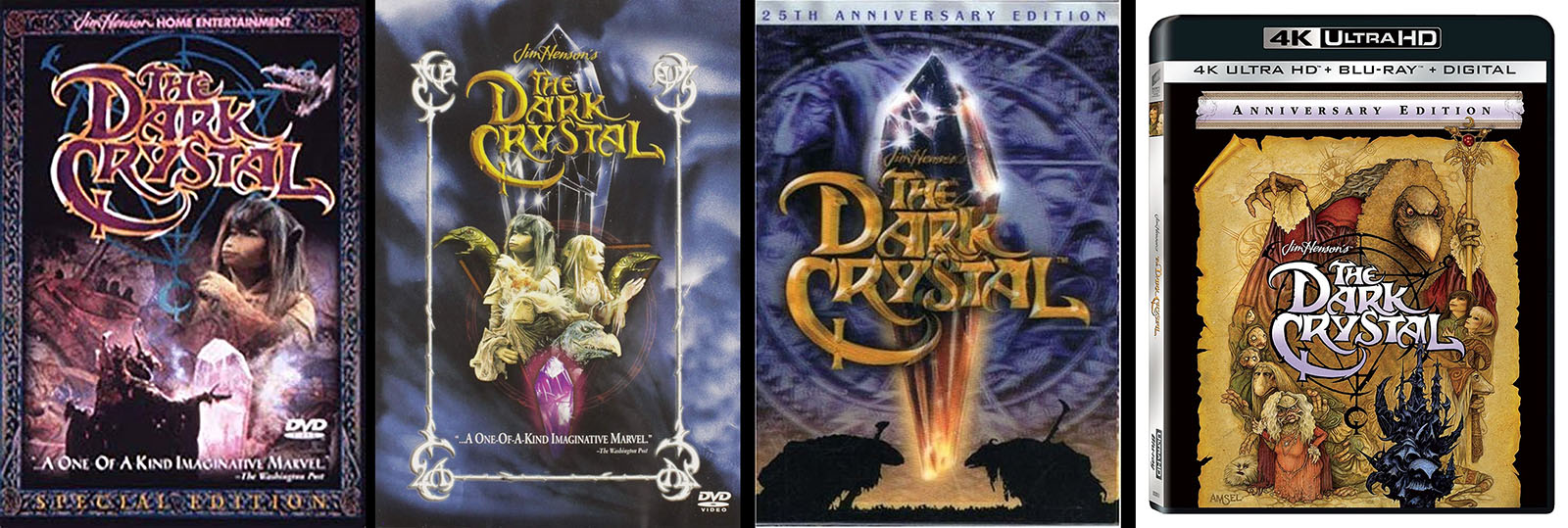
Video Collection
There have been more DVD and Blu-ray editions of the film than I care to count, all of which seem to have slightly different bonus features, so there’s some homework required to pick the one that suits you. The first DVD had a very unique feature, an isolated music track that gave you full access to the score. If I were elected Dictator of Hollywood, I would order that for every movie.
One common bonus feature is an hour long making-of documentary, which you can see on Youtube here.
Music Collection
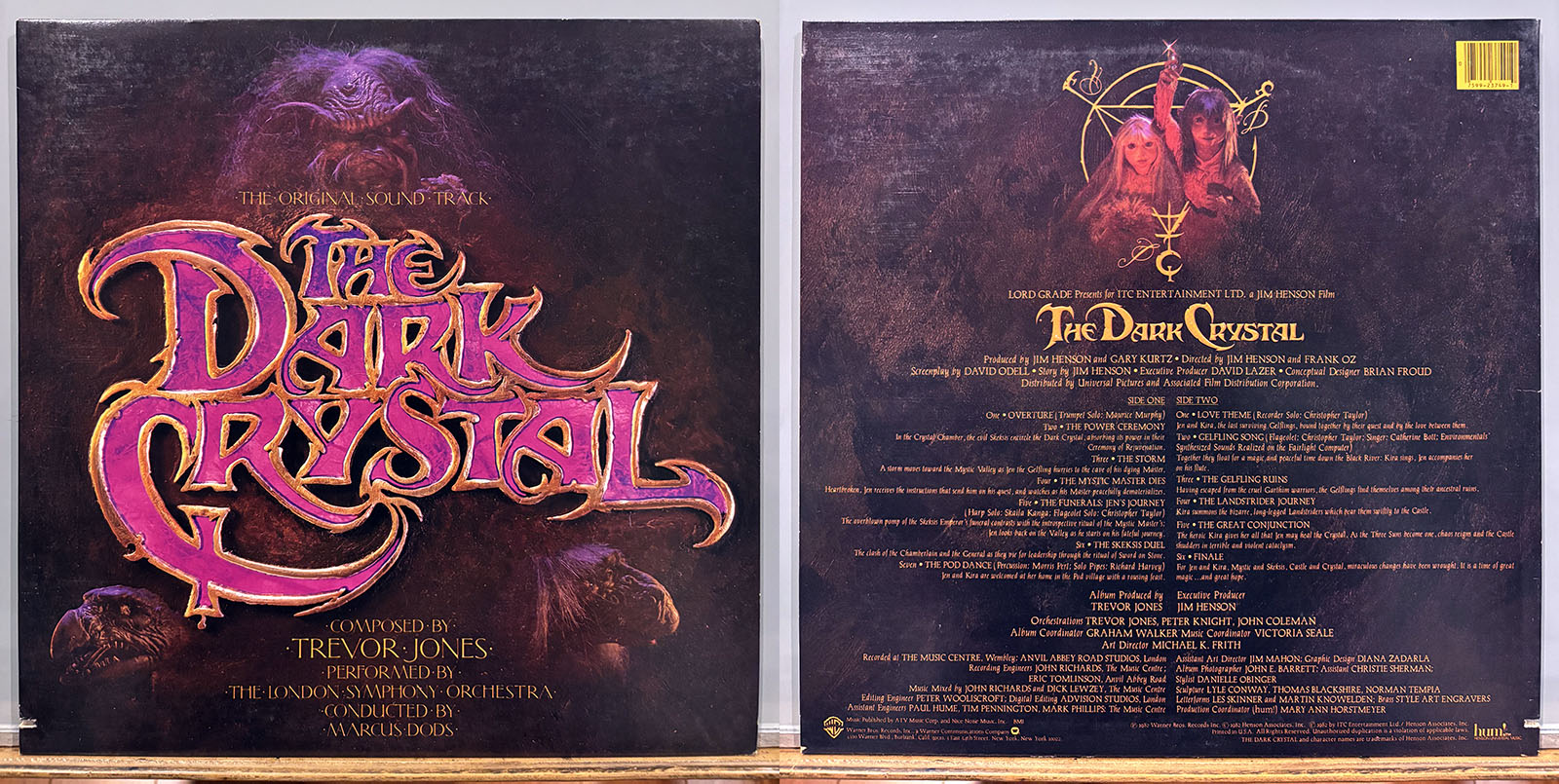
Original soundtrack
1982 version, edited for LP
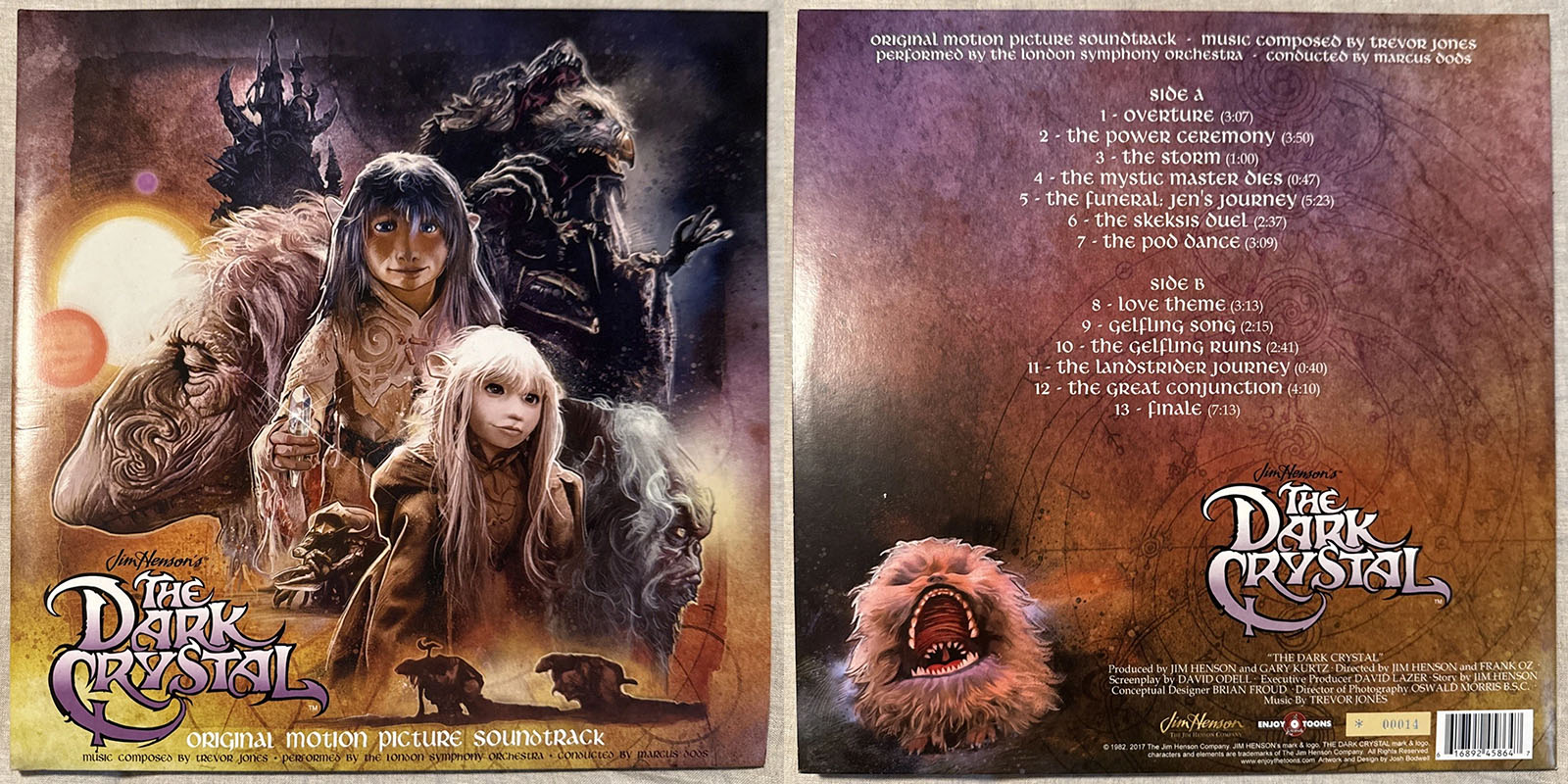
2017 LP reissue
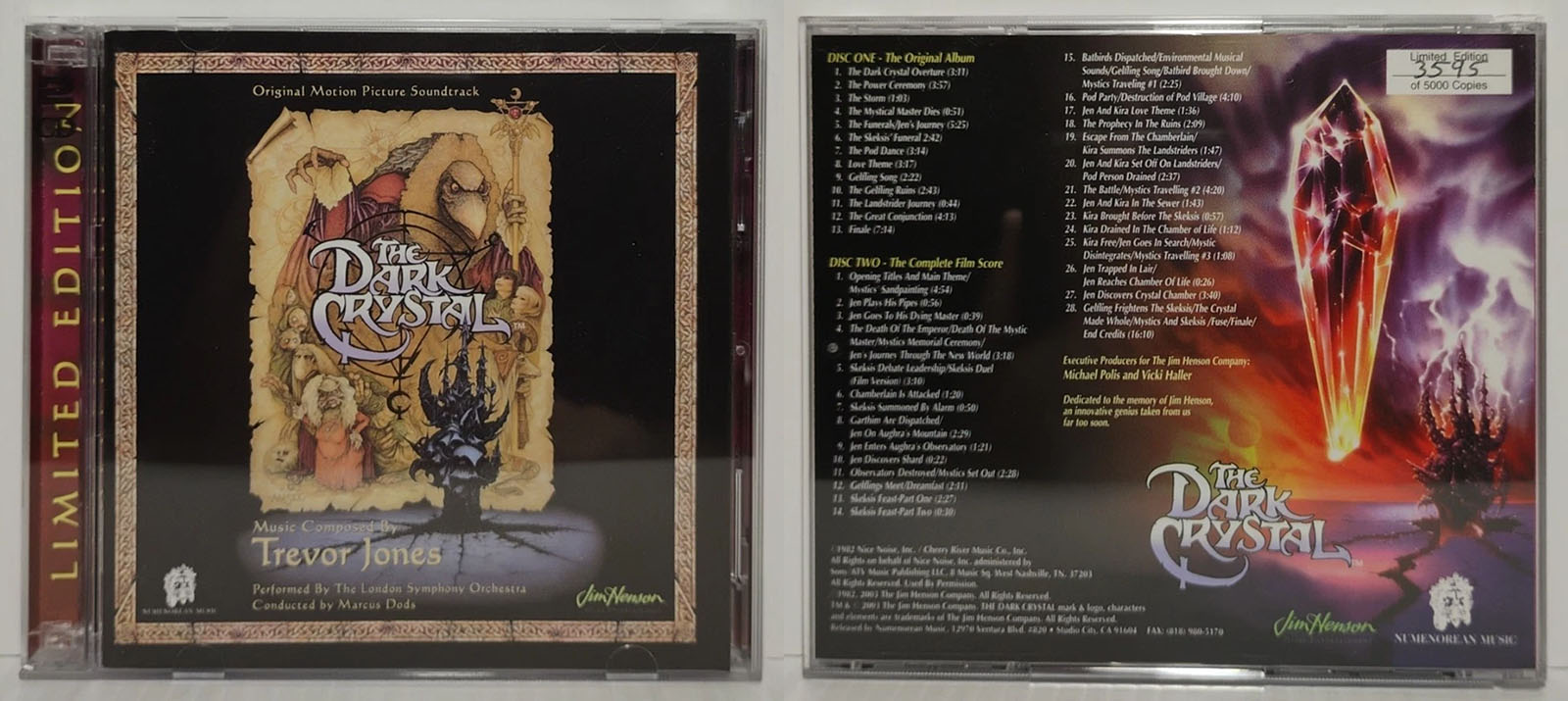
Limited Edition
2003 2-CD set, contains the original album and the complete score
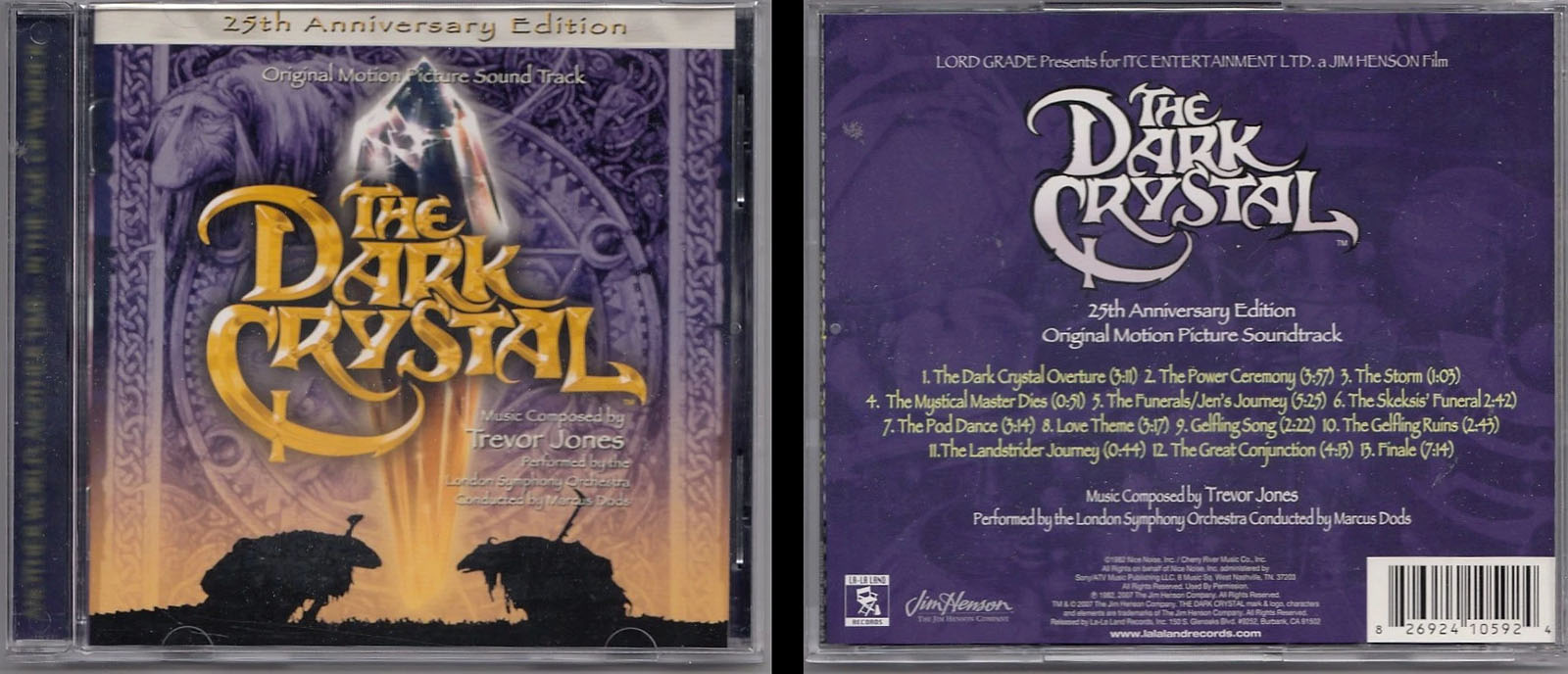
25th Anniversary Edition
2017 CD, contains the original album
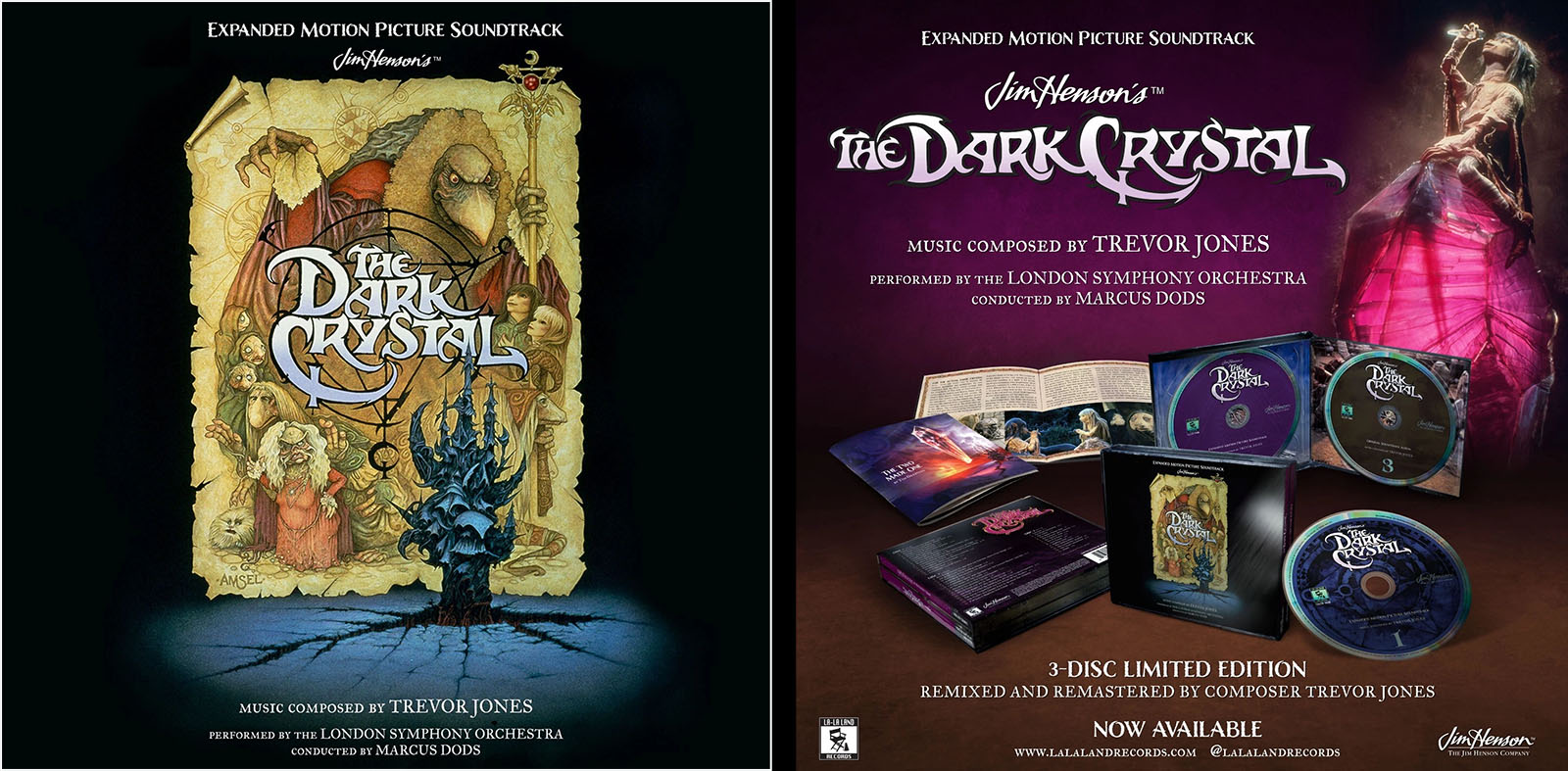
Expanded Edition
2024 3-CD set, contains an expanded/enhanced version of the complete score along with the original album.
Listen to all of it on Youtube here (tracks 1-30 are the expanded score).
Related links
The Dark Crystal Wikipedia page (movie)
Age of Resistance Wikipedia page (Netflix series)
Part 2: The Age of Spinoffs
When The Dark Crystal became a generational heirloom, it was only a matter of time before it evolved into a franchise. Numerous books, novels, and comics placed the movie into a larger context, turning it into a fulcrum upon which past and future turn. This effort ultimately culminated in the 2019 Netflix series Age of Resistance. Despite the criminal lack of a followup to that series, there are many original comic spinoffs to make up for it. Freed of any constrictions posed by an adaptation, the stories are layered and engaging. The writing and art is exquisite throughout, clearly the product of talented fans who grew up on the film.
Legends of The Dark Crystal
Tokyopop, 2007-2008
Written by Barbara Randall Kesel, Art by Heidi Arnhold & Max Kim
2 volumes, prequel
Read volume 1: The Garthim Wars here

Vol. 1: The Garthim Wars. Vol. 2: Trial by Fire. At right: Vol. 1 reprint
This is where the expansion began, and I was lucky enough to talk with the writer, Barbara Kesel, about this unique experience. Join us, won’t you?
Tim: Since you were at the leading edge of what went on to become kind of a cottage industry of Dark Crystal comics, you might have a vantage point on what it took to launch that entire enterprise. You were the first one to do a spinoff story, and I’m curious to know how it originated.
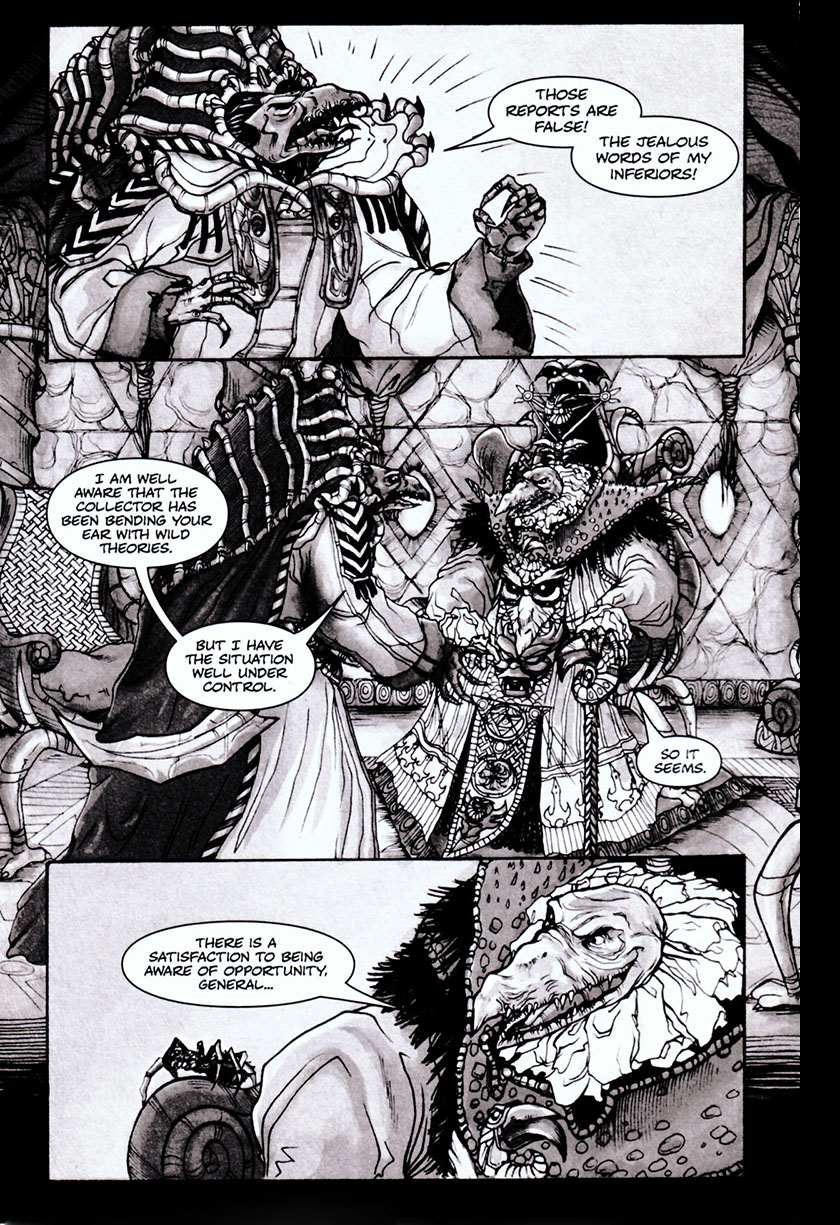
Barbara: As I remember it, I was contacted and asked if I had any ideas. I was told they were working on a sequel and an animated show. And I said, okay, let’s carve out our own territory. We know they’re not playing with the past and we don’t know what they’re doing in the present. So let’s just stay out of their way and not try to coordinate because they hadn’t completely come up with what they were doing. That’s the reason it’s set 250 years in the past, because we know where it will end up even if we have a different set of characters in a different setup.
These other projects were all going to be sequels?
I actually had the script for The Dark Crystal 2, but we only had some vague outlines for the animation. They were still putting pieces together and deciding what they were going to do. So it just seemed wiser to stay outside the lines there. One of the hallmarks of Dark Crystal is Jim Henson’s view of a sort of gentle world. Even though there’s a lot of vicious stuff going on, it can be argued that there’s a gentle nature to our lead characters that I wanted to preserve. And the other thing is, music is so much of a part of it I wanted to try to get across a sense of lyricism. To preserve the kind of motion that had been set up by the movie and have it feel the same, even though it was a completely different medium.
Do you think conceiving it in manga terms gave you an advantage that you wouldn’t have had with regular American comics?
I think so, because you could find more things that manga played to a. A more peaceful world. I haven’t looked at some of the modern stuff, but you don’t want an “Absolute Dark Crystal” approach that turns it all harsh and dark. To be consistent with the tone of what they created for what was essentially going to be a franchise, you’d want to have a similarity to the exact feel of the core material.
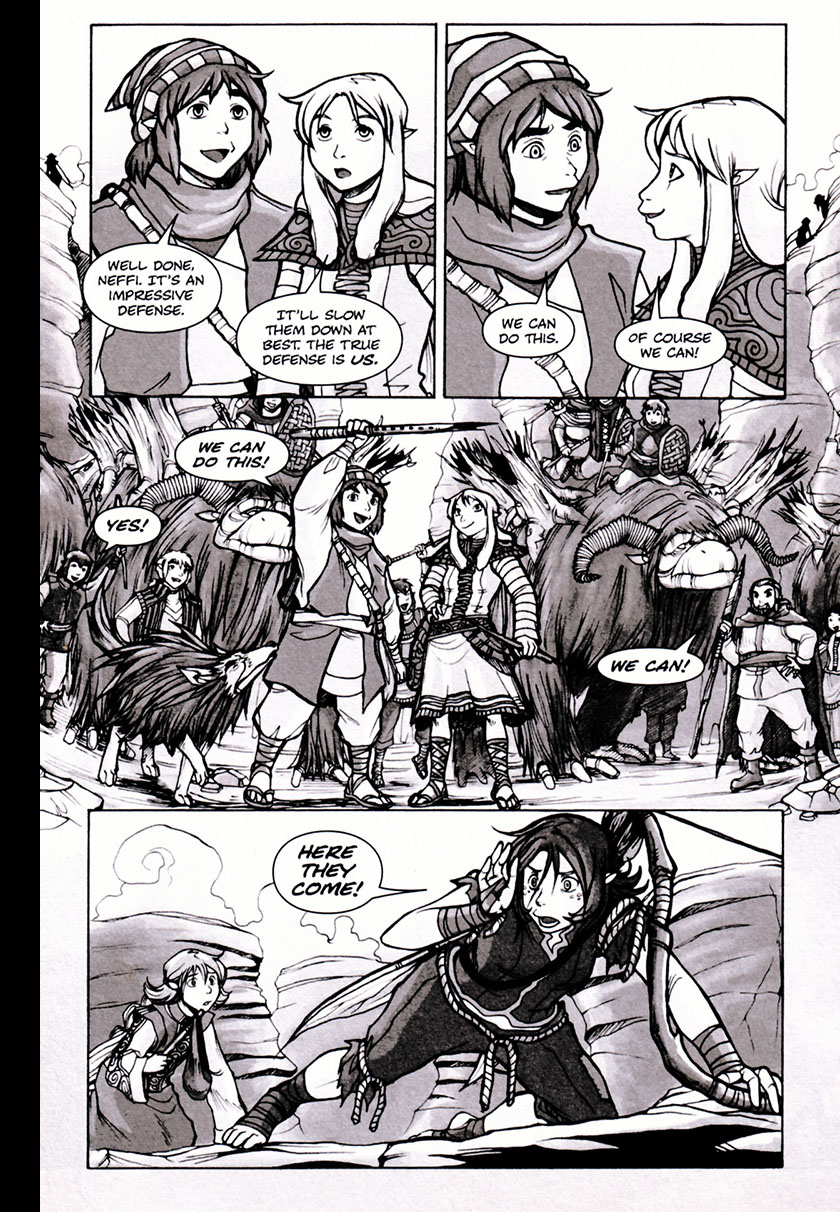
What was your opinion of the art style?
Oh, my God. Loved it. Absolutely loved every bit of it. Tokyopop did a lot of auditioning, trying to find someone with the right feel for it. We needed somebody who could be a good storyteller and preserve that gentleness without making it totally childlike or childish. Feeling like The Dark Crystal movie. It was that tight of a target.
Is it true that there were going to be three volumes, but it got cut short?
Tokyopop lost the license midway through printing. It was supposed to be a three volume story, so I had to suddenly come up with a new ending. It was kind of crammed together in two volumes and what had been planned was supposed to be three. It’s very awkwardly paced as far as I’m concerned, but people seem to like it.
I don’t know if the later spinoff projects are completely compatible with what you did, but I’m pretty sure you set the tone for them to follow.
I also got to create a new Skeksis/Mystic pair, which was a thrill for my Henson-loving self. It would be great if this series could be reprinted somehow. I’m sad that it’s out of print.
What sort of communication did you have with the Henson Company or whoever was in charge of the license at that time?
I had a great contact there. Joe Lafavi was in charge of all the outside commercial license stuff. He had a great commercial sense, a great story sense. He’s a really tough taskmaster. And he took his protection of the Henson materials very seriously. Like he wanted to make everything a success, but also wanted to do it right. We had wrestling matches over certain things that were going to go on in the story, but mostly it was a case of him helping to figure out how we could do it.

To my knowledge, at that point, there had only been one really heavy source of lore, and that was Brian Froud’s book. Were there any elements in there you were able to use?
I don’t know that I drew anything directly from the Froud book, but I did try to psychically tap into the vibe. It was a source of inspiration and thinking about the whole Dark Crystal world. I watched the movie on endless repeat while I worked. When adding the Monk Mystic (UrSen) and the Collector (SkekLach), Lahr and Neffi and their neighbors, not to mention the Mounders, it was important that these characters feel like an organic part of the world.
Was the Jim Henson authenticity something that you perceived at some level and tried to accommodate or reengineer in the content?
I don’t know that I thought about it specifically in those terms, but I definitely wanted to be consistent with the feel of the movie. It sums up Henson and his approach to storytelling. His very early stuff was more sort of 50s experimental, but he settled into something that felt cozy, or grandfatherly. There are some winks in the humor, but there was that gentle love diffused throughout the work that comes through very strongly. It’s like listening to somebody make music and you try to do something in the same vein. And you might not be doing exactly the same thing, but you’re going for a consistency of tone so someone who loved the first one feels welcomed and served in the followup.
Looking back on it now, how do you view this in the long sweep of your career? Is it something you still consider a high point?
Oh, it’s definitely something that was a precious opportunity and I’m so glad I got it. This conversation is making me realize how long it’s been since I’ve even looked at it. Time disappears in a blink anymore.
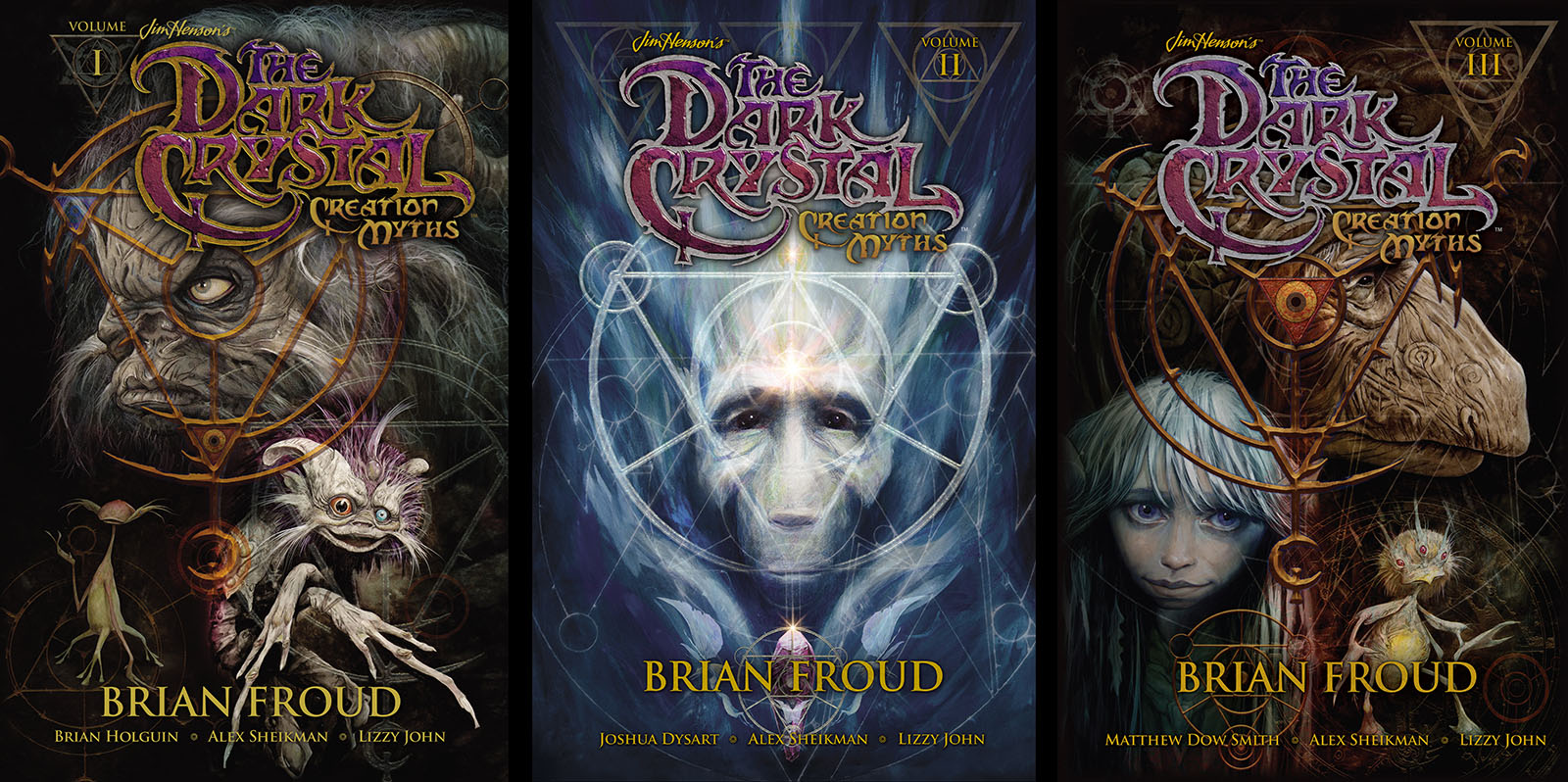
The Dark Crystal Creation Myths
Archaia, 2015-2016
Written by Brian Holguin, Art by Alex Shiekman and Lizzy John
3 volume prequel, based on concepts by Brian Froud
Read them here
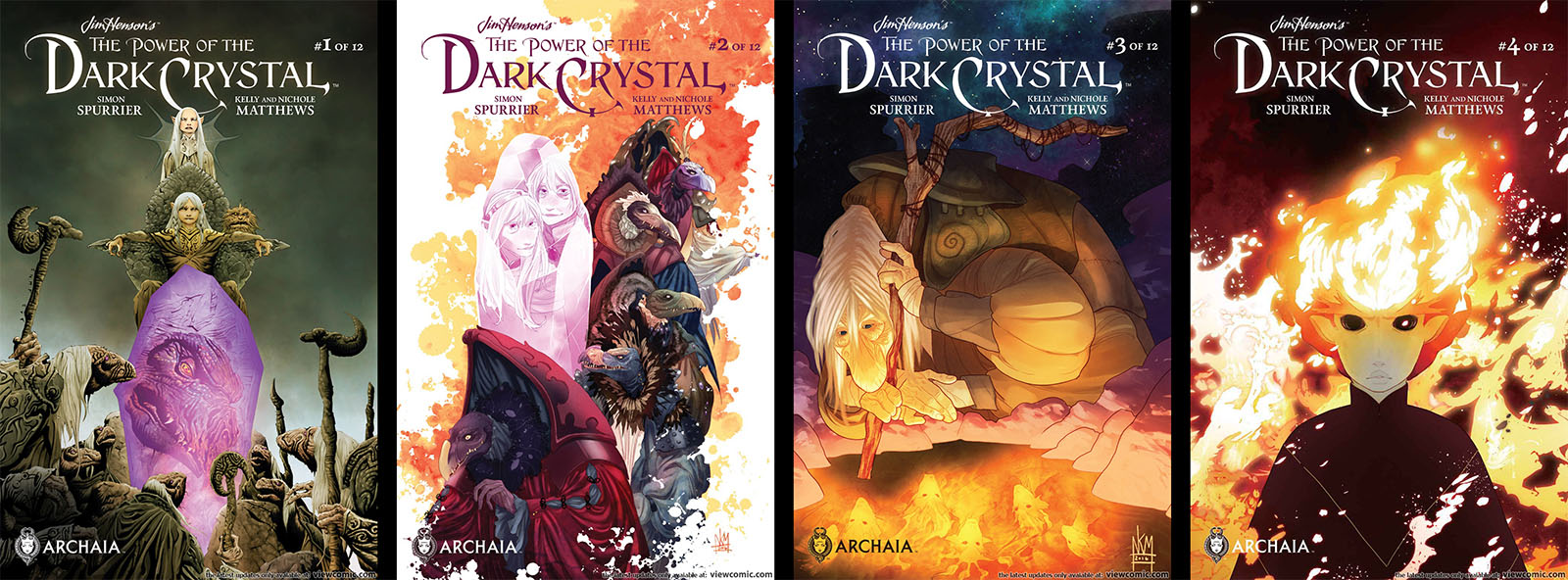
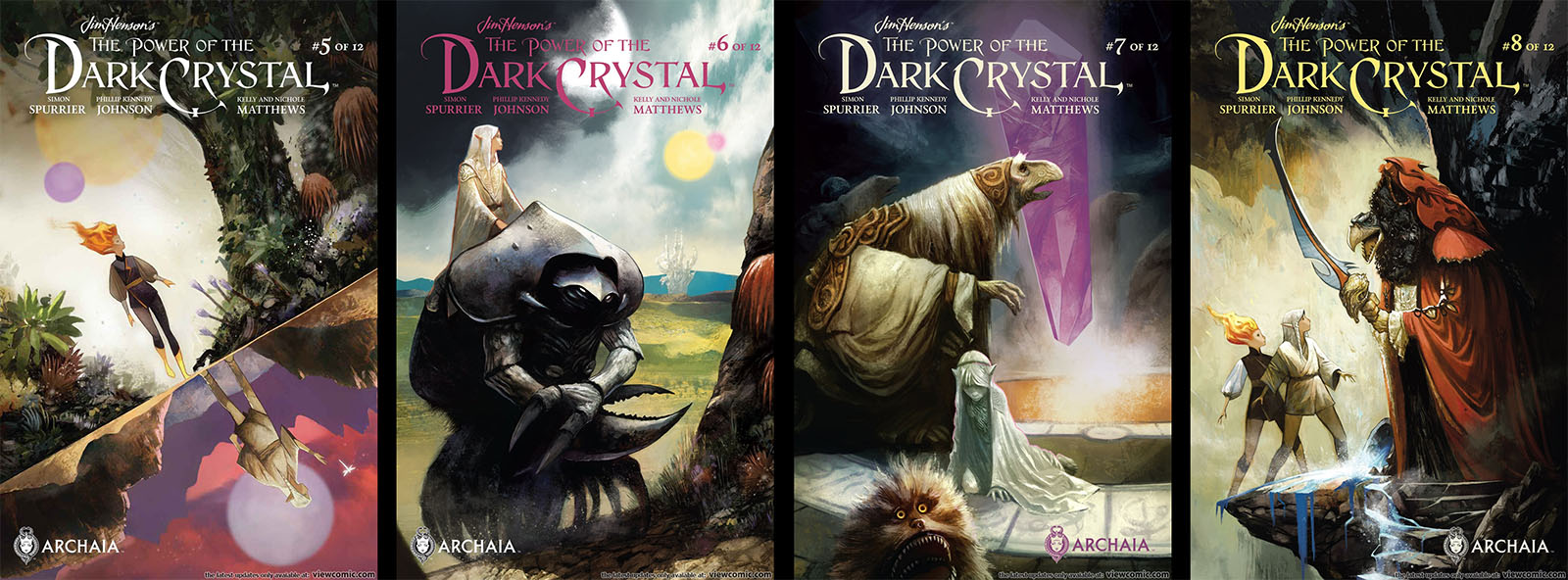
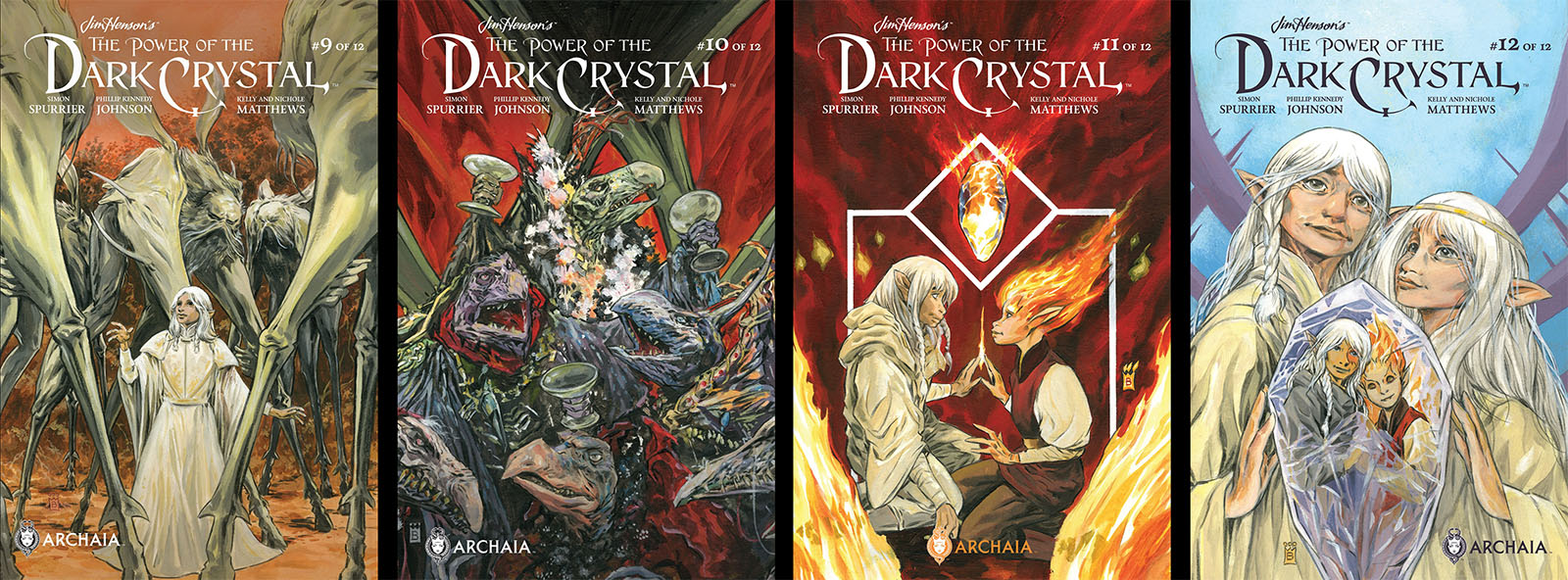
The Power of The Dark Crystal
Archaia, 2017-2018
Written by Simon Spurrier, Art by Kelly & Nichole Matthews
12 issues, based on screenplays for a film sequel
Read them here

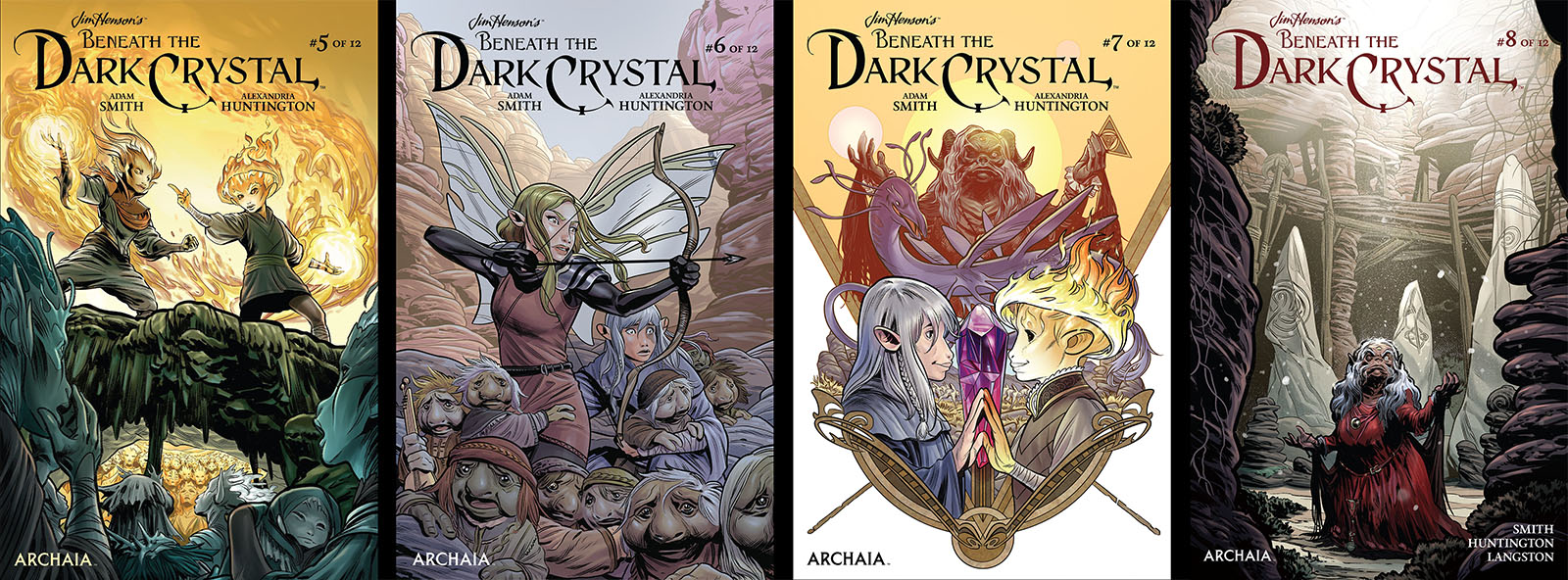
Beneath The Dark Crystal
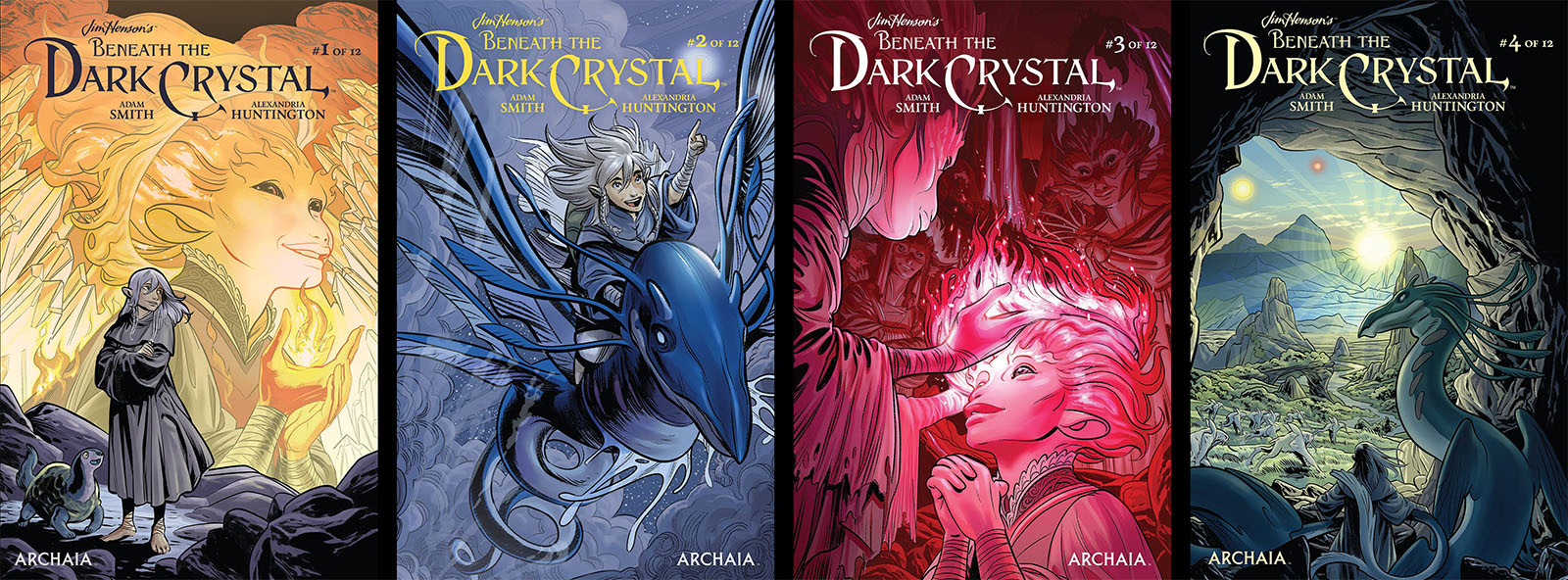
Archaia, 2018-2019
Written by Adam Smith, Art by Alexandria Huntington
12 issues, continued from The Power of The Dark Crystal
Read them here

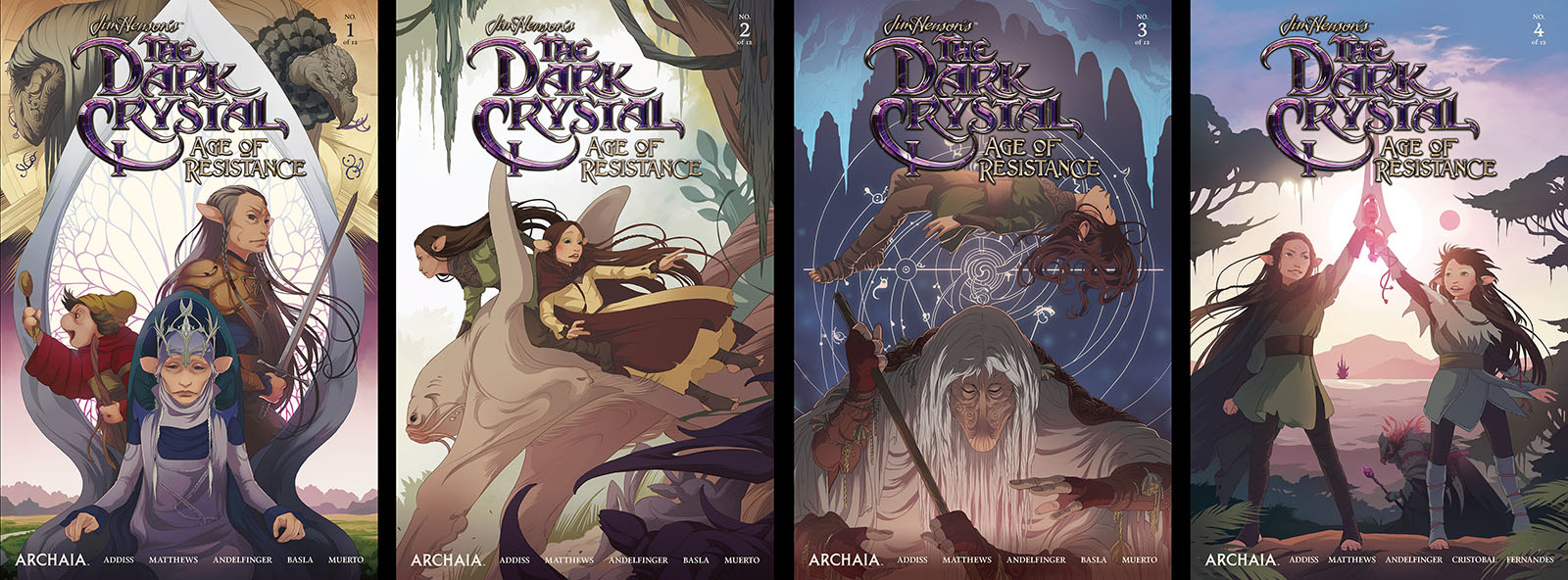
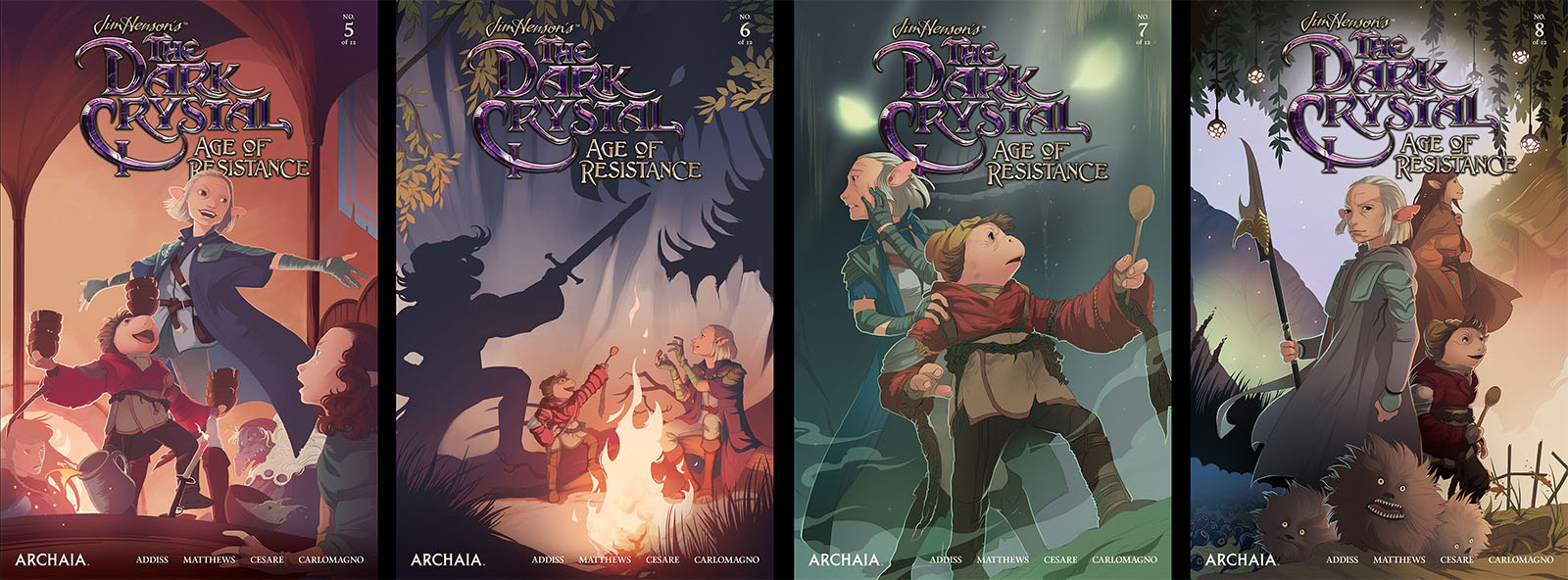
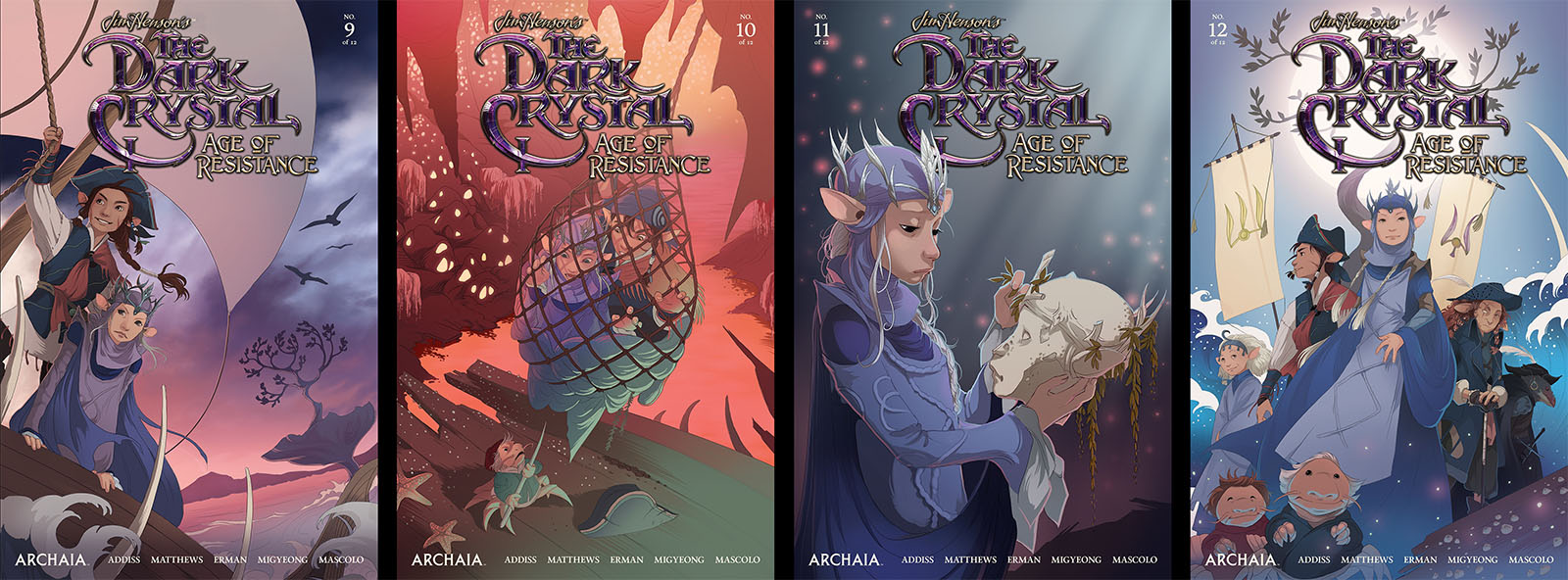
Age of Resistance
Archaia, 2019-2020
three 4-issue arcs, each by different writers and artists
12 issues, prequel to the Netflix series
Read them here
Honorable Mention
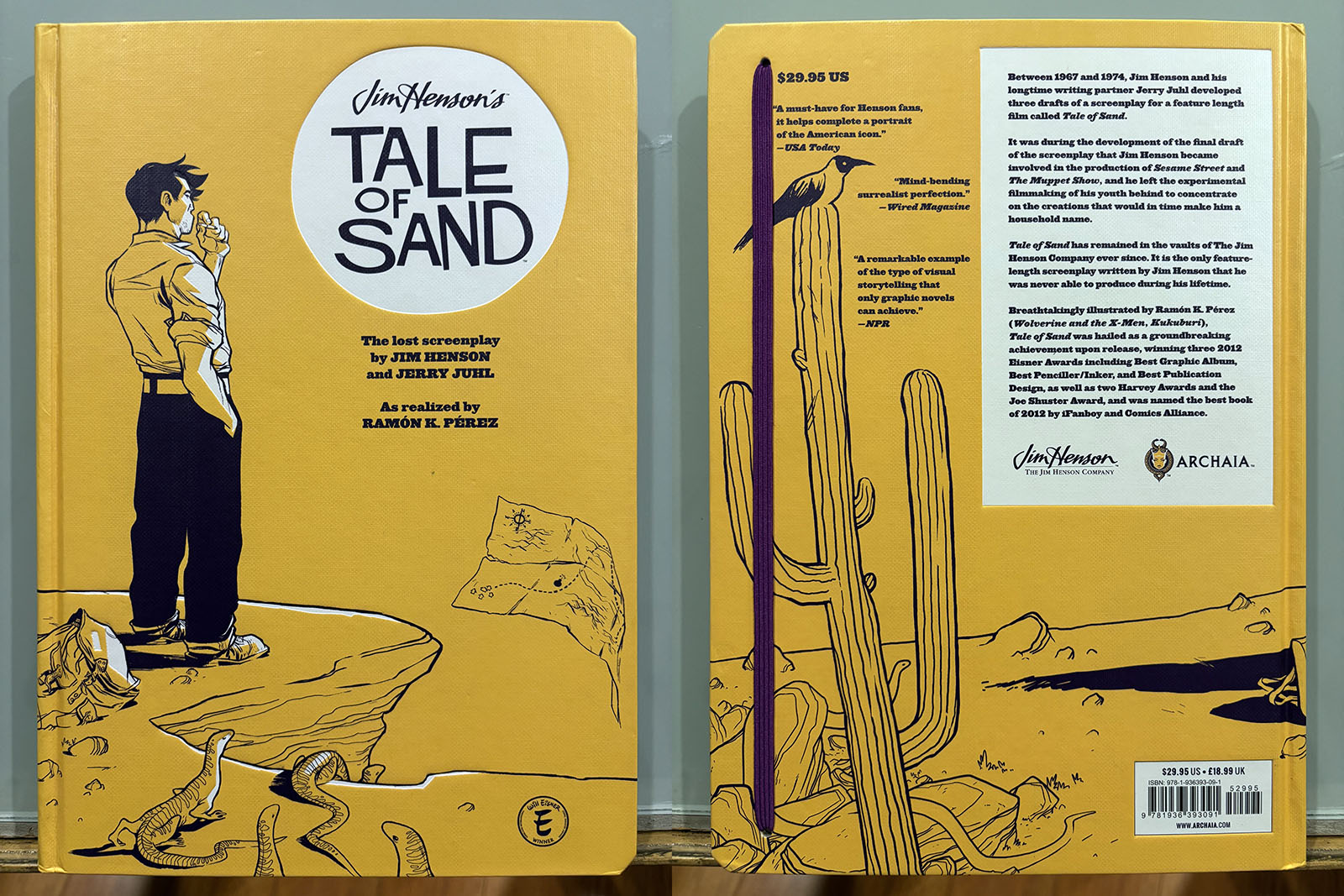
Jim Henson’s Tale of Sand
The lost screenplay by Jim Henson and Jerry Juhl
As realized by Ramon K. Perez
Written in the late 60s, Tale of Sand was a fully-realized screenplay for a surreal live-action film that was set aside when Henson got involved with more puppet-based projects. It sat in the archives until 2012, when Archaia published this amazing graphic novel adaptation. The art is crisp and expansive and the minimal text makes for a visual feast that the script could only imagine. This turned out to be an ideal method to carry the Henson charm to the printed page.