
Comics go to the movies: ALIEN The Illustrated Story, 1979
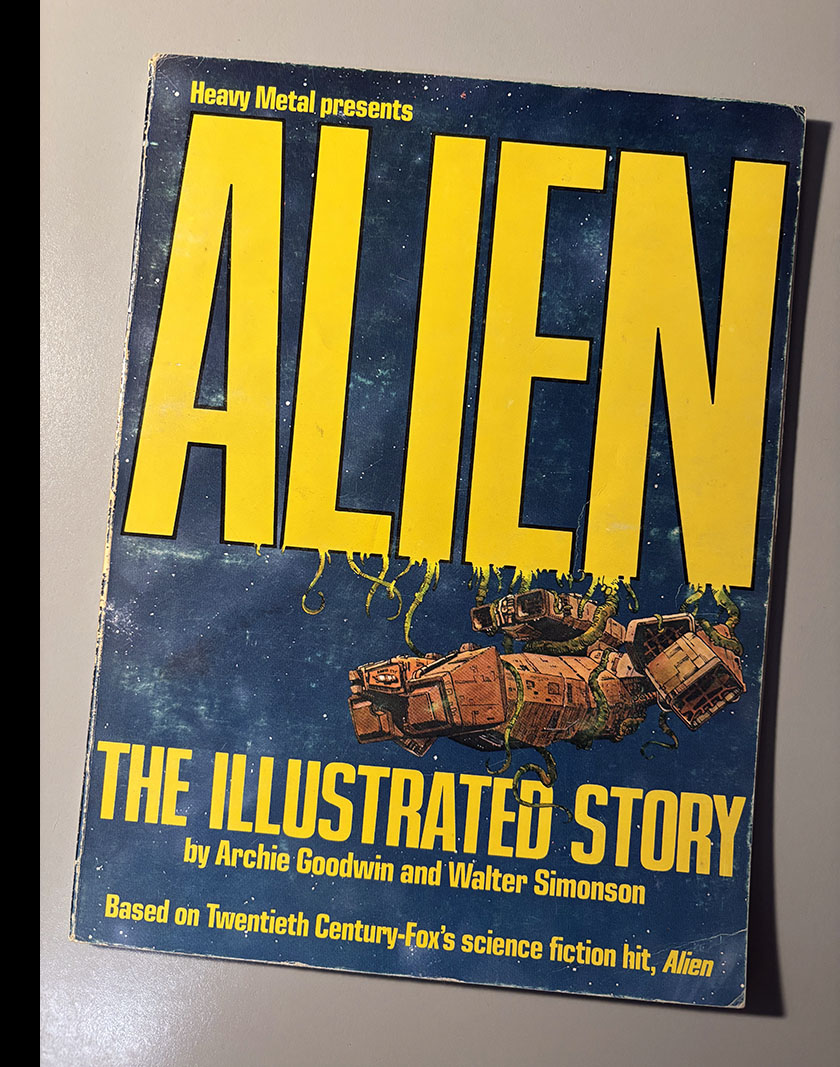
When I started writing this series, I already knew what I’d say about Alien: Perfect. No notes.
But obviously I can’t leave it there. This one is a masterpiece that accomplishes the single best thing an adaptation can: it does justice to its source material while also standing on its own two feet. There are some things comics do better than any other medium, and this comic does them all. It taught me more about the craft than any other single comic book.
When you find something as masterful as this, you want to know how it came to be, what makes its foundation so strong, and if the formula for its success can be repeated. Let’s take those three points one at a time…
How did it come to be?
Based on the testimony of artist Walter Simonson, it was a combination of decisions and luck. And for a long time, I didn’t realize just how lucky we were.
It started with a publicist at 20th Century-Fox named Charles Lippincott, who had risen to fame for his work promoting Star Wars. It was Lippincott who went to Marvel Comics and engineered the deal (despite some ambivalence from Stan Lee) to have Star Wars debut as a comic book a couple months before the movie premiered in May 1977. Those comics went on to become perhaps the most reprinted in Marvel’s history.
When Alien was in production (fall 1978), Charles pursued the same strategy. But this time he went to Heavy Metal Commmunications instead of Marvel, which was the first in a series of best-possible decisions. The publisher’s flagship was its monthly anthology magazine Heavy Metal, which contained some of the best comic art from all over the world. To properly showcase that level of talent, its production values were higher than Marvel’s at the time.
The deal was actually for two books: a comic adaptation and a making-of book called The Book of Alien. Editor John Workman was asked to manage the comic, and when he looked around for artist candidates he landed on a science-fiction strip penciled by Carmine Infantino and inked by Walter Simonson (for a Warren magazine). John called up Infantino to offer him the job, but the phone was busy. So he called Walt to offer him the inking spot and Walt asked exactly the right question: “How about I do the whole thing?”
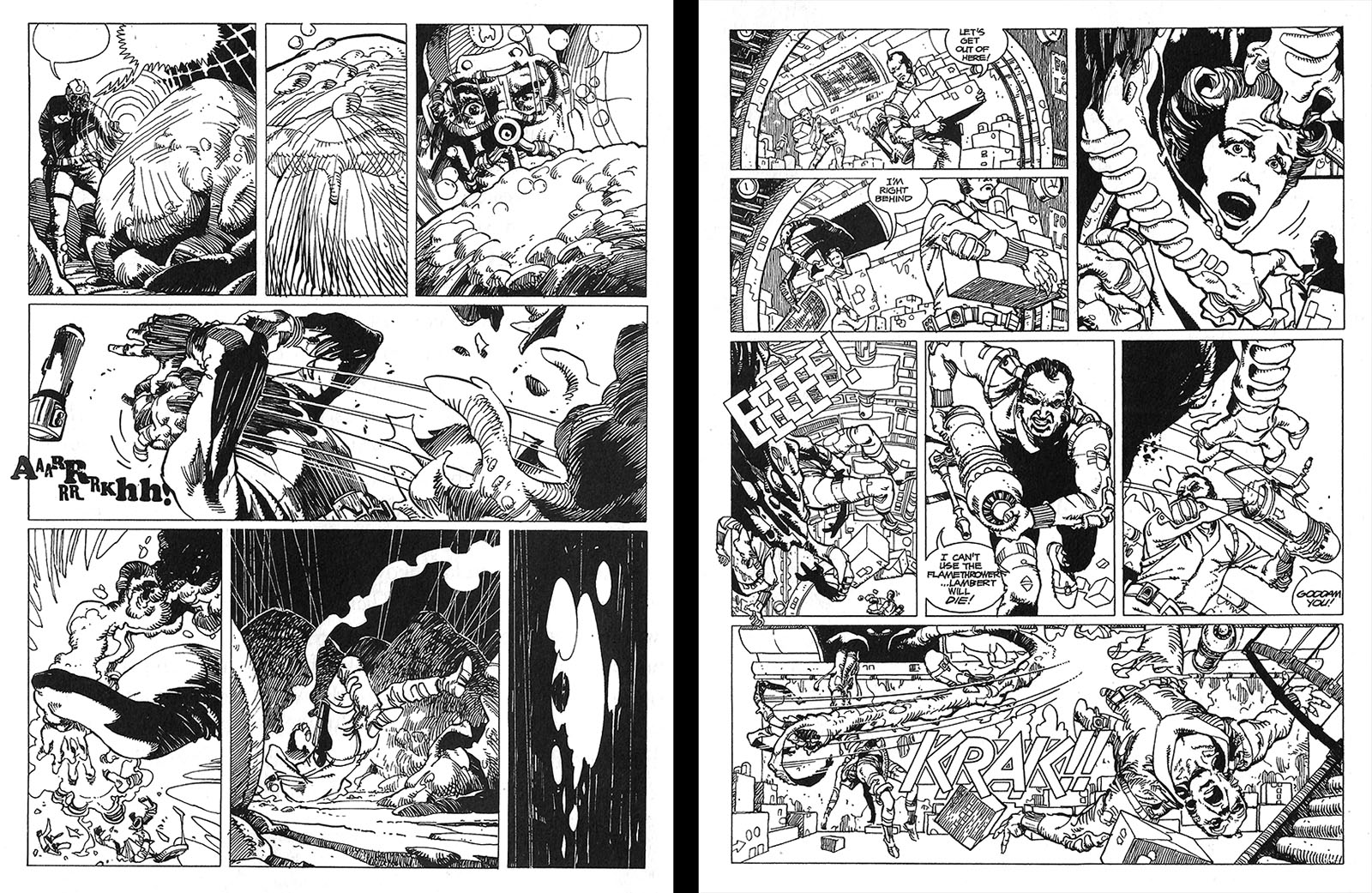
Walt’s tryout pages, drawn without movie reference
Talk about dodging a bullet! earlier in 1978 we saw the first Star Wars comics drawn by Carmine, and they were godawful. (Read more of my greivances here.) If Carmine’s phone hadn’t been busy at that precise moment, I’m 100% certain I would be writing the exact opposite about ALIEN The Illustrated Story.
Instead, John Workman made another best-possible decision by hiring Walt. Then Walt did the same by bringing Archie Goodwin on board as the writer. And here’s where we step into the second of our three points.
What makes its foundation so strong?
Walt and Archie had first worked together years earlier on Manhunter for DC and found that they were precisely in sync. Walt later described it as the best experience of his early career. In fact, it’s generally agreed by everyone who knew him that Archie Goodwin was the single best writer/editor in comics for the entire length of his tenure. He was definitely my favorite Star Wars writer, giving me a reason to keep buying the comic book every month despite the terrible Infantino artwork.
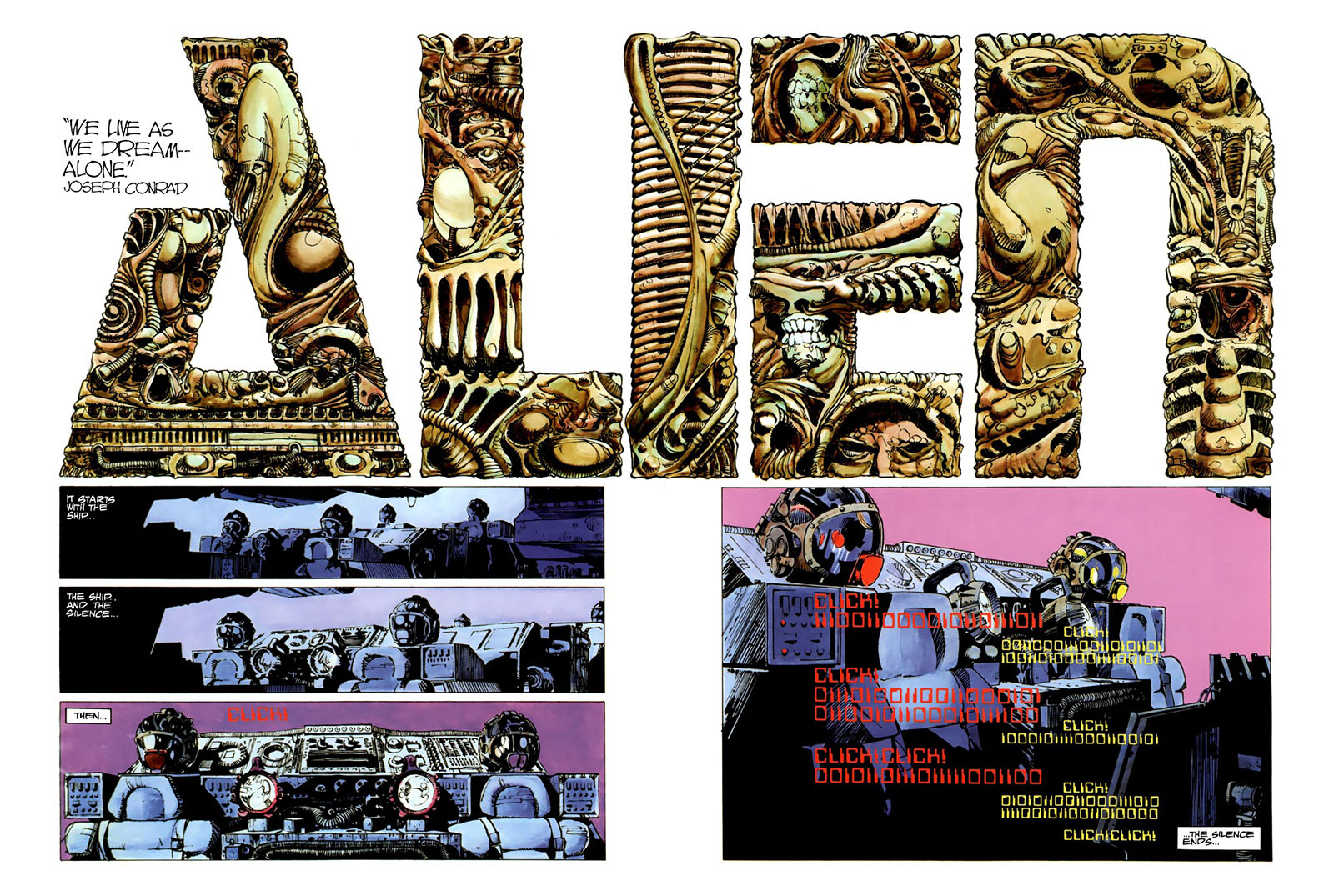
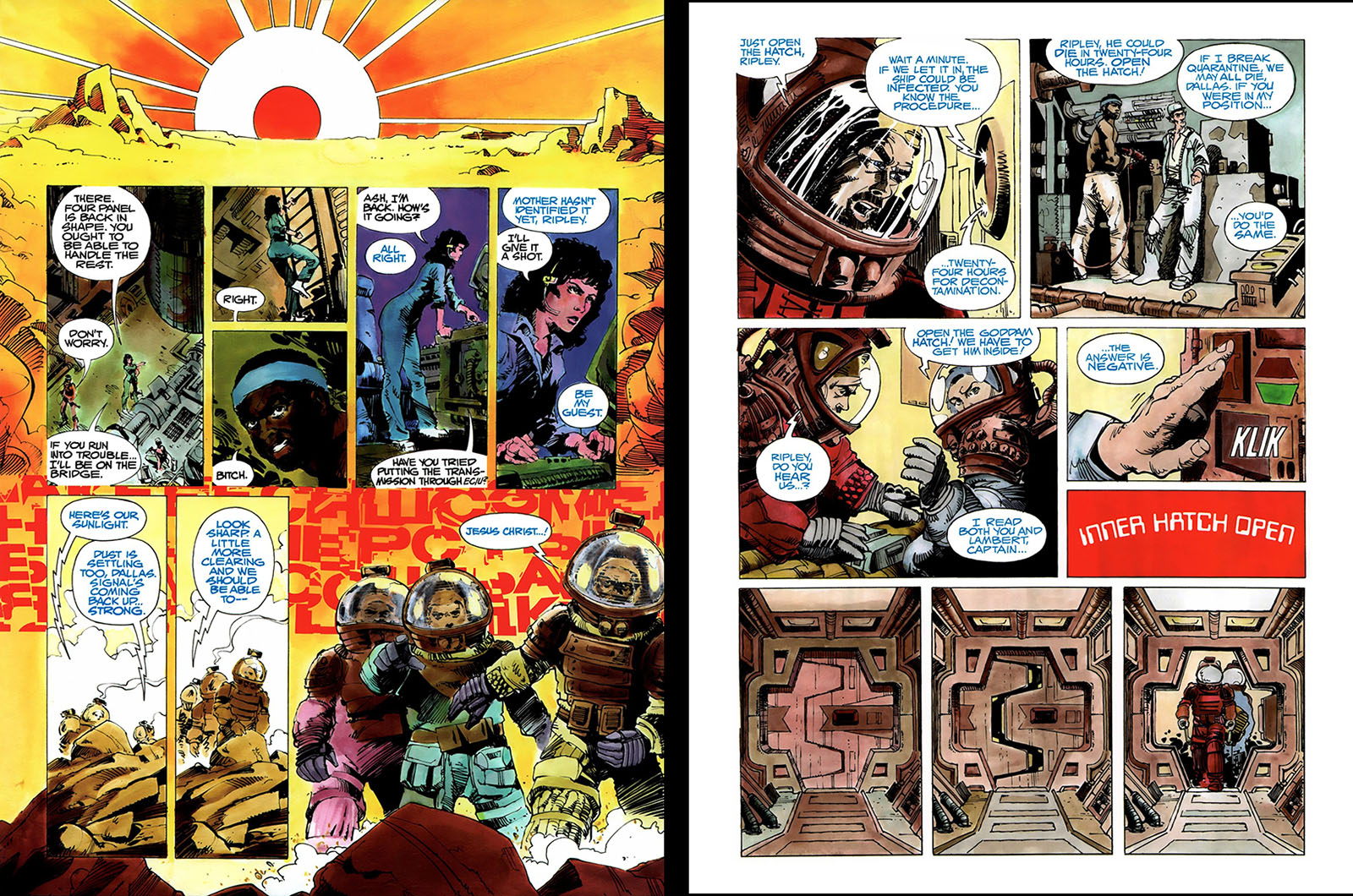
As for Walt himself, I don’t remember seeing his work before Alien, but one look was all I needed to rank him one of my top three favorite US comic artists (along with Al Williamson and Michael Golden). What set him apart from all others was his design sensibility, a unique blend of illustration, typography, and graphic design that energized his art in a truly original way. He knew exactly how to stretch perspective for maximum impact. He designed sound effects with the same craftsmanship as logos. He was an expert at both figure drawing and backgrounds, and was especially good at enlivening machinery with texture where most other artists would minimize it.
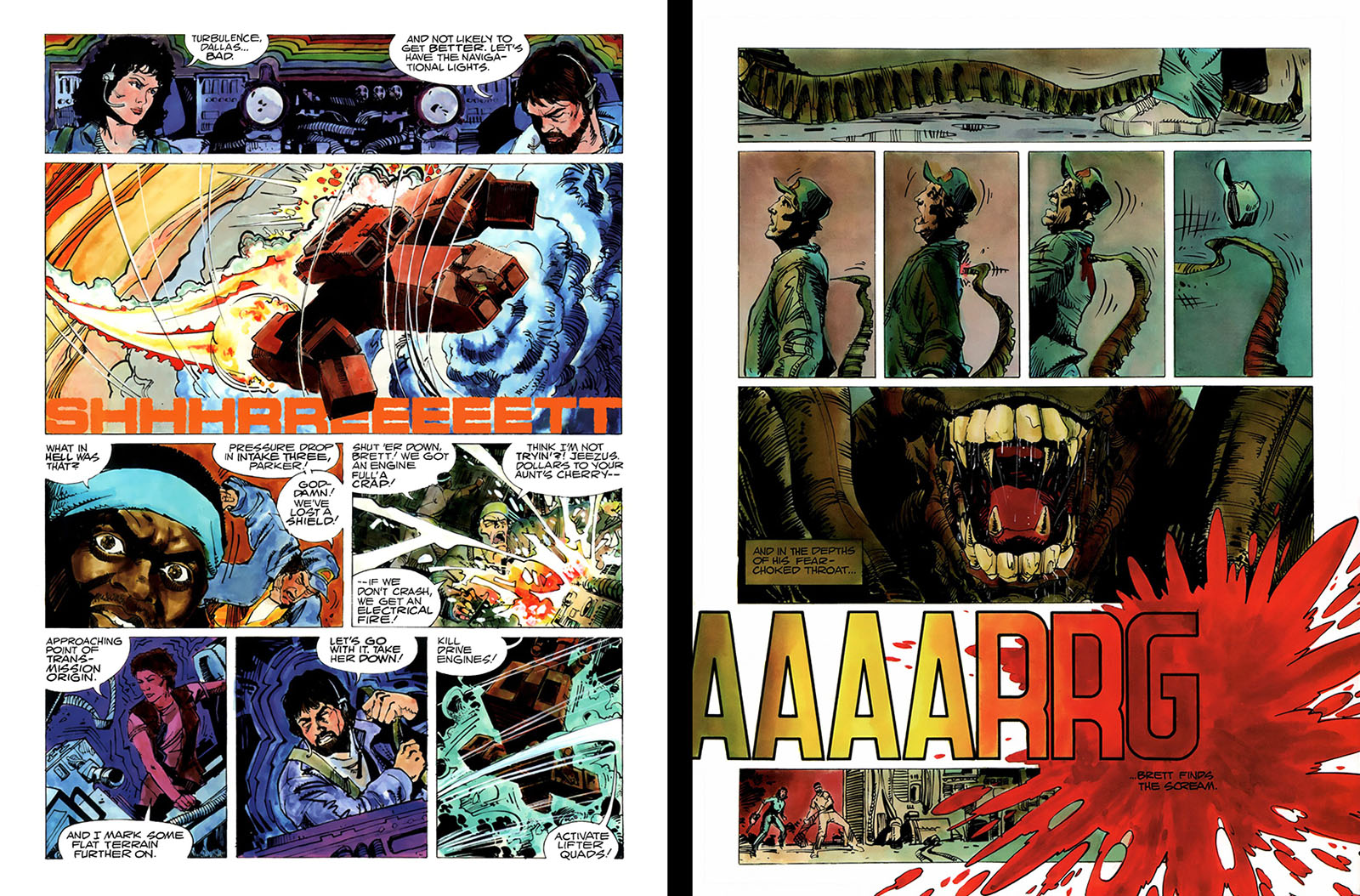
On Alien in particular, Walt keyed in on the techno-organic flavor of the film with a high-tension combo of very precise penciling and loose, energetic inking. On top of all that, no two pages in this 61-page adaptation share the same layout. You could build a masterclass in comic book storytelling with Alien as the syllabus, each page offering its own lessons on composition and continuity. If you know something about the craft, reading this is like listening to a great symphony by a true genius in perfect control of his form.
As a fledgling graphic/comic artist myself, the element that most caught my eye was something unexpected: the word balloons. They were unlike any other style I’d seen, and they trained me to think differently about the “canvas” of a comic book page.
I brought up that term in my essay on The Abyss: the “canvas” is what I call the area outside the panels. It’s the “background field” that all the pictures sit on top of. Innovative artists would occasionally use it as a composition tool, either breaking outside a panel into the canvas or leaving out a panel border entirely so that the canvas would become a de facto panel.
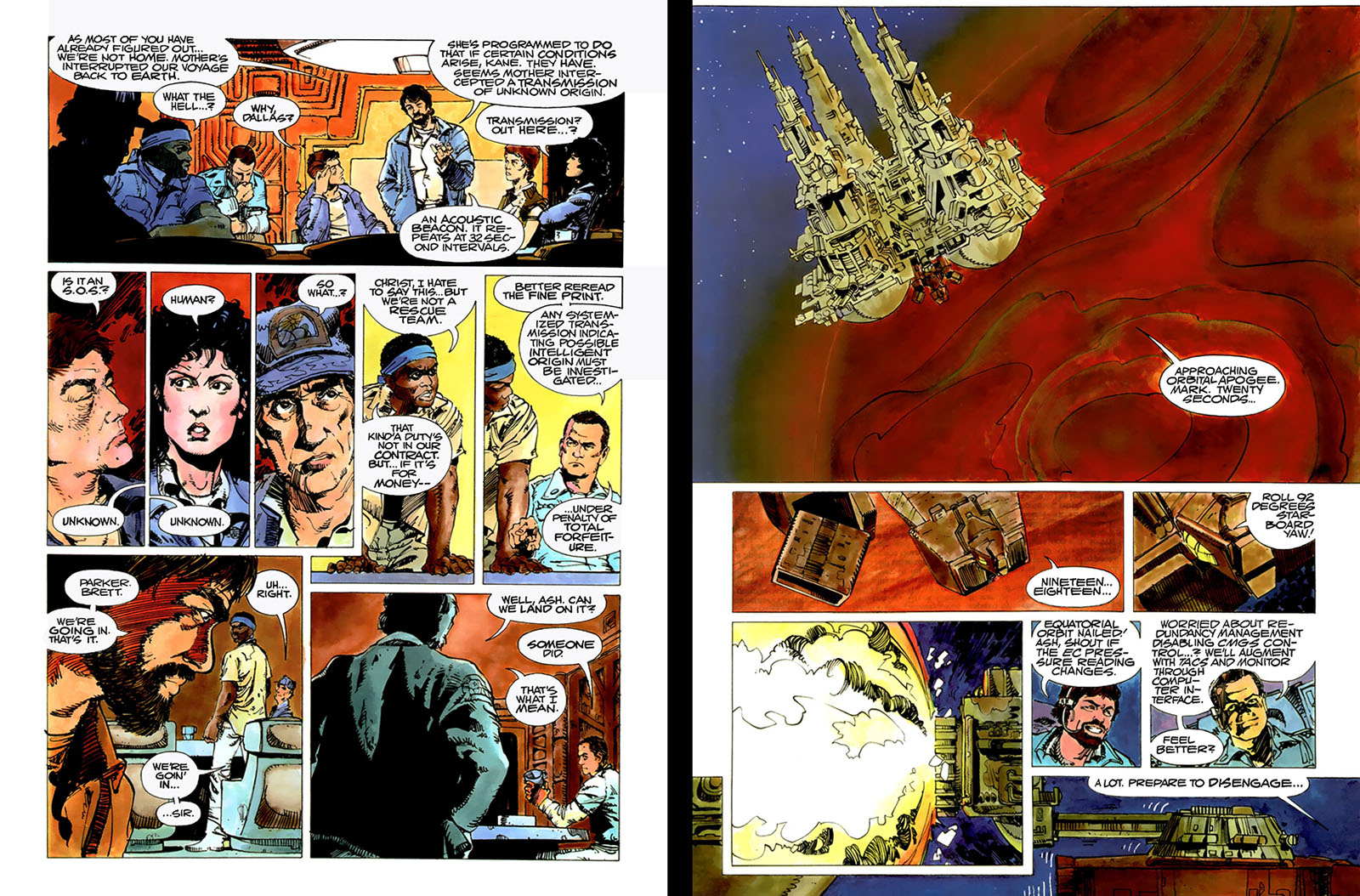
What Walt did, though, was truly different: he turned word balloons into part of the canvas. It’s a subtle move, but it changed my thinking completely. Rather than encasing a word balloon inside a panel, he would use it to break the panel border open and position the lettering where that border would have been, essentially using it to complete the panel shape. That simple shift redefined the word balloons as a “canvas” element rather than a “panel” element. It gave the canvas a greater purpose and made word balloons into a design feature rather than a simple container of dialogue.
Tremendous credit must also go to John Workman, who not only served as the editor but also as the letterer. John instinctively understood Walt’s graphic sensibilities, and his handwriting style was such a perfect match to Walt’s drawing style that the two continued to collaborate for years to come.
Walt also chose the colorists for Alien after painting a few pages himself and realizing he wouldn’t make the deadline without help. So he enlisted three colorists: Louise Jones, Deborah Pedlar, and Polly Law. Unfortunately, their work went uncredited, but that didn’t stop them from producing some of the best-looking painted color seen up until then on an American comic.
To answer the question we started with, the foundation of Alien was so strong precisely because Walt Simonson had intimate knowledge about the advantages of his medium and made the best possible decisions from start to finish.
Can its success be repeated?
Since Alien‘s success was a direct result of its foundation, more needs to be said about that. Specifically, what the publisher brought to the table.
Producing Heavy Metal in magazine format, larger than a standard comic book, gave each page more real estate for Walt to draw in. Simply put, a magazine page could accommodate more panels and make the big splash pages even splashier.
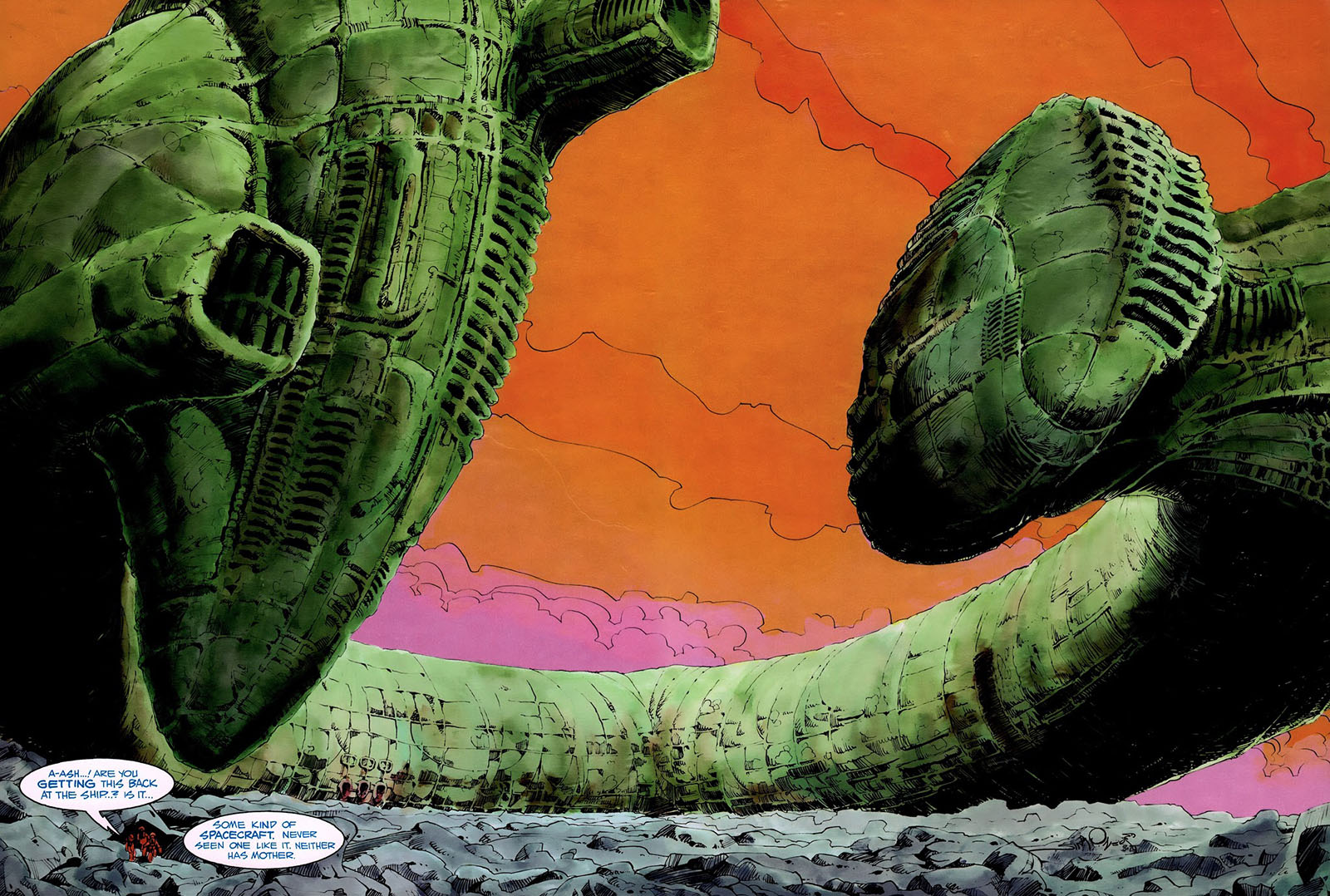
The higher production value came from the economic advantages of magazines vs. comic books. Not just better paper, painted color, printing quality, and wider distribution, but the mechanics of the printing itself. This is exemplified in the term “full bleed.” That’s what you call it when the art and color go all the way to the edge of the page, a technique that was too costly for standard comic books in the 70s. Why? Because if the art bleeds off the page, it has to be printed on larger paper so the edges can be trimmed off. Since comics were printed like newspapers (on large “web presses,”) the art had to stay inside a comfortable margin that went all the way around the page. Breaking outside that margin required more specialized printing, which naturally added extra cost.
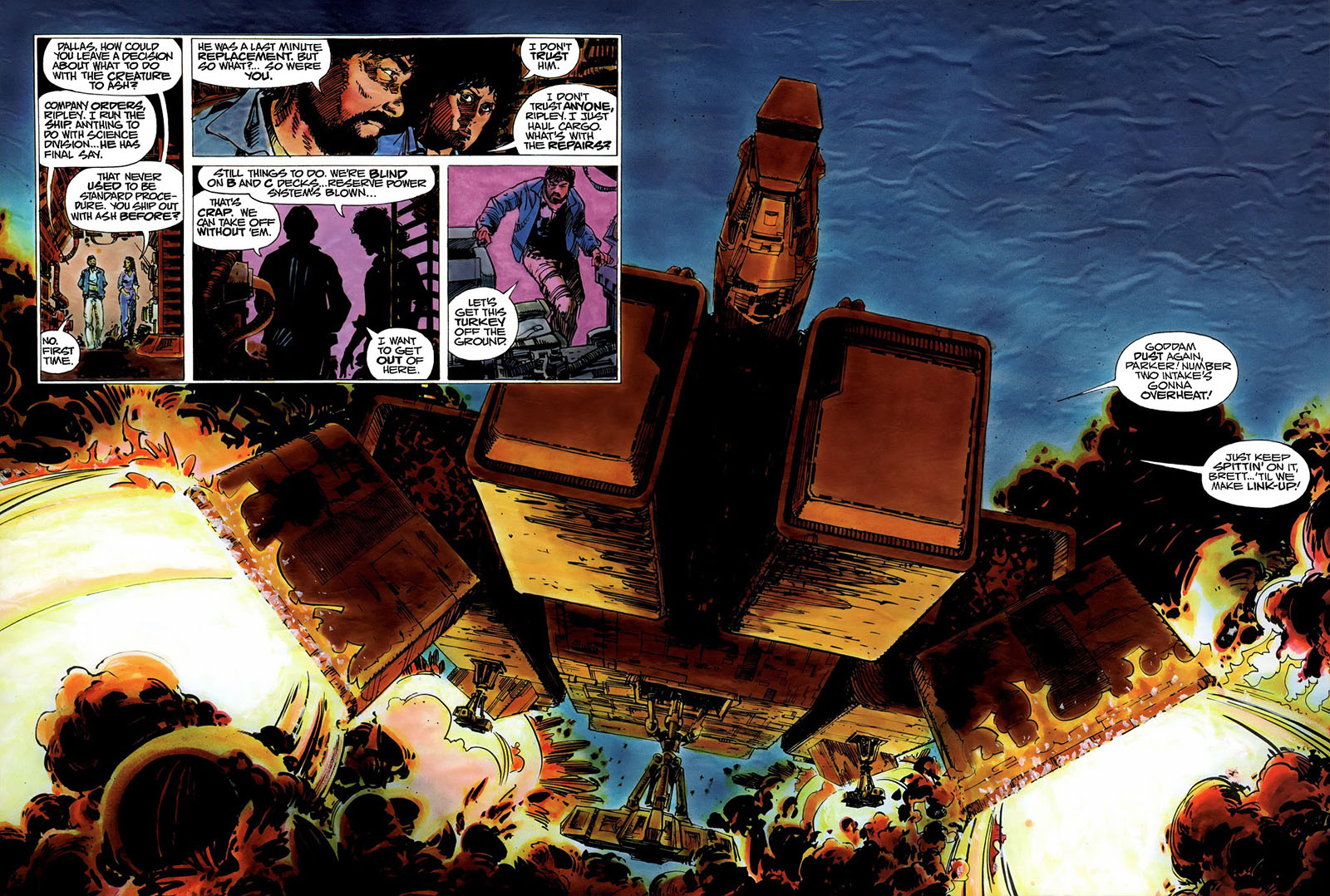
Heavy Metal wasn’t subject to those restrictions, and so neither was the Alien comic. Walt could go full bleed to his heart’s content and he wisely did so for all the biggest moments in the story.
The simplest way to describe Alien‘s success is “perfect casting.” Exactly the right people made exactly the right choices to make it exceptional in every way. And the marketplace rewarded their choices by making this the first graphic novel ever to hit the New York Times bestseller list. It topped out at number 7 in trade paperbacks just as Alan Dean Foster’s novelization hit number 9 in mass market paperbacks.
So, returning to the point: can this success be repeated? Probably not.
Perfect casting isn’t impossible; modern comics are filled with examples of this. Getting comics on the NYT list isn’t impossible; it’s happened more than once since 1979. Matching Heavy Metal‘s production values isn’t impossible; it’s now the standard for monthly comics.
The problem is more basic than any of that. As I’ve observed (with regret) since I started writing these essays, we no longer have a media environment that values movie adaptations. Long gone are the days when a Charles Lippincott made comic books part of a promotional campaign. The money that used to fund print media has now shifted to other things or dried up altogether.
Of course, the franchise sparked by Alien is still with us, and spinoff comics have been around since Dark Horse planted their flag in 1988. We’ve seen xenomorphs square off against Batman, Superman, Green Lantern, Judge Dredd, the Avengers, and more. But nobody’s done it better than Walt and Archie. And many have fallen far short (see a large sampling from cover to cover here).
The Illustrated Story was published in June 1979, shortly after the film premiered on May 25. The first VHS release came from Magnetic Video Corp. on March 11, 1980, which was earlier than usual for the time. Today, the jump from cinema to home viewing is measured in weeks instead of months, leaving little room for a comic adaptation to gain traction, let alone the kind of print media that used to have a year or more to sell through before home video devalued it.
Some days I mourn what we’ve lost. But every time I look through Alien, I’m infinitely grateful that (A) things like this were once possible and (B) Carmine Infantino didn’t answer his phone that day in 1978.
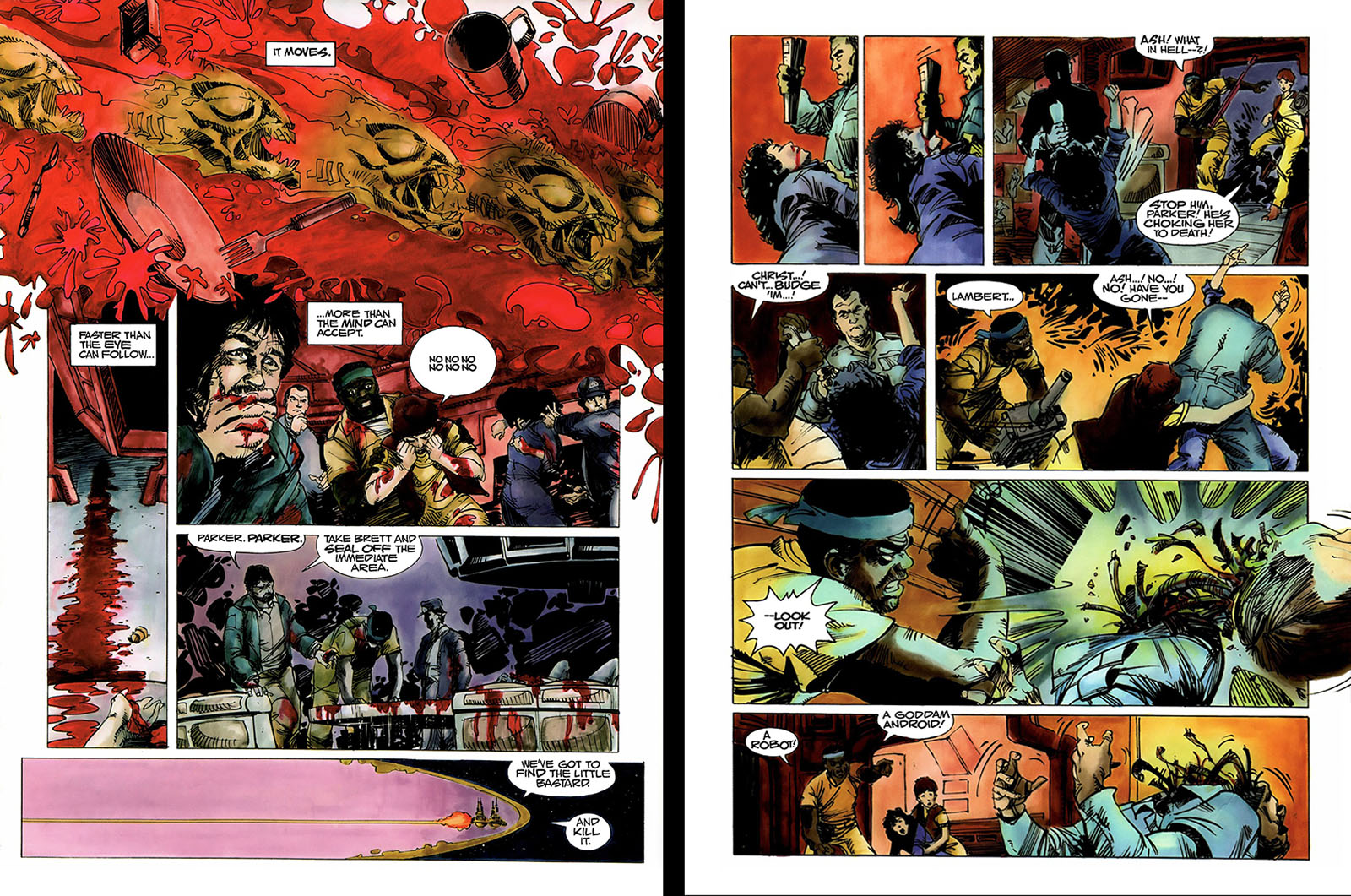
Read the book (2012 edition) from cover to cover here
Read the Wikipedia page on Alien here and The Illustrated Story here
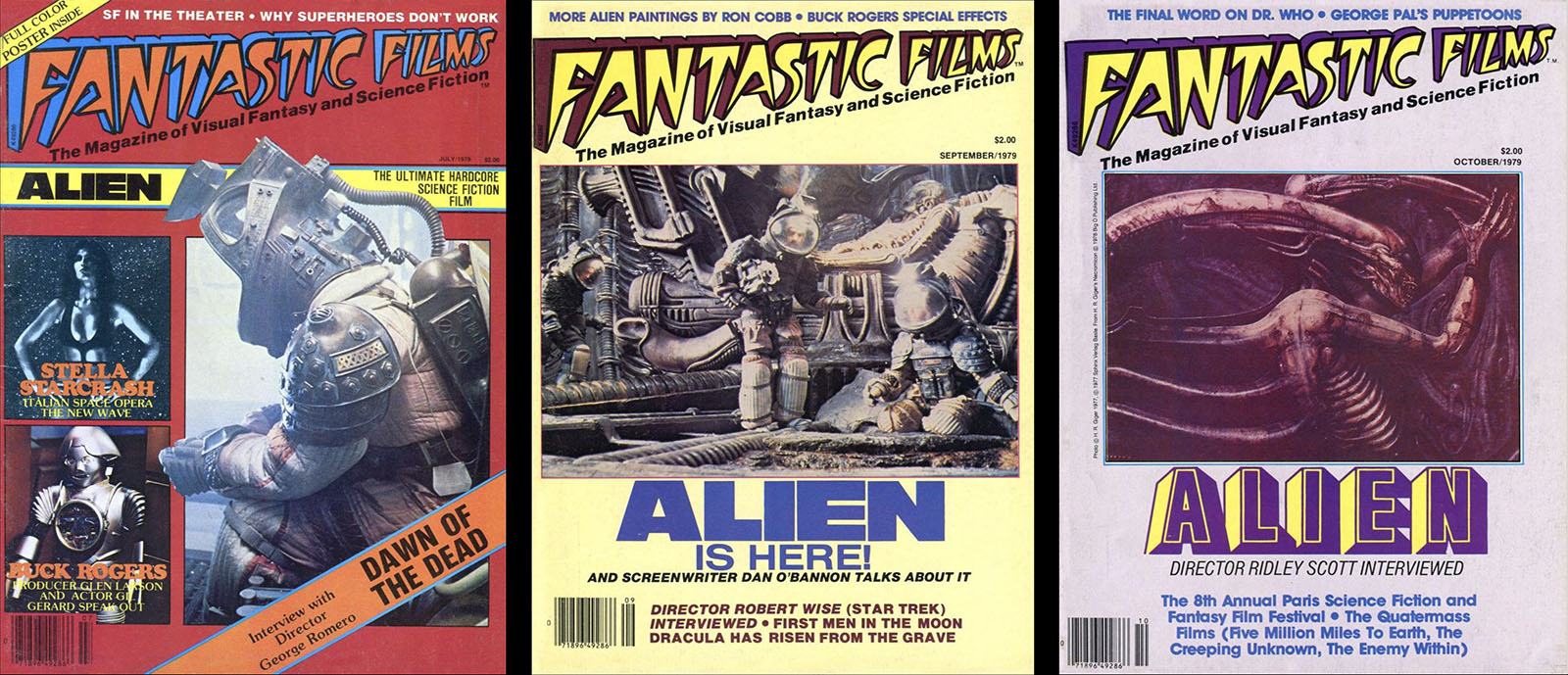
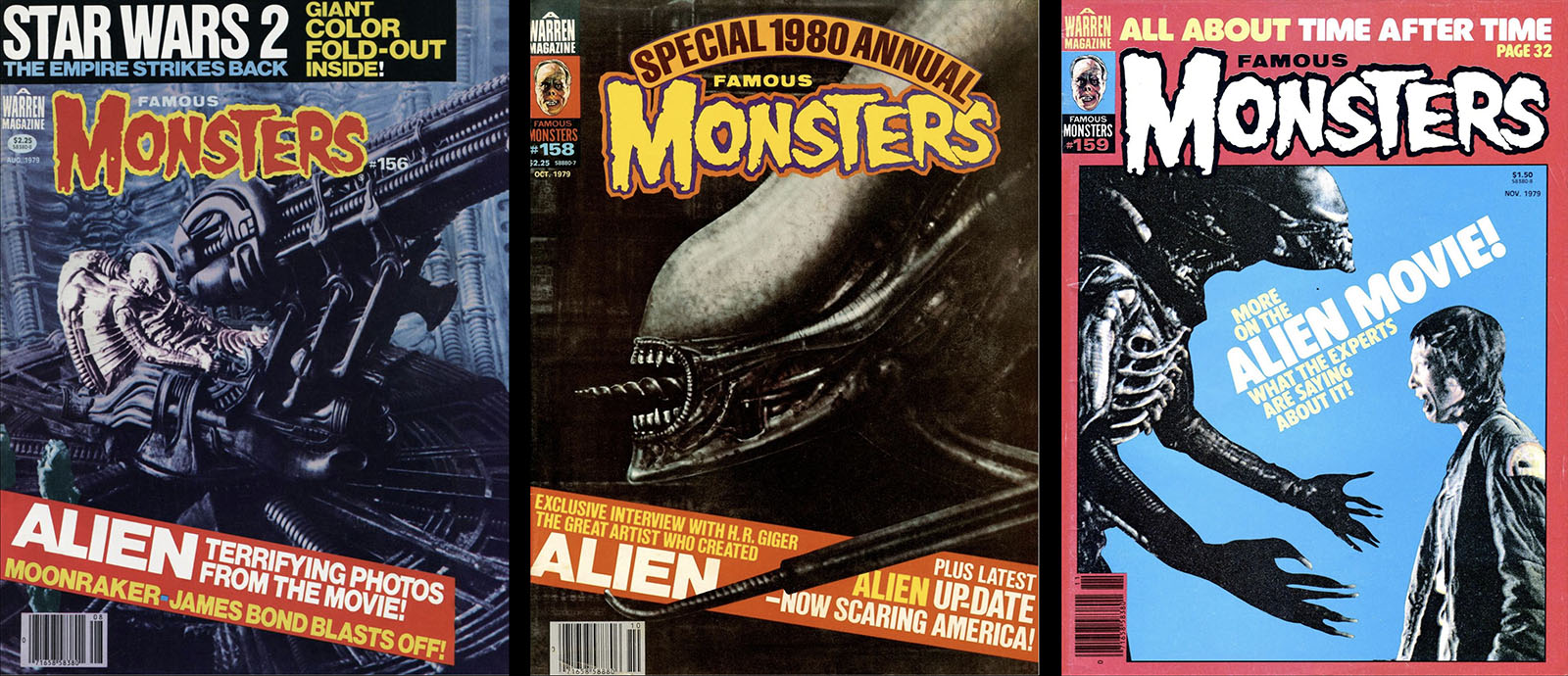
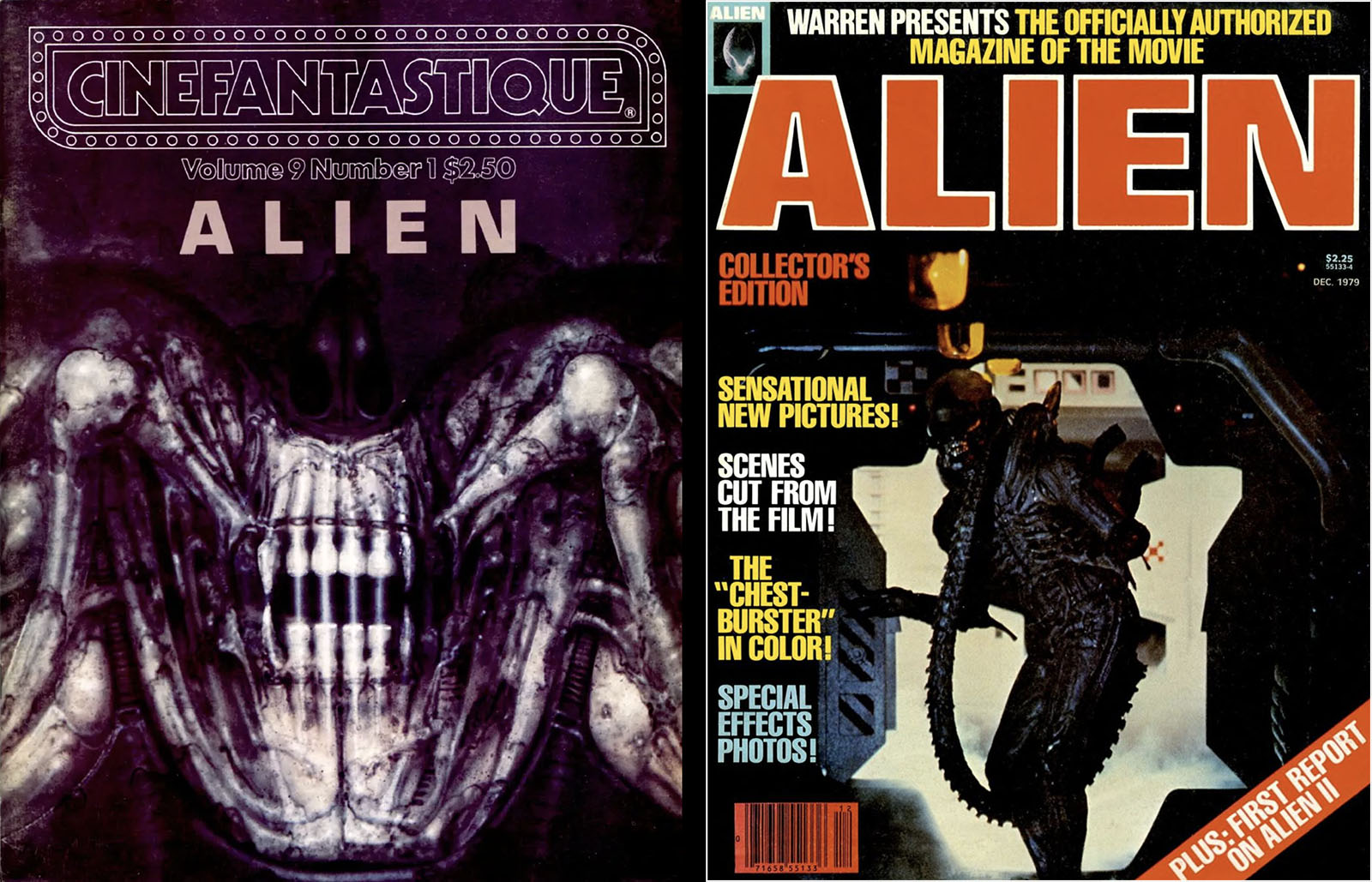
Other ALIEN publishing
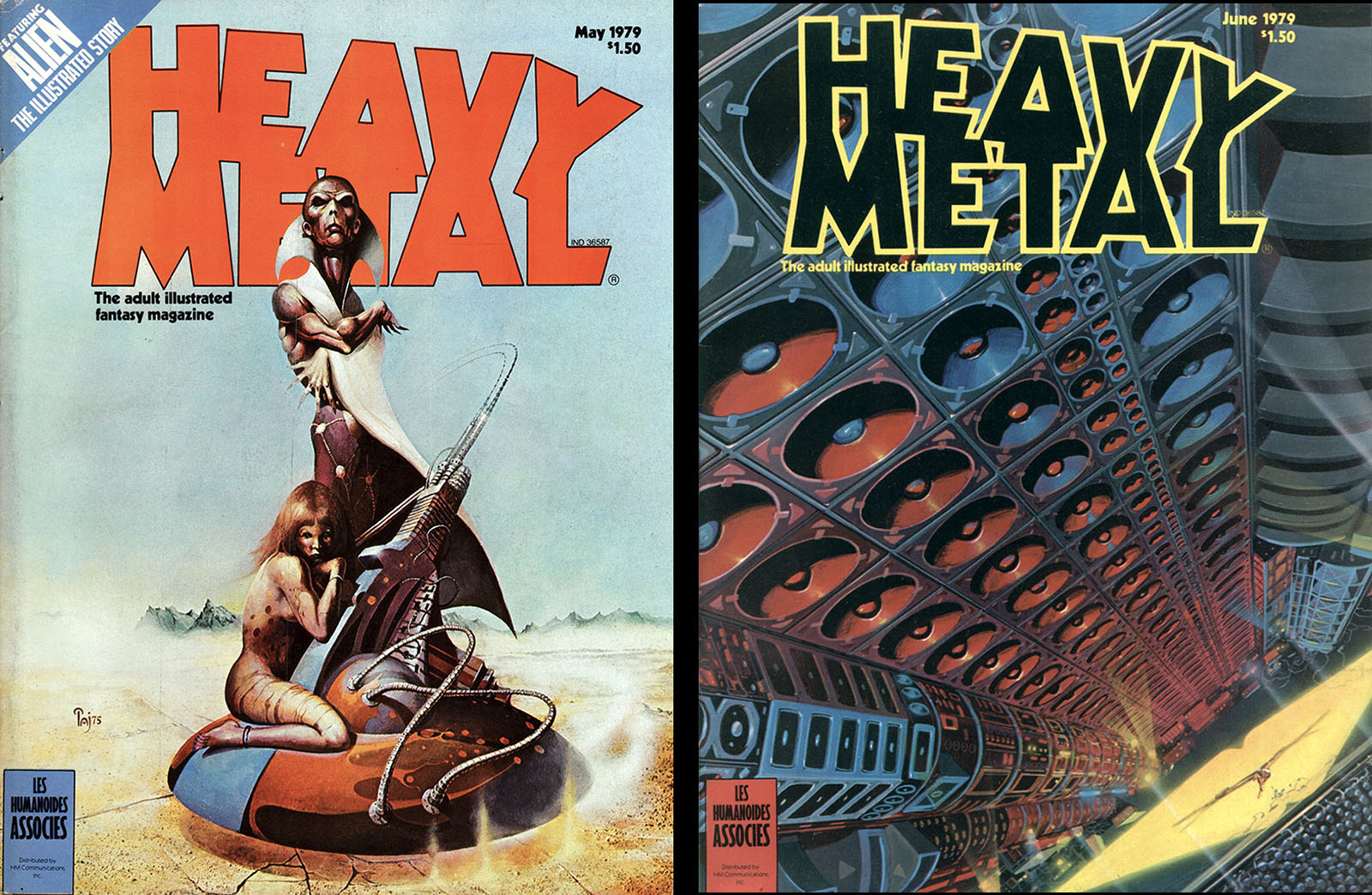
Heavy Metal Vol. 3 #2
June 1979
Contained the second 8 pages of the adaptation
See sample pages here
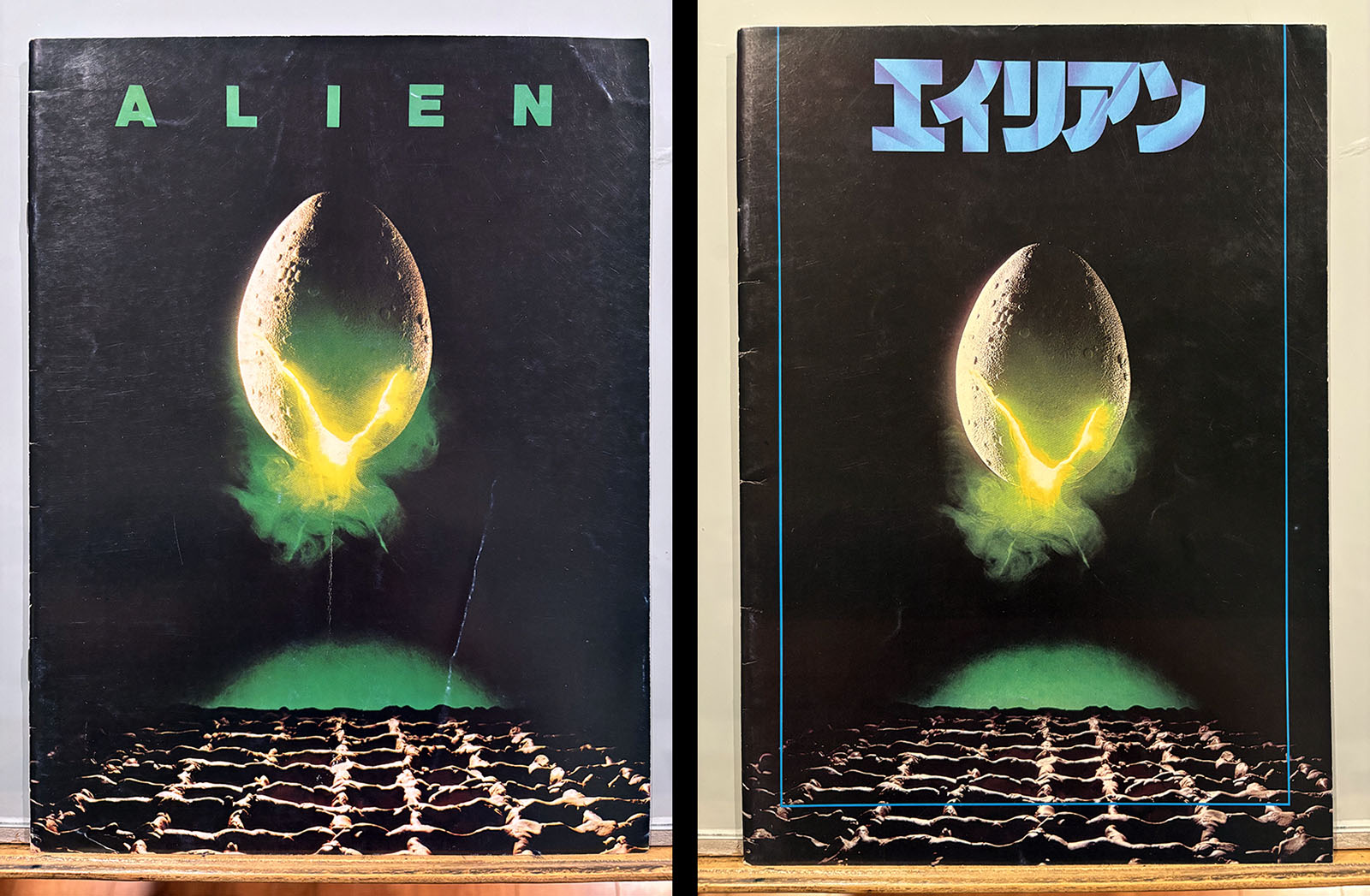
Movie program book (Japanese)
June 1979
See it from cover to cover here
Read a translated version here
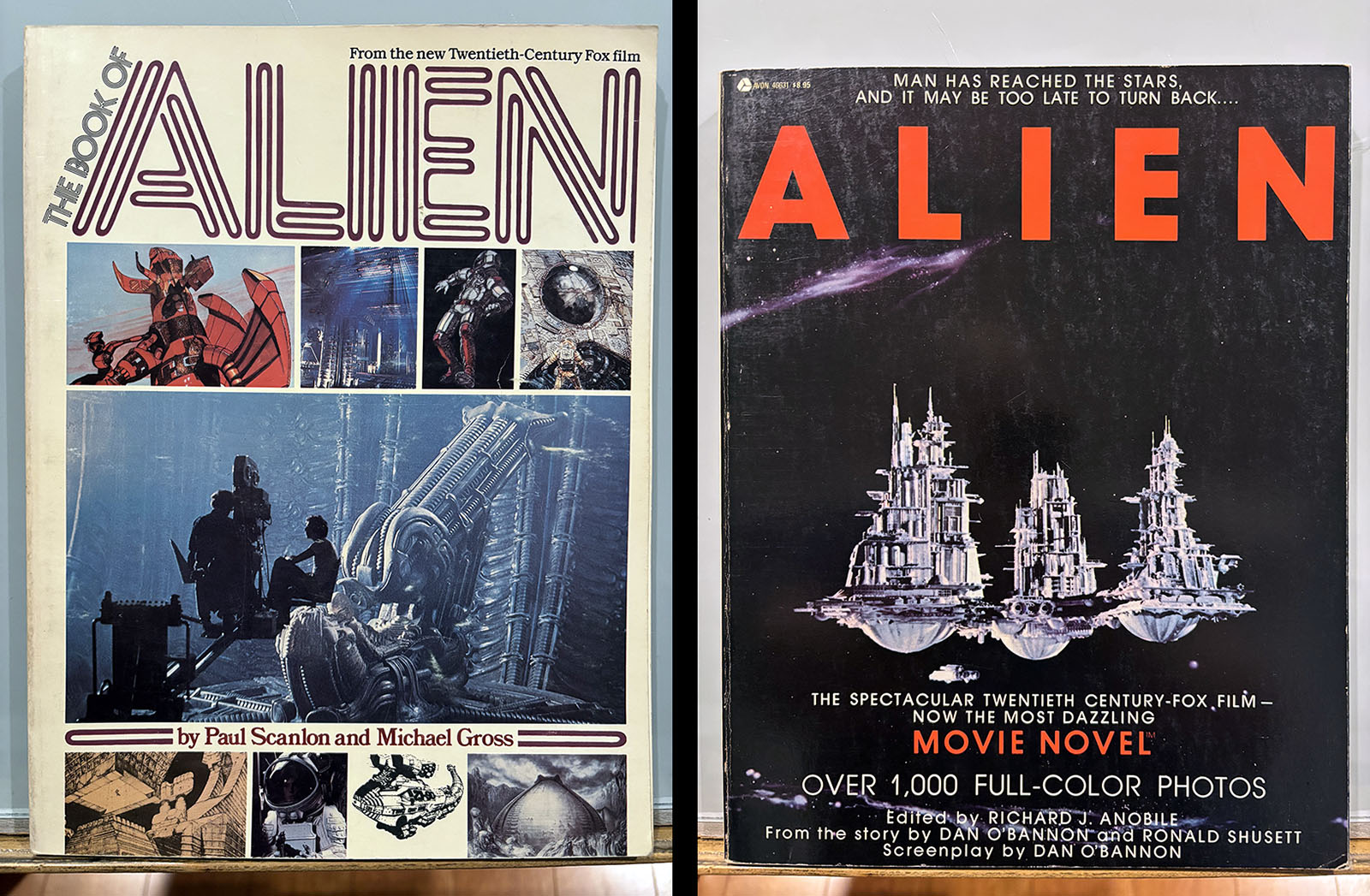
The Book of ALIEN
Heavy Metal Communications, 1979
The first making-of book on the movie with a massive collection of art and photos.
Read it from cover to cover here
ALIEN Movie Novel
Avon, 1979
The single best photographic reference for the film, a complete telling of the story with hundreds of stills taken directly from a print of the movie. It’s like having an “infinite pause” function on your Blu-ray player.
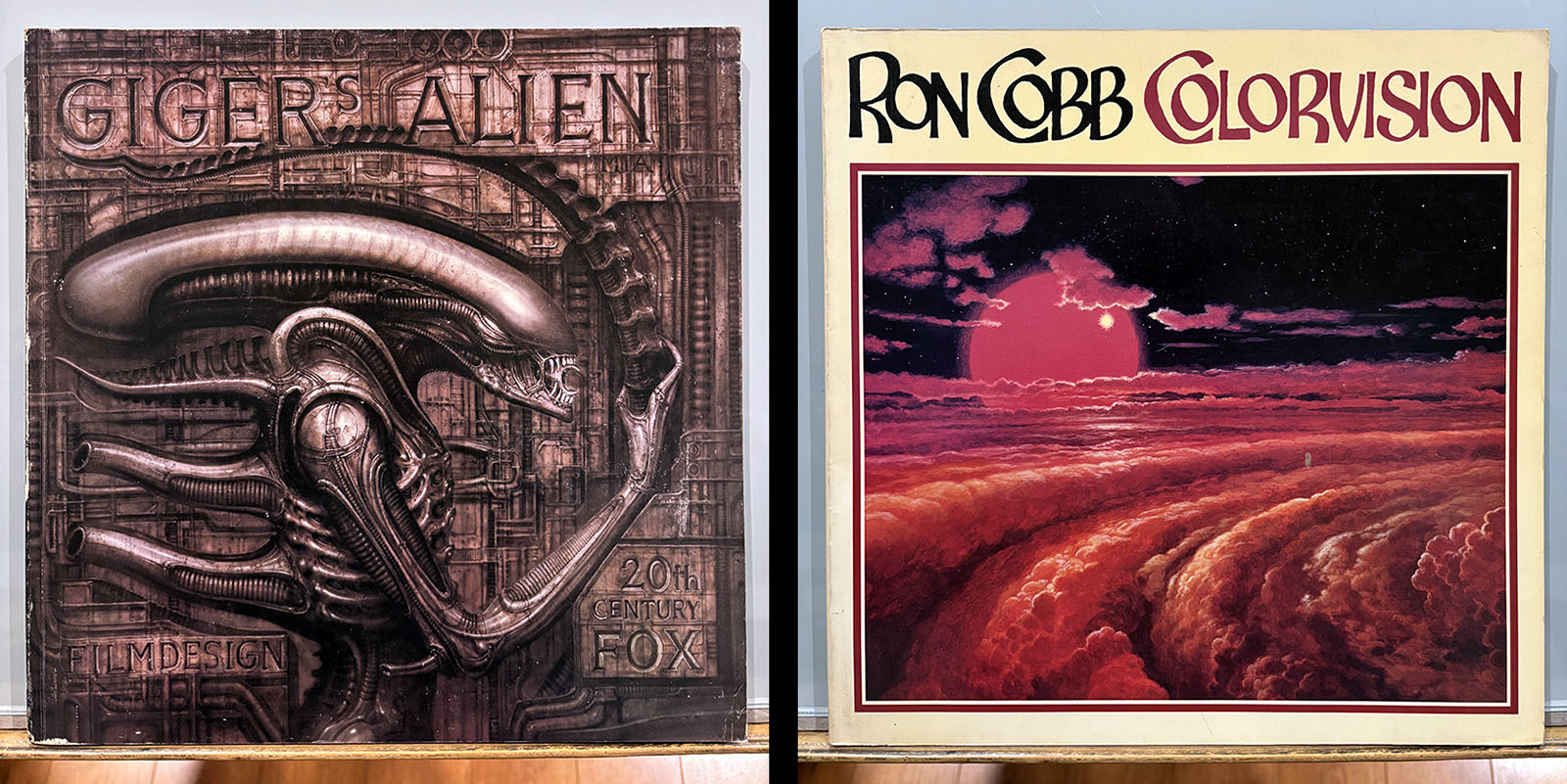
Giger’s Alien
Big O Publishing, 1979
The definitive source of H.R. Giger’s production design for the movie with paintings and photos found nowhere else.
Read it from cover to cover here
Ron Cobb Colorvision
Wild & Woolley, 1981
Ron Cobb was the key designer of the environments in the film and a fantastic artist/painter/designer on his own. This is an amazing collection of his work with a big chunk devoted to Alien.
Read it from cover to cover here
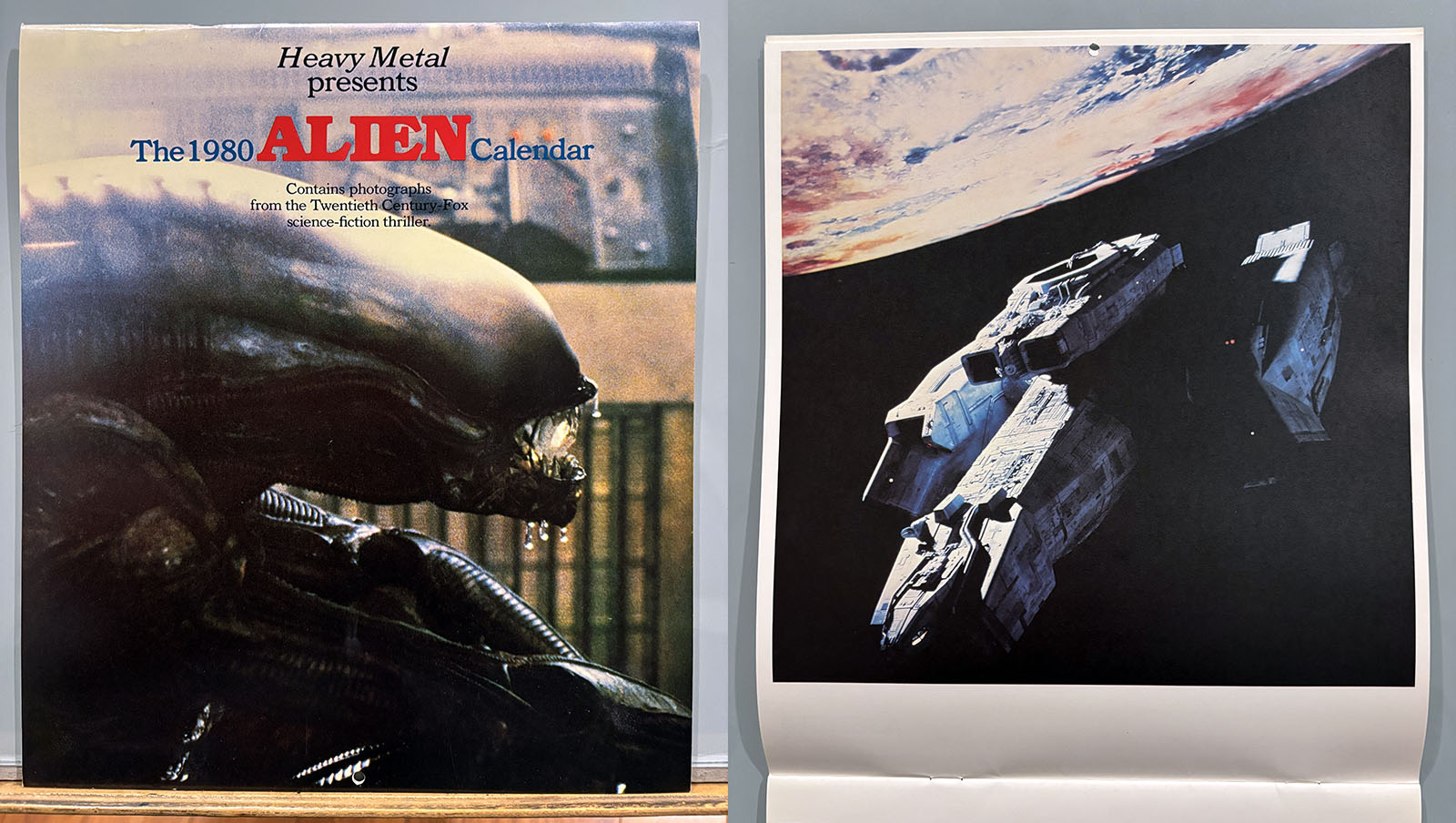
1980 Calendar
Published by Heavy Metal, late 1979. See all the pages here.
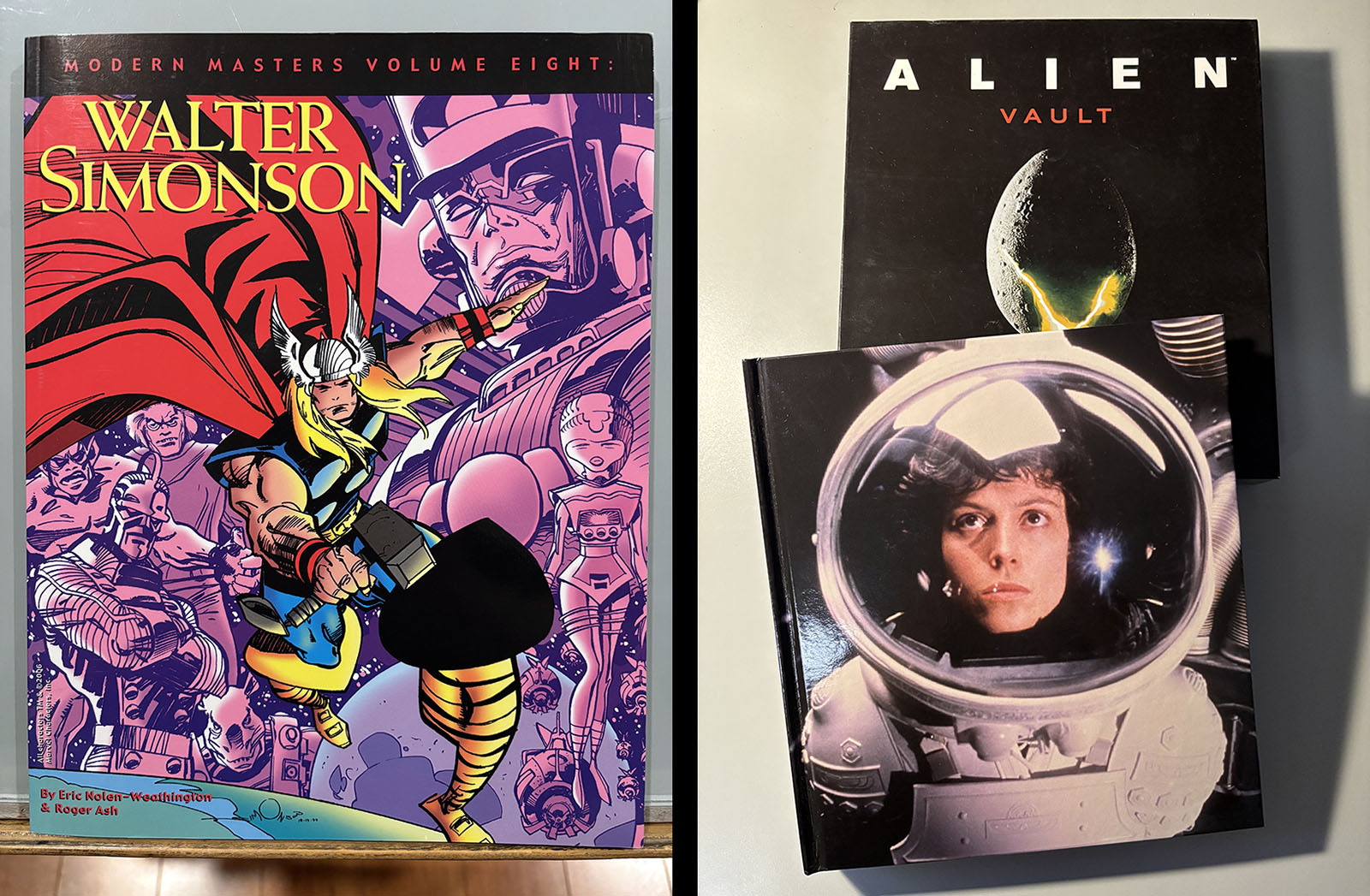
Modern Masters Vol. 8: Walter Simonson
TwoMorrows Publishing, 2006
A book-length interview with Walter and his various collaborators, accompanied by a ton of art. Includes conversation about Alien.
ALIEN Vault
Voyageur Press, 2011
A hardcover making-of book with material that had never been released before. The “artifact” features (loose items slipped into pocket pages) are a nuisance, but the content is top notch.
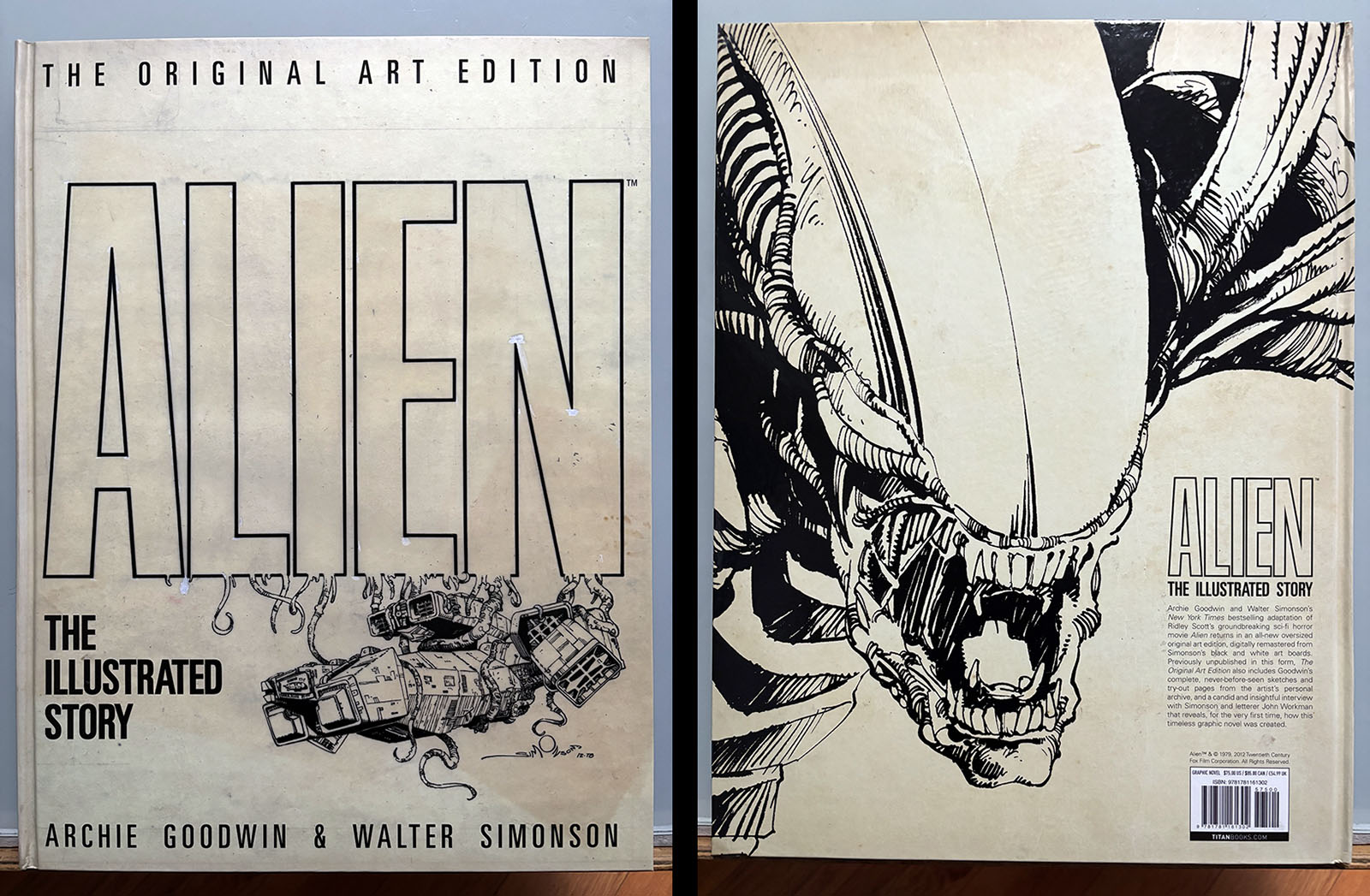
ALIEN The Illustrated Story, the Original Art Edition
Titan Books, 2012
I saved the best one for last. This is a huge (13″ x 17″) collection of the entire adaptation scanned from Walter’s originals, which he never sold off. You don’t get the color, but you do get a life-size look at every page, lots of support materials, and a lengthy interview about the making of the comic with intricate details of Walt’s technique. An essential companion piece if you’re even half the fan I am.