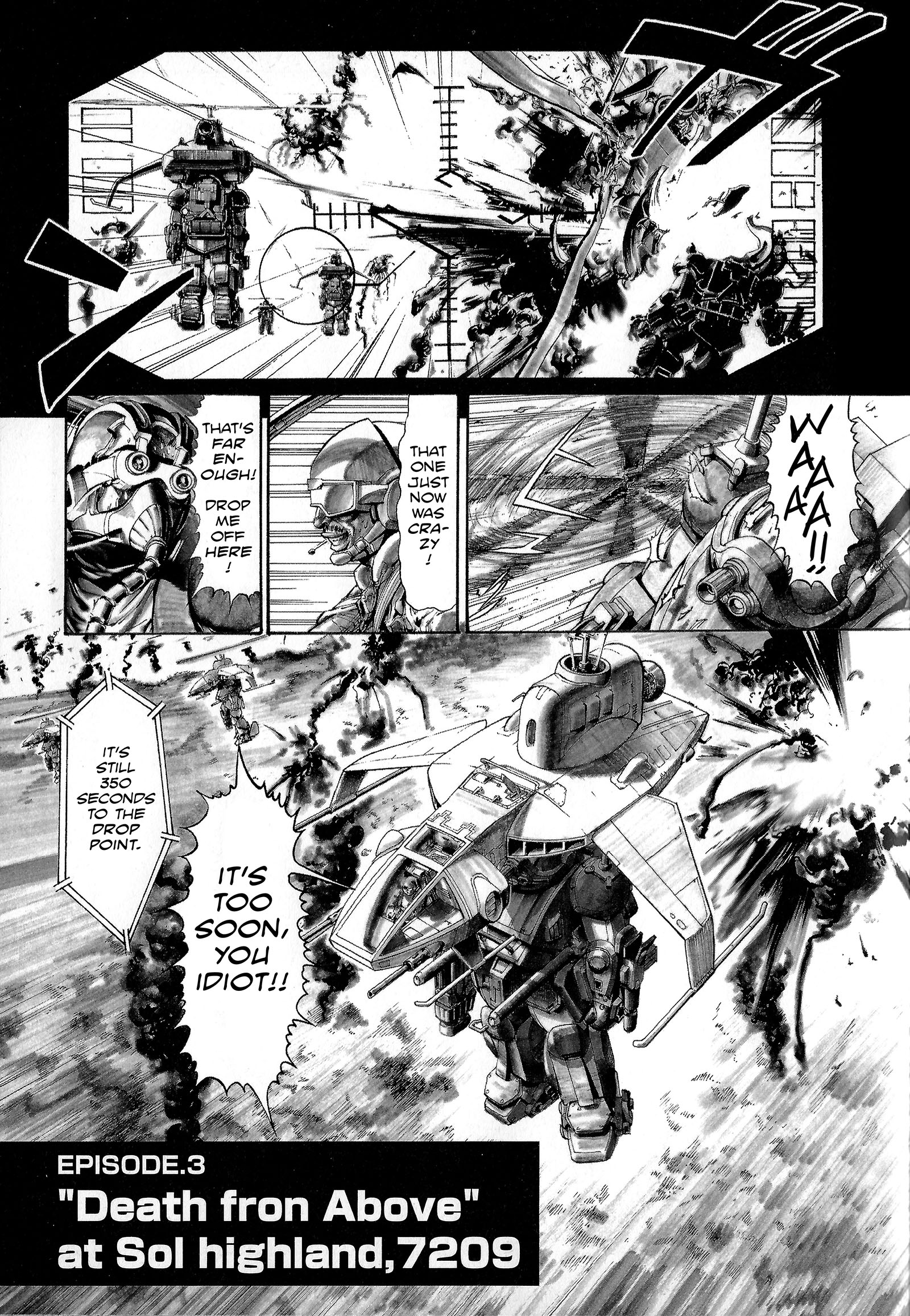
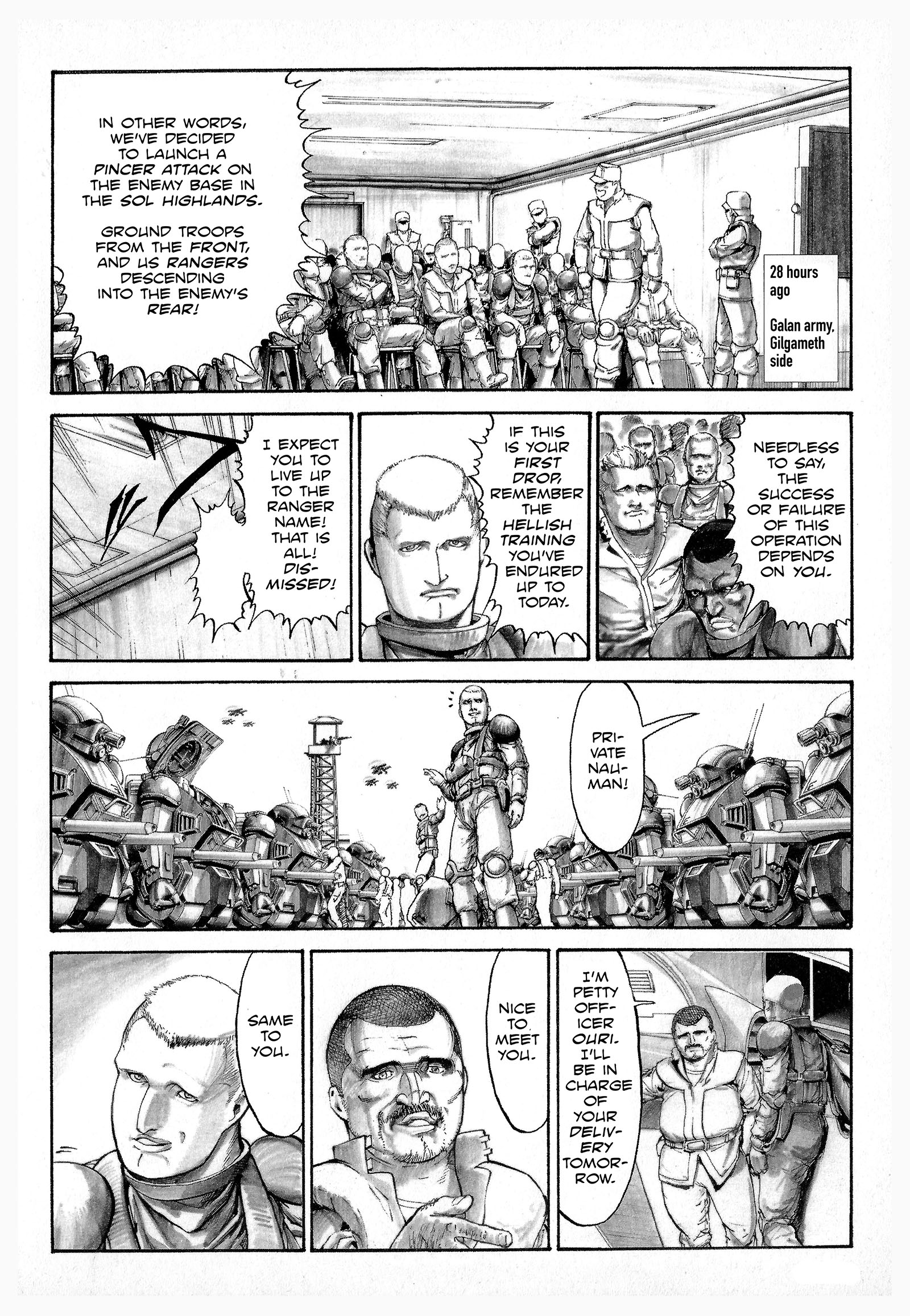
A.T. Stories, Episode 3
Tactical commentary column
A.T. Fly and descent strategy
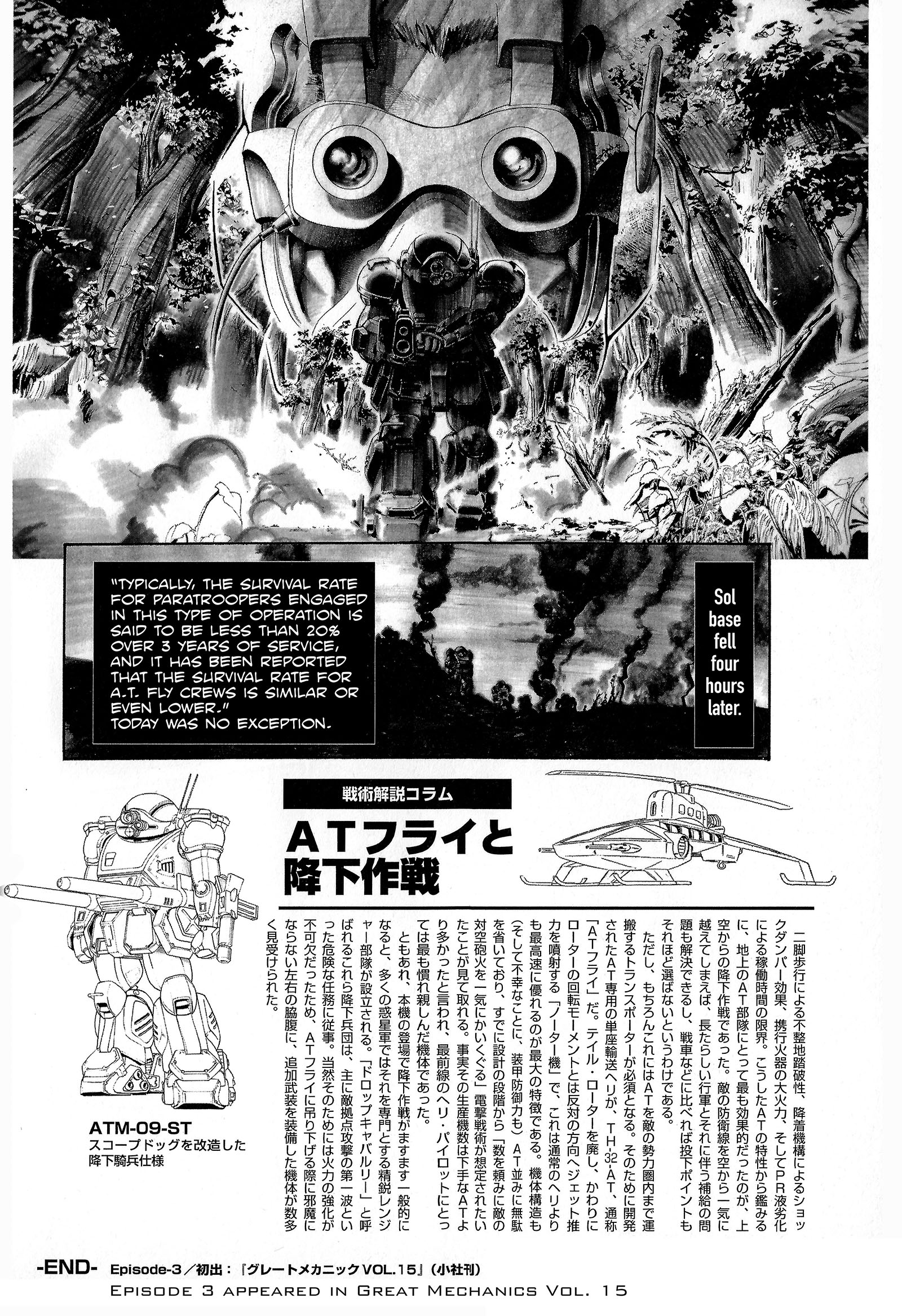
Considering the characteristics of A.T.s (Armored Troopers), such as their ability to traverse rough terrain with bipedal locomotion, the shock-dampening effect of their landing gear, the high firepower of their handheld weapons, and the limitations of their operating time due to the degradation of their P.R. (Polymer Ringer’s) fluid, the most effective strategy for ground-based A.T. units is airborne drop operations. By quickly crossing enemy defense lines from the air, the long marches and associated supply problems could be solved, and they were less selective about drop points compared to tanks and other vehicles.
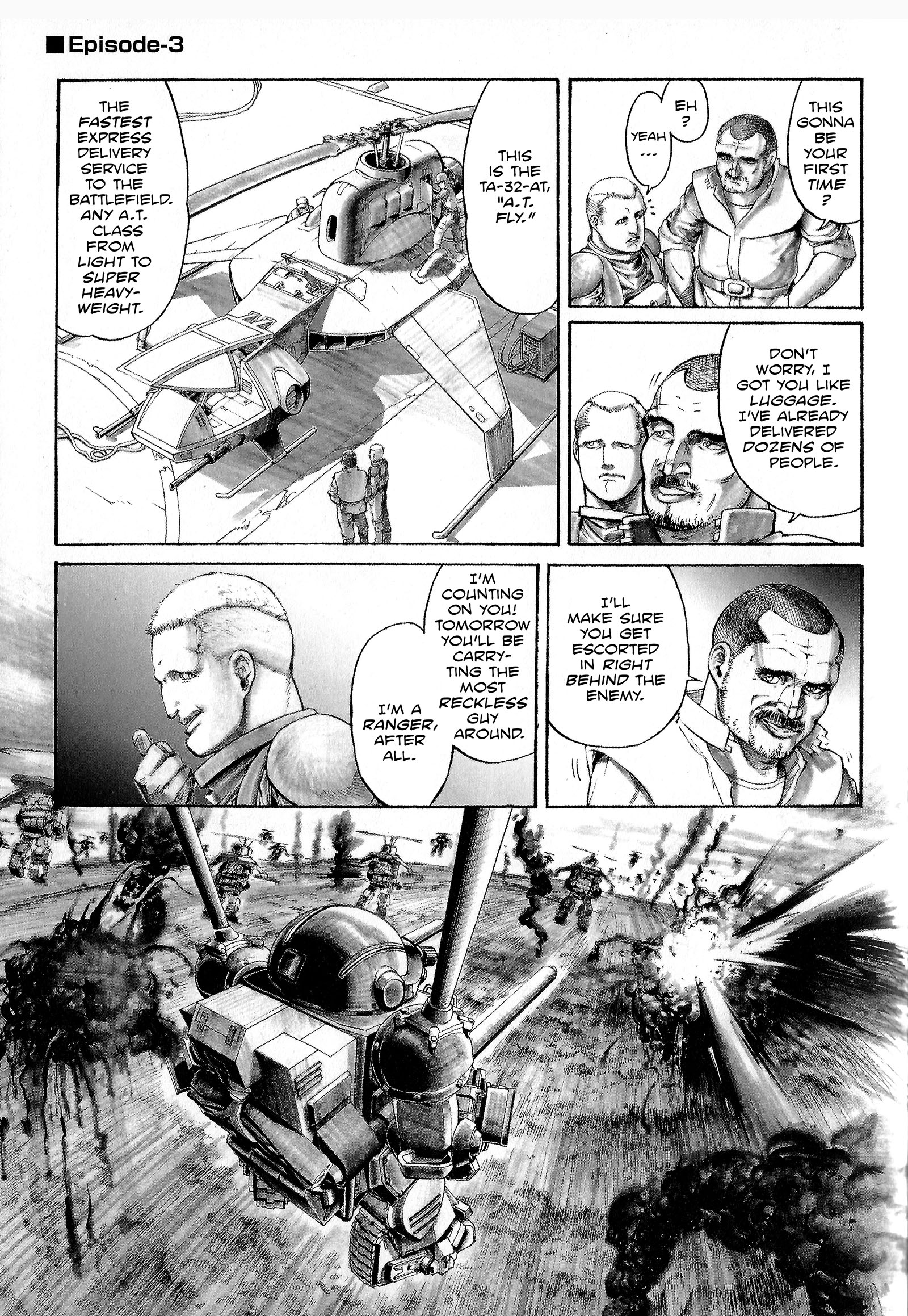
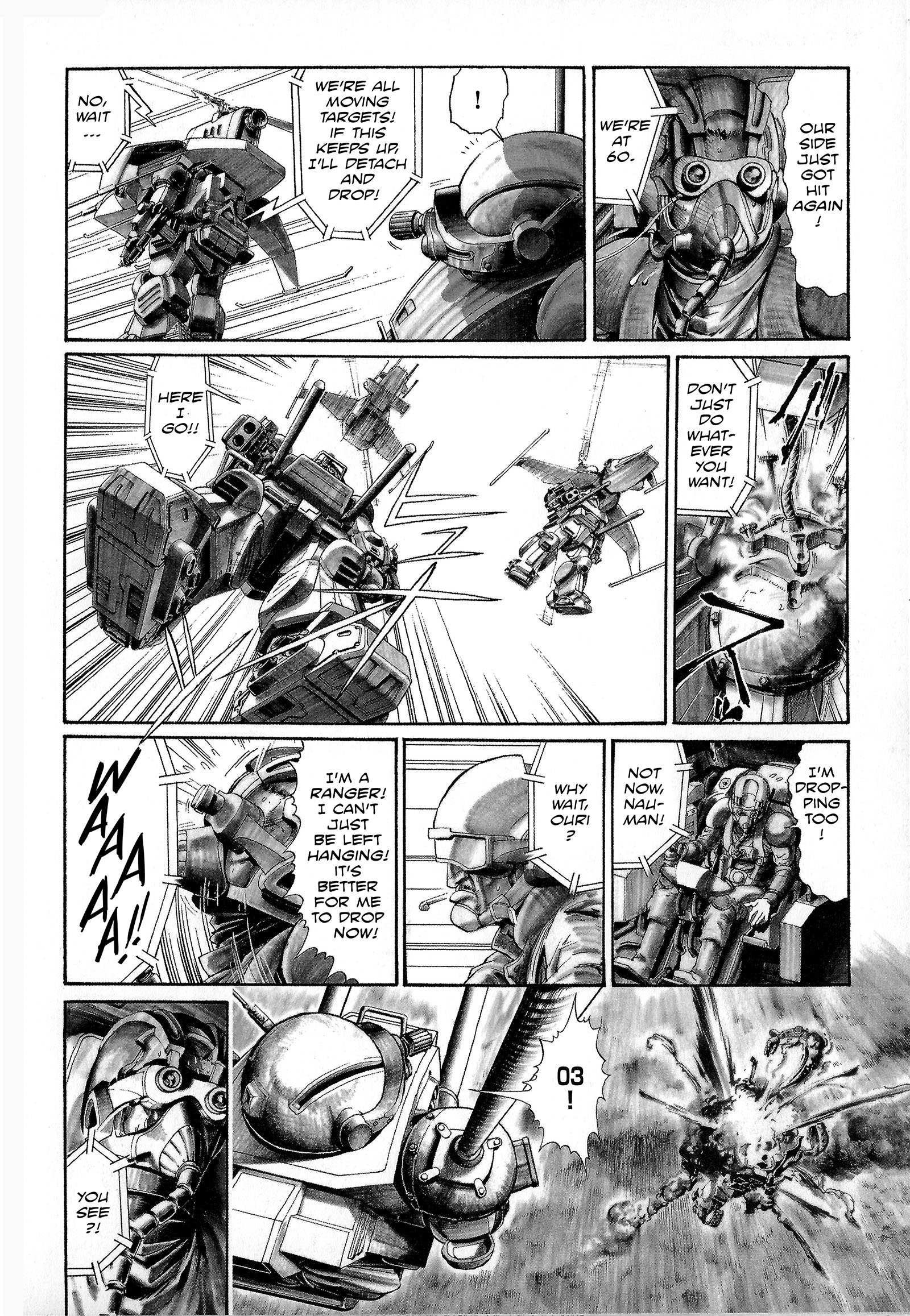
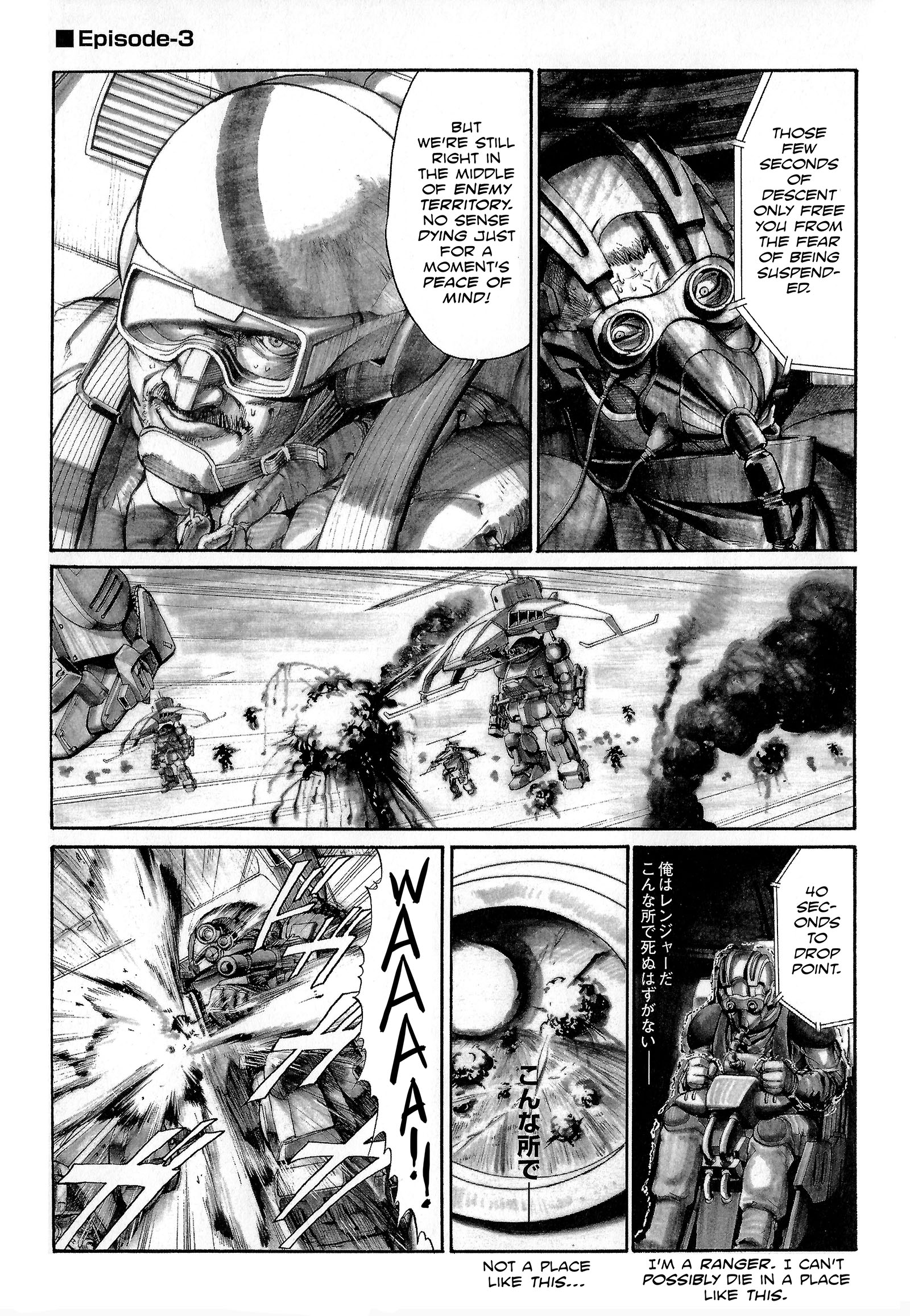
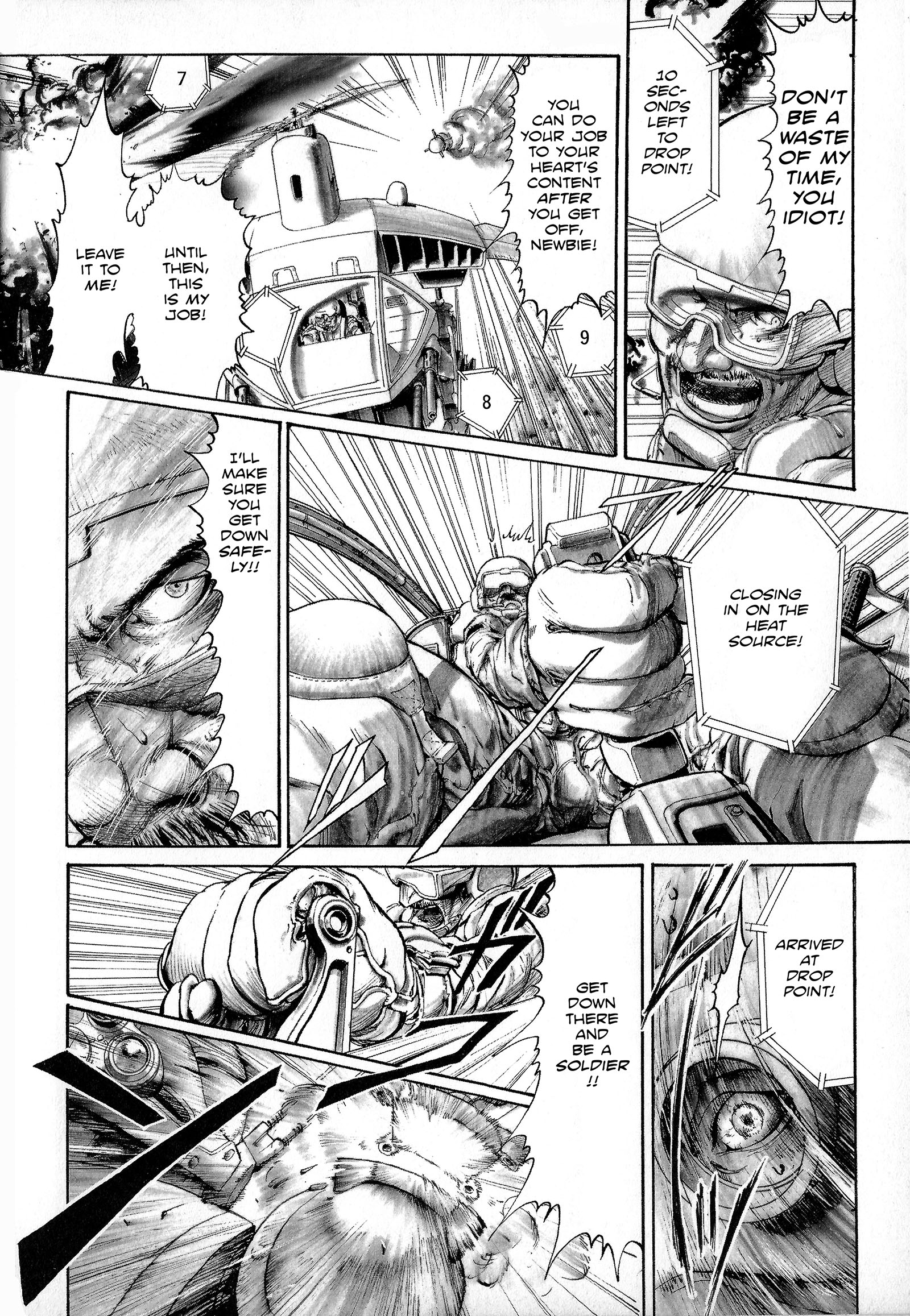
However, this of course requires a transporter to get the A.T.s into enemy territory. TH-32-AT, known as the “A.T. Fly,” is a single-seated transport helicopter developed specifically for this purpose. It is a “NOTOR” aircraft, which eliminates the tail rotor and instead ejects jet thrust in the opposite direction to the rotors’ rotational movement. Its greatest feature is its superior top speed compared to conventional helicopters. The air frame structure (and unfortunately, its armor protection as well) is as streamlined as that of an A.T., and it is clear that the design already anticipated a lightning strike tactic of using sheer numbers to quickly bypass enemy anti-aircraft fire. In fact, it is said that more of these were produced than some A.T.s, and it is the most familiar aircraft to frontline helicopter pilots.
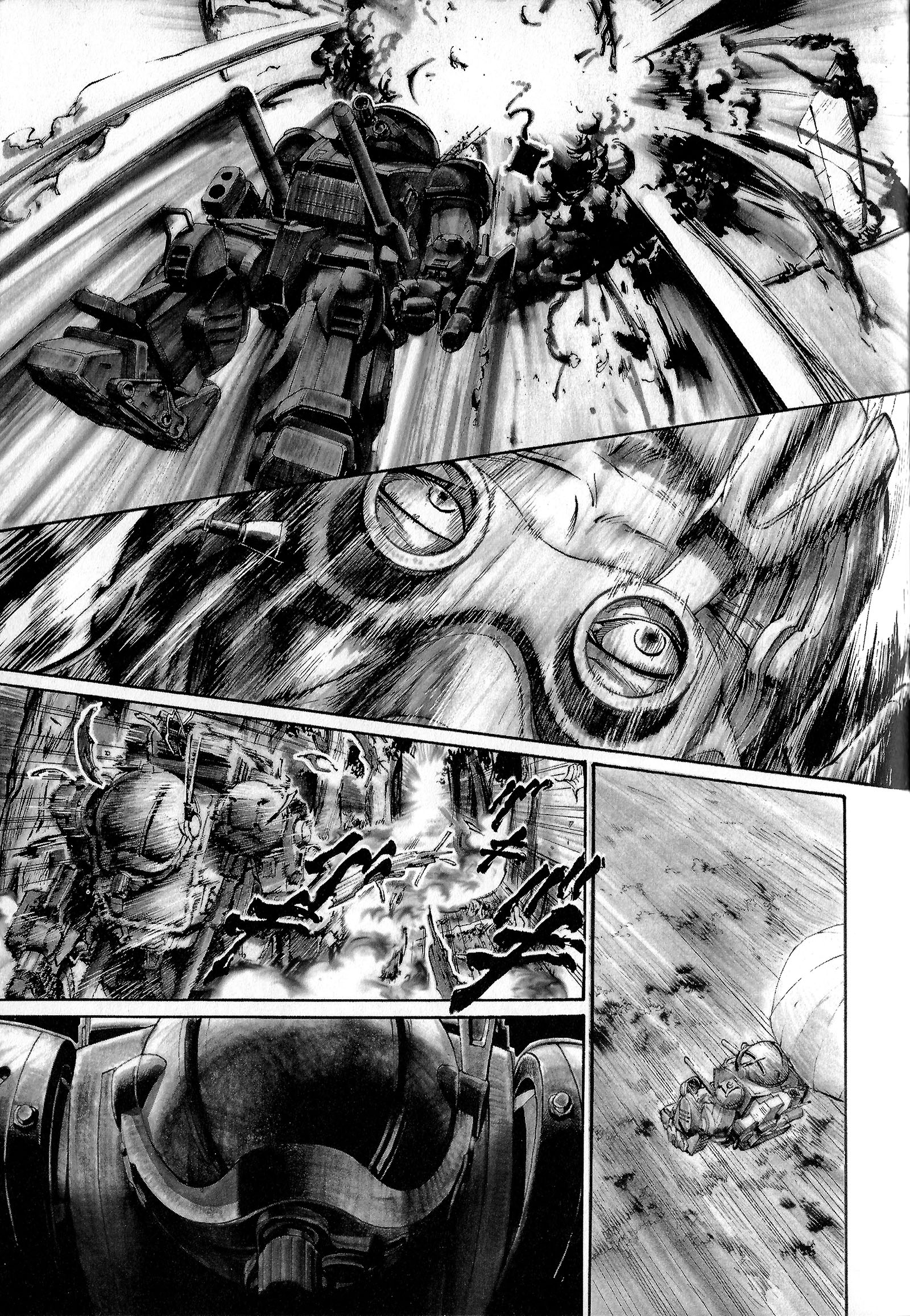
In any case, with the introduction of this machine, drop operations became increasingly common, and many planetary armies established elite ranger units specializing in such operations. These units, known as “drop cavalry,” are mainly engaged in dangerous missions, such as the first wave of attacks on enemy bases. Naturally, enhanced fire power is essential for this purpose, so many units are equipped with additional weaponry on the left and right flanks, where it will not interfere with being suspended from the A.T. fly.