
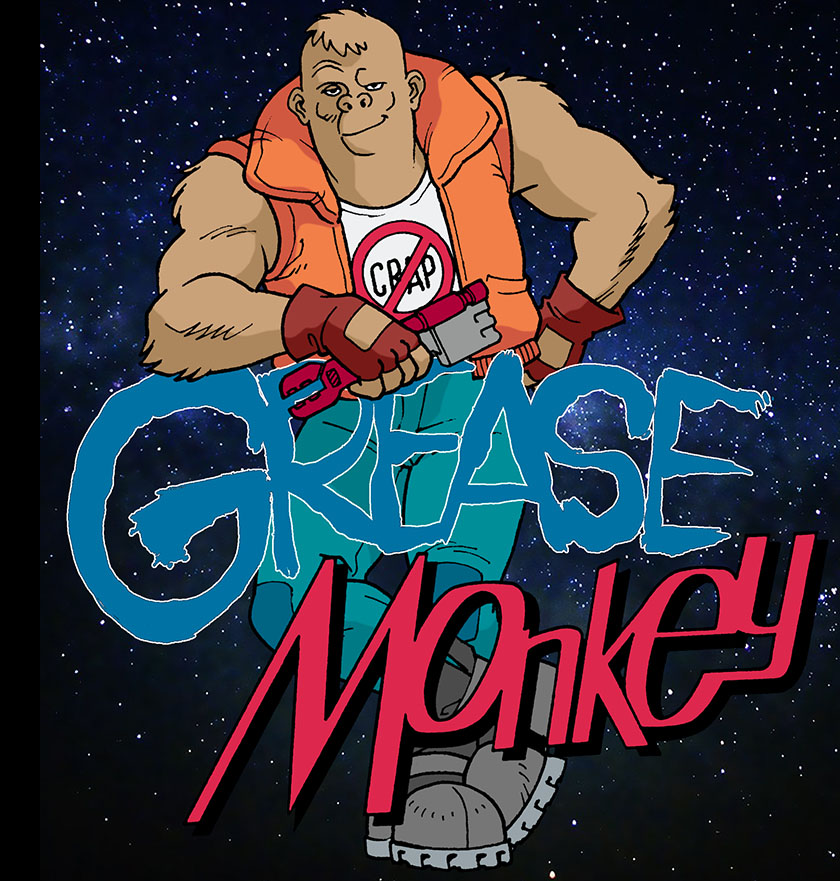
Grease Monkey graphic novel, 2006
It’s the summer of 2003. My phone rings.
“Tim, this is the call you’ve been waiting for.”
It was my literary agent Ashley Grayson on the line. He really knew how to get my attention.
To understand how significant that call was, it’s necessary to plunge backward in time a few years. I’ve already written about the creation of Grease Monkey in 1992 here, so we don’t have to go back that far. Throughout the 90s, it was taken on by three different publishers: Styx International in ’93, Kitchen Sink Press in ’96, and Image in ’98. Although the personal benefits were vast and life-changing, it was clear that the comic book world was a shifting quagmire that smothered books like mine without a care. I wanted Grease Monkey to have a better shot, and that meant taking it elsewhere.
With the help of Kitchen Sink, I was plugged into the bloodstream of the animation world to pitch Grease Monkey as a TV cartoon. It didn’t get all the way anyone’s screen, but it did lead to other things (and not just a new career for me). Prior to 1996, I had only written and drawn six episodes. That summer, I was energized enough to write 18 more, plus some bonus content. I didn’t have time to draw them, since I was now splitting my time between other comics and my first storyboard job, but having them sitting in reserve was often a great comfort, like a dresser drawer full of warm socks. I’d often heard that “real” writers had an archive of unpublished work sitting in their files to be discovered after they die, so for that brief time I felt like a “real” writer.
In late 2000, TV animation slowed down to the point where I got laid off for several months. I had savings to fall back on, so in January 2001 I finally pulled out those 18 scripts and started drawing Grease Monkey again. I didn’t have a publisher lined up, but I didn’t need anyone’s permission. I just wanted to make these stories real. With eyes on the future, I decided to refer to the overall project as “Book 1.”
For reasons that were entirely aesthetic, I decided to continue with the format I’d established in the very beginning. I placed a rigorous 12-page rule on myself, so there was always a charge of anxiety during the first step, where I broke each script down into thumbnail pages. Like all rules, it was bound to be broken. Some stories contained themselves effortlessly. Others fought like demons. The first time I allowed myself to break the rule, all bets were off. So much for discipline.
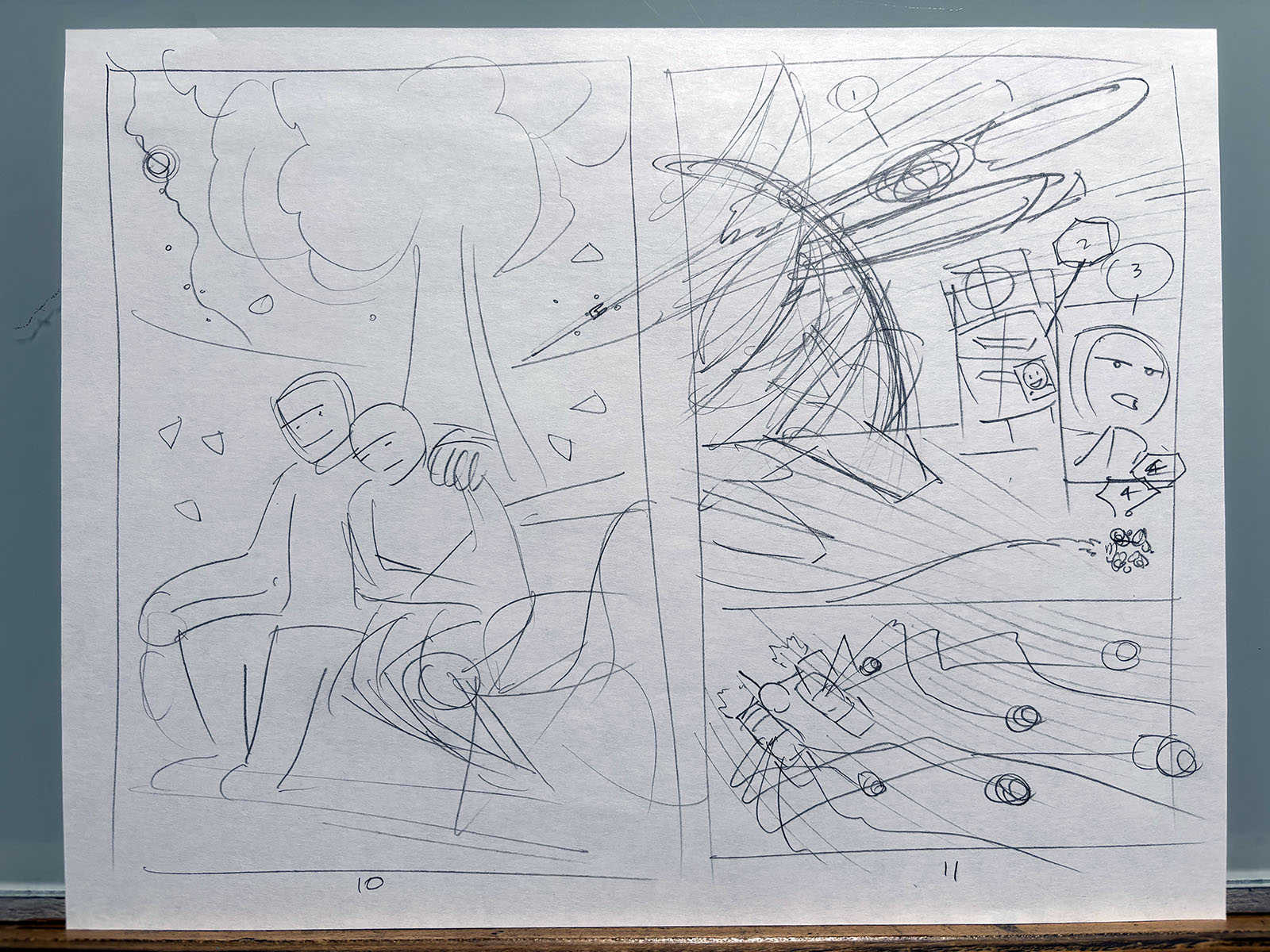
It had been four years since I wrote the episodes I was now drawing, and a lot had happened in the intervening time. The period in which Grease Monkey was developed for a TV pitch inspired me to create a lot of new story material that would function as a sequel, so I had a strong sense of where things would go after Episode 24. That, along with some new life experience, allowed me to sharpen the writing. Additionally, a few years of working as an animation artist allowed me to sharpen the art. I was sort of amazed at what was now coming out of my pen. The time I’d taken off was making for a better product.
As I completed each new episode, I dutifully photocopied them and shipped them off to a friend I’d made in the comic industry: writer Kurt Busiek. We met at a few conventions in the mid 90s (back when I was on staff at Malibu Comics) and I gave him a look at the early episodes. He liked them, so I put him on my mailing list. He was always happy to get a new one, and this would have an unexpected payoff later on.
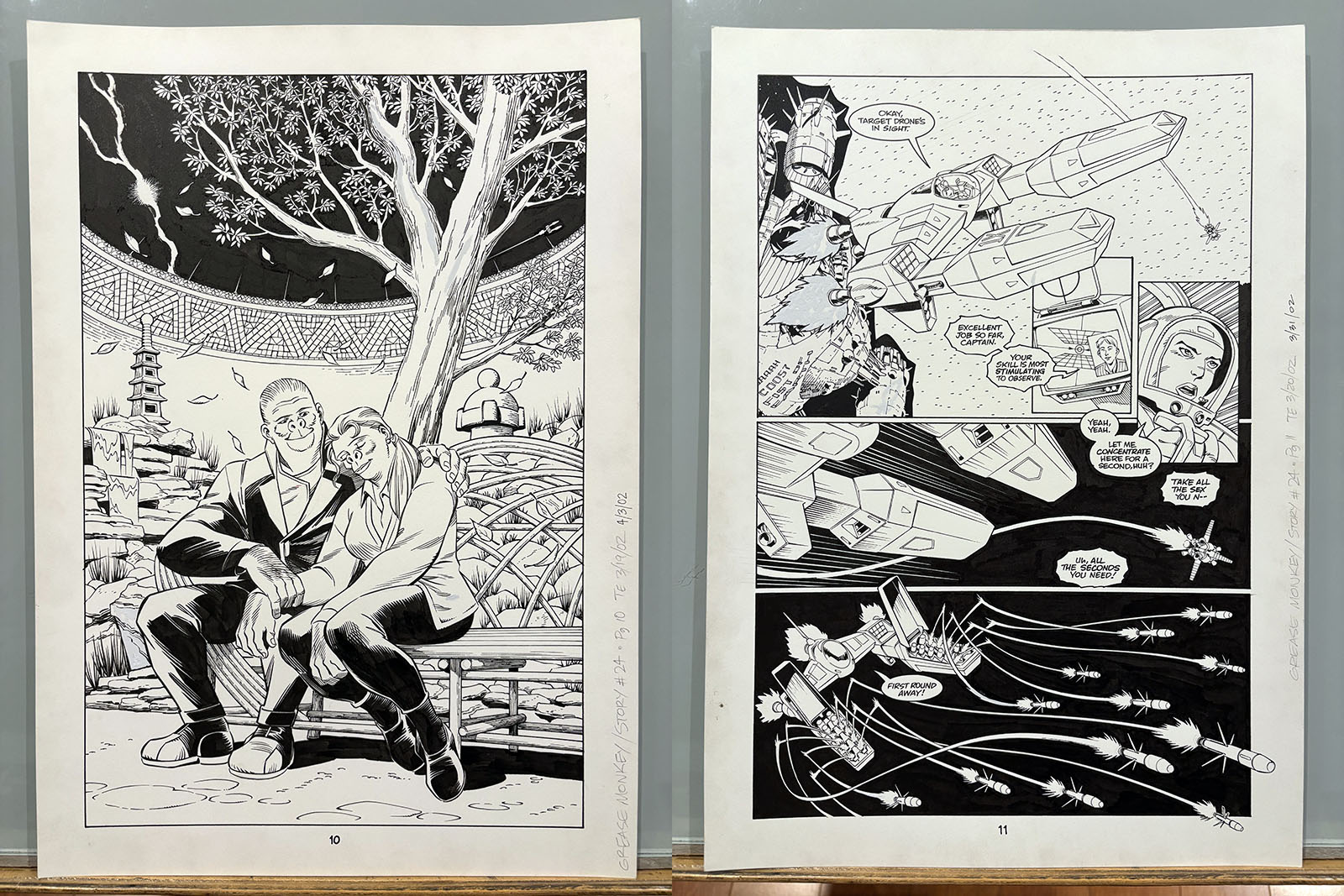
An interesting aspect of the whole creative process is the transfer of importance from one stage to another. Every comic story makes its way through script, thumbnail, rough layout, pencil, ink, and printing. Whatever stage I’m on at any given time is the most important. For a while, the script is indispensable. When I finish the rough, the script is old news. By the time I get to the inking, the rough is useless.
When these things were merely hypothetical, they were priceless. When a finished product appeared, they were just taking up space. Following this premise to its natural conclusion, the end product is just the transient vehicle of an idea. What you’re reading here is less important than the ideas it communicates. If I got it right, the ideas will resonate for a good long time and the comics themselves can vanish. (Not that I want them to, of course…)
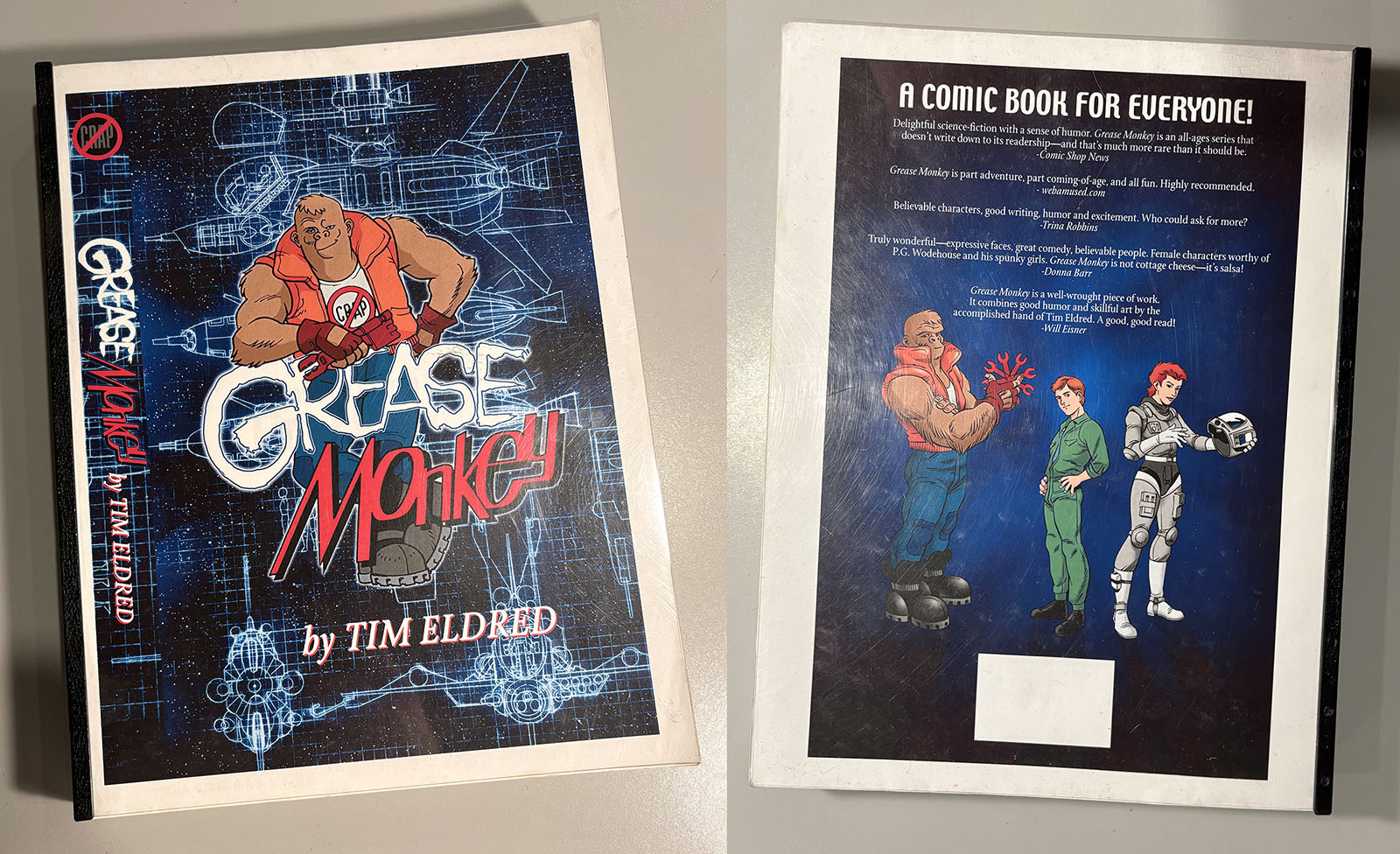
Finished mockup of the complete book. I added some favorable reviews of previous publication on the back cover.
By now it should be obvious that getting this work done was quite an undertaking, with a full thirteen years having passed since the very start. Book 1’s final phase began when all 24 chapters (plus three vignettes) were finished in 2002, and I decided to approach a book publisher outside the comic book world.
How did one go about this? Every online source I looked to said publishers only talk to literary agents, so I went and got a book on how to find an agent. It wasn’t very different from pitching a comic book back in the 80s and 90s (before everyone got lawyered up); you’d write a “query letter” to a prospective agency that described your project. If it caught their interest, they’d request a writing sample. If not, they’d turn you down. The book I found had contact info for dozens of agents, so I got busy.
I picked the first ten and sent them letters. They all came back with a turn-down. Then I did the same with the next ten. Same result. But there were still plenty more agents out there. I reeled out the third batch and finally got a strike. It was from a fellow named Ashley Grayson, who received my letter at precisely the same moment he thought about adding a graphic novel to his already impressive credentials. Ashley suspected that Tor Books might feel the same way, so I agreed to have him represent me.
About a year later, my phone rang. And Ashley gave me the perfect quote to start this article. He’d pitched Grease Monkey to Tor, and they said yes!
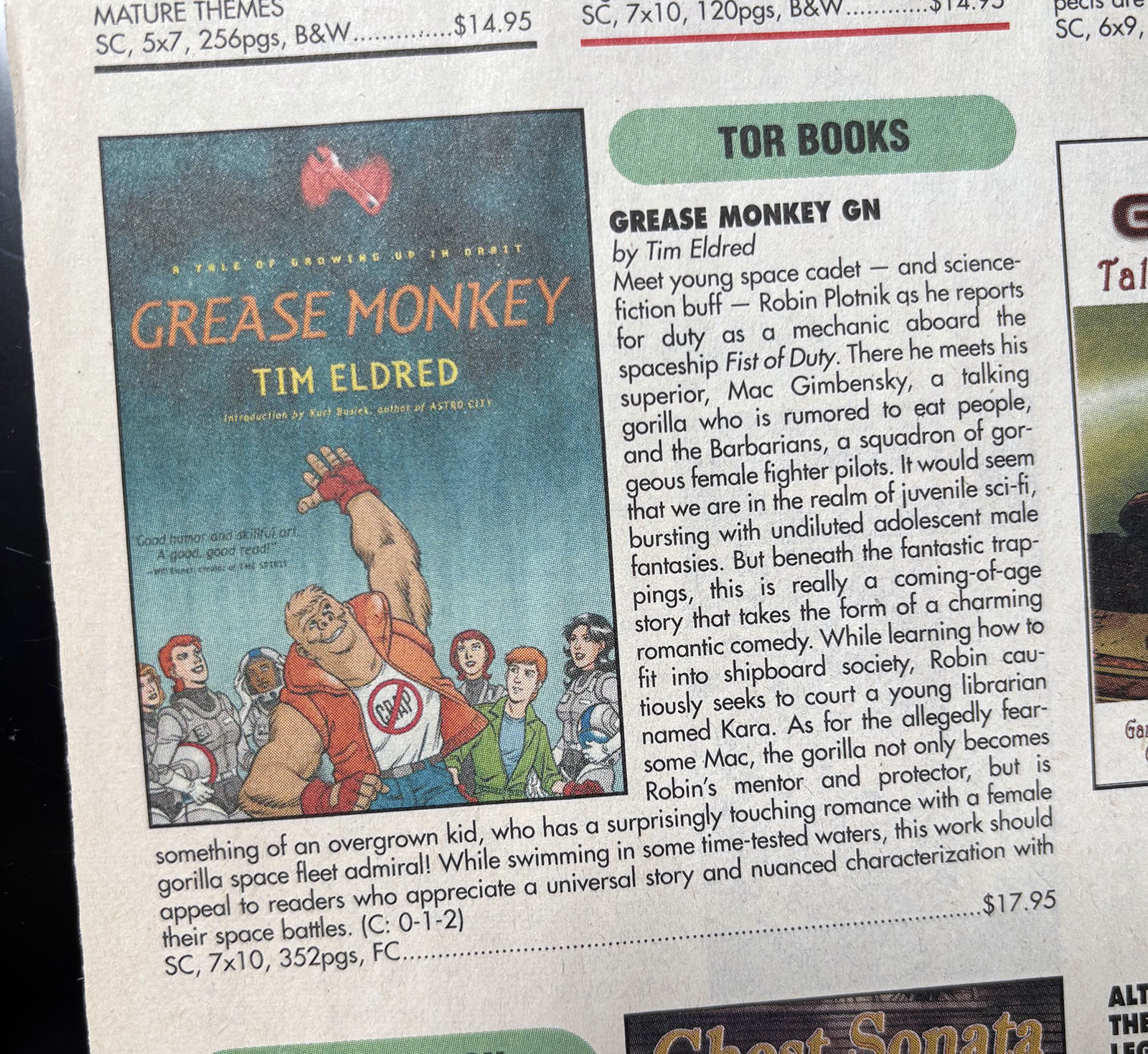
The publishing industry moves pretty slow, so it took another year for Ashley to negotiate a contract. I signed it in the summer of 2004 and my editor Teresa Nielsen-Hayden pulled me into this entirely new realm. She knew it would be a challenge, since the production leap from prose fiction to graphic novels brings a huge number of variables into play. To my relief and her credit, there was never any question that it could be done. She was one of those people who “got it” upon her first reading of the book, and her desire for others to have that experience kept the entire project buoyant. She even came up with a secondary title as an alternative to “Book 1” which I liked: A Tale of Growing Up In Orbit. Not completely accurate to the story, but it nicely encapsulated the theme.
Interacting with Teresa and Tor was always enjoyable. I got to visit their office once in person as well (in Feb 2006), situated in New York’s famed Flatiron Building. Walking through that office and meeting the people who would be involved was an enjoyable throwback to my pre-animation days in print media. For plenty of reasons, I felt right at home.
This was also where sending the comics to Kurt Busiek had its unexpected payoff: when Tor asked me who I could suggest to write an introduction, his name was at the top of my one-name list. They invited him and he accepted. That’s how Grease Monkey got such a glowing intro.
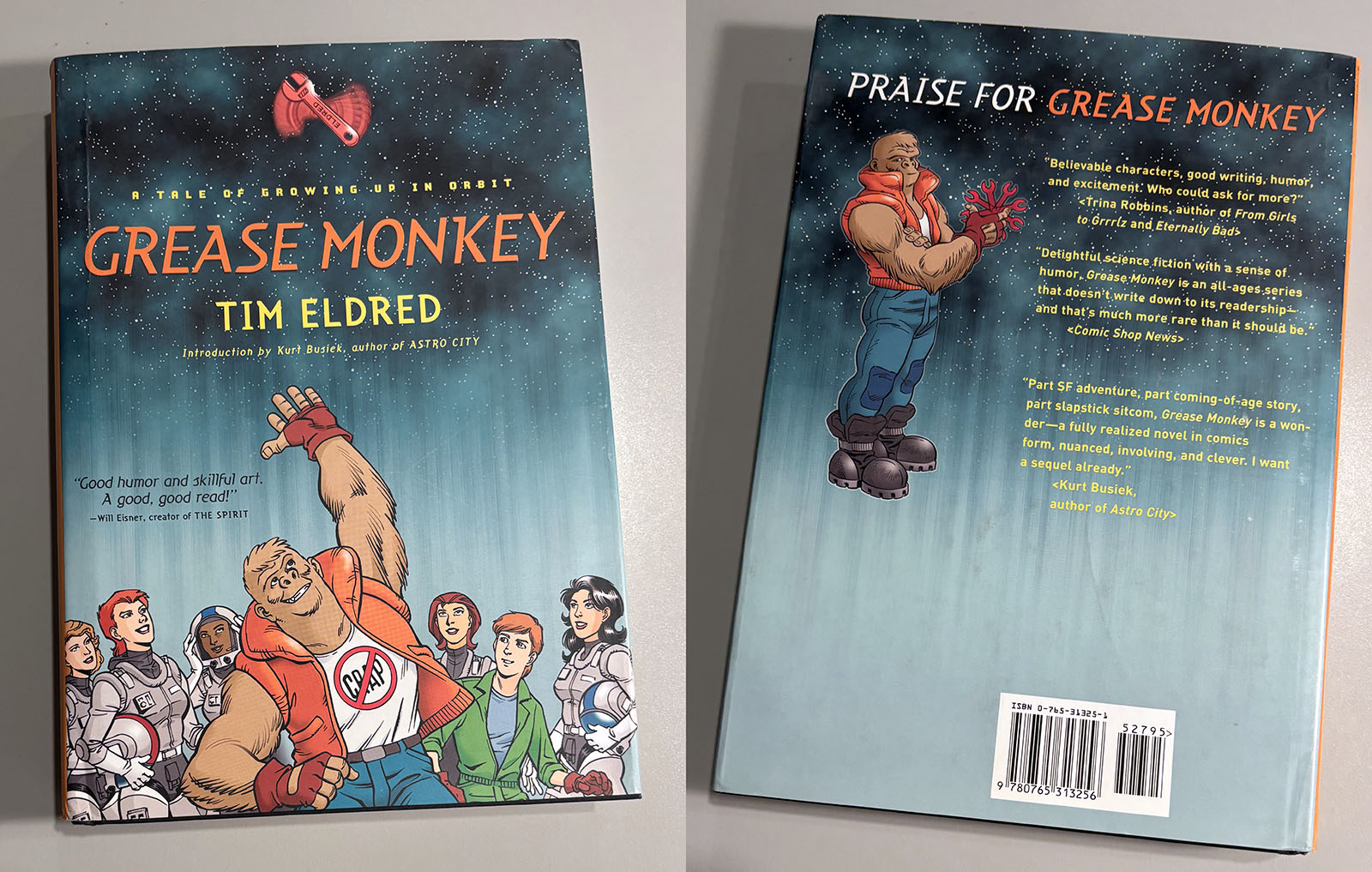
Hardcover edition
I remember a lot from my conversations with Teresa, but one thing in particular has stuck with me ever since: the importance of choosing your battles.
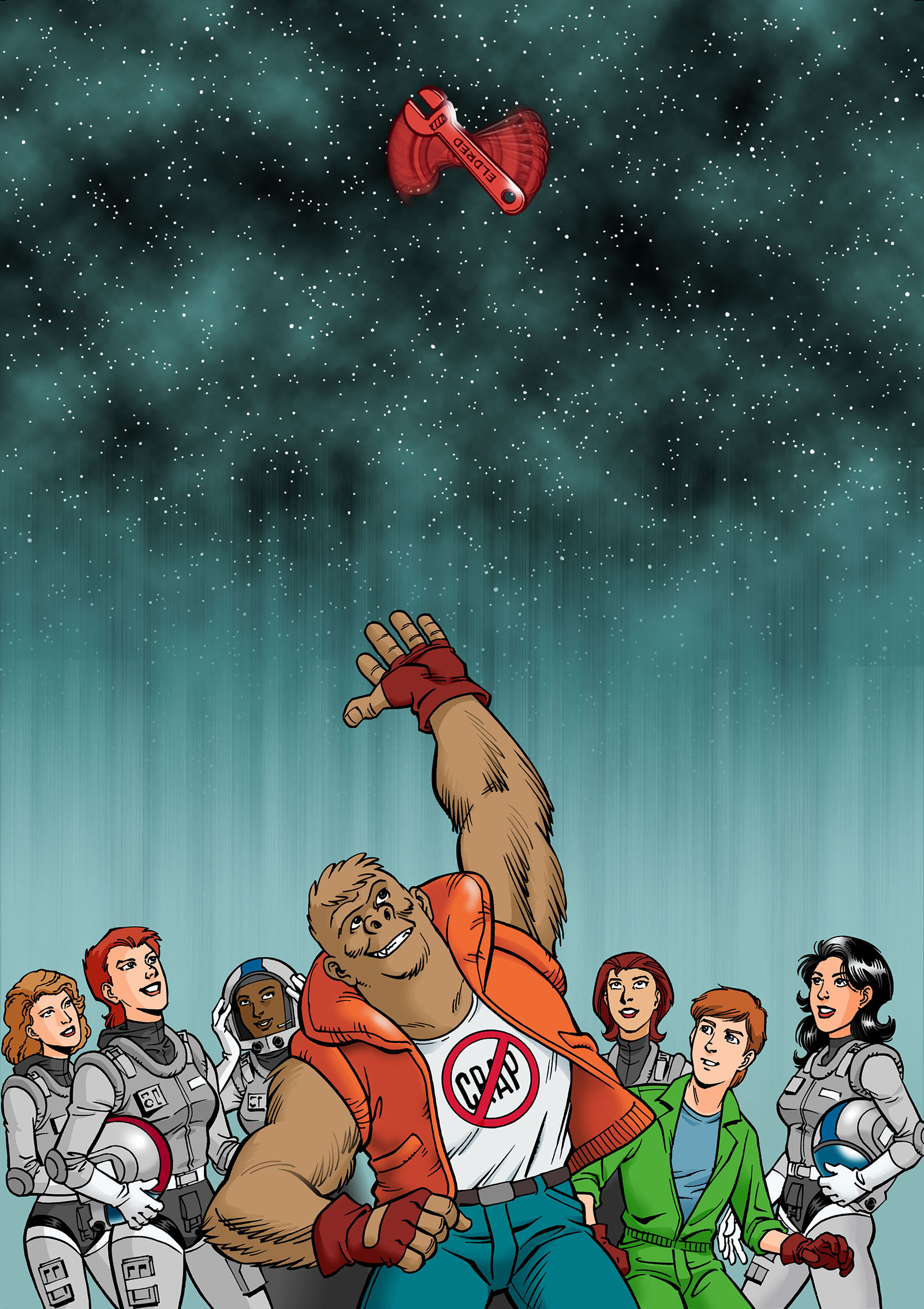
Back when Kitchen Sink published the first six episodes (in two comic books), they paid me to color them. All the subsequent episodes were in black and white. I’d hoped the first six would stay in color, but Tor decided to convert them to greyscale. One reason for this was to keep printing cost down (always a valid concern), but the other took me by surprise: if only one quarter of the book was in color, we’d be explaining it forever. And in the world of marketing, your hold on someone’s attention is extremely brief. You don’t want to waste any of it explaining things that ultimately don’t matter. When Teresa put it to me that way, it taught me a lot about not just marketing, but also writing itself. In all things, choose your battles. Especially if you can choose to prevent them from happening at all.
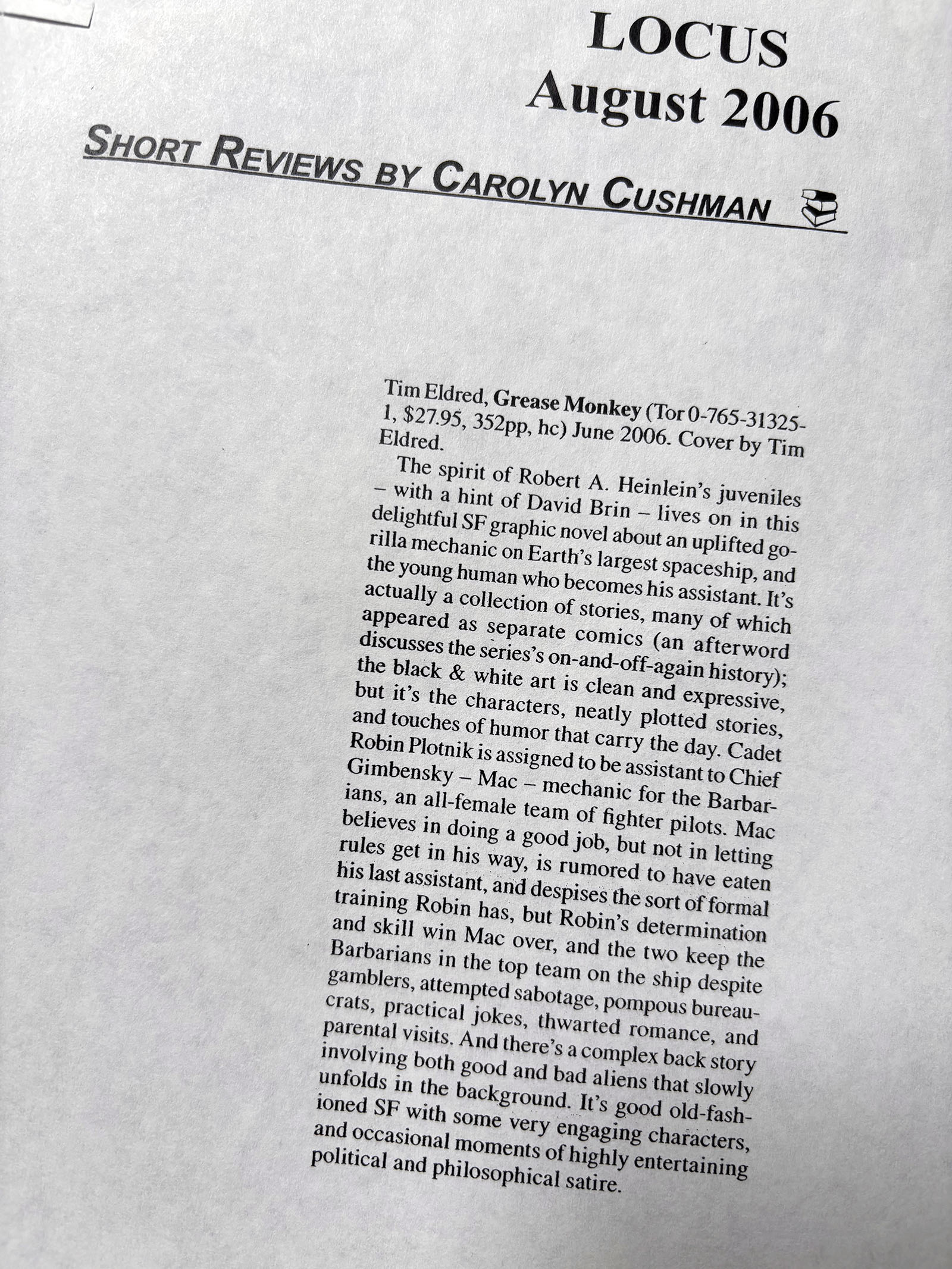
I owe a huge debt of gratitude to both Teresa and her mighty crew, and I have no doubt that they committed many untold acts of heroism to ensure that Grease Monkey: A Tale of Growing Up In Orbit got into bookstores in June 2006. It debuted in hardcover, and a softcover version followed in February 2008. The book turned a profit and earned a couple of awards, and I was immensely happy to have found my way to this new world.
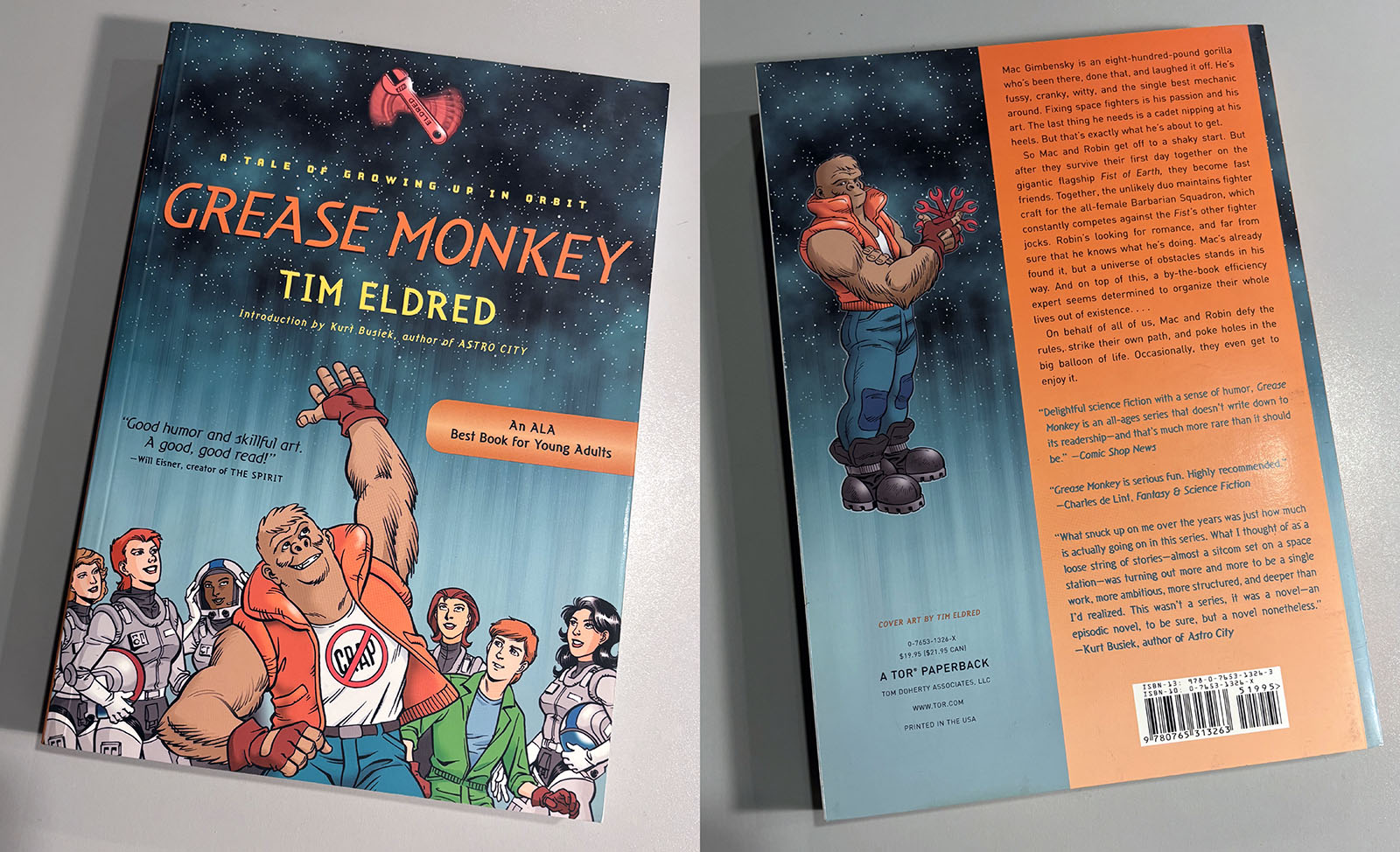
Softcover edition
As soon as my feet touched the top of that mountain, I was ready to start on Book 2, now titled A Tale of Two Species to keep with the style Tor established. But for reasons that have never been clear to me, Tor didn’t bite.
Naturally, I’d hoped this new world would be self-perpetuating. Everything I’d seen told me that when an author establishes a good relationship with a publisher, they continue to work together. But as work progressed on Book 2 I kept reaching out to Teresa and getting nothing back. Zero replies. After a few rounds of this, Ashley told me that Tor wasn’t really like other publishers. For whatever unexplained reason, they weren’t going to open the door on this again.
That was the end of the road where Tor was concerned, but not for Grease Monkey. Book 2 got done and I published it myself…online. Looking back at my entire history in comics and books, it seems like the inevitable outcome. The world of paper is so fraught with cost and compromise it simply doesn’t accommodate self-propelled ideas that can’t be easily categorized. TV animation was paying my bills now, so I didn’t need to accommodate the world of paper.
And thus, Grease Monkey Book 1 was to be my last paper-bound work. From there, everything got easier.
Read all of Book 1 here. And Book 2 if you’re so inclined.
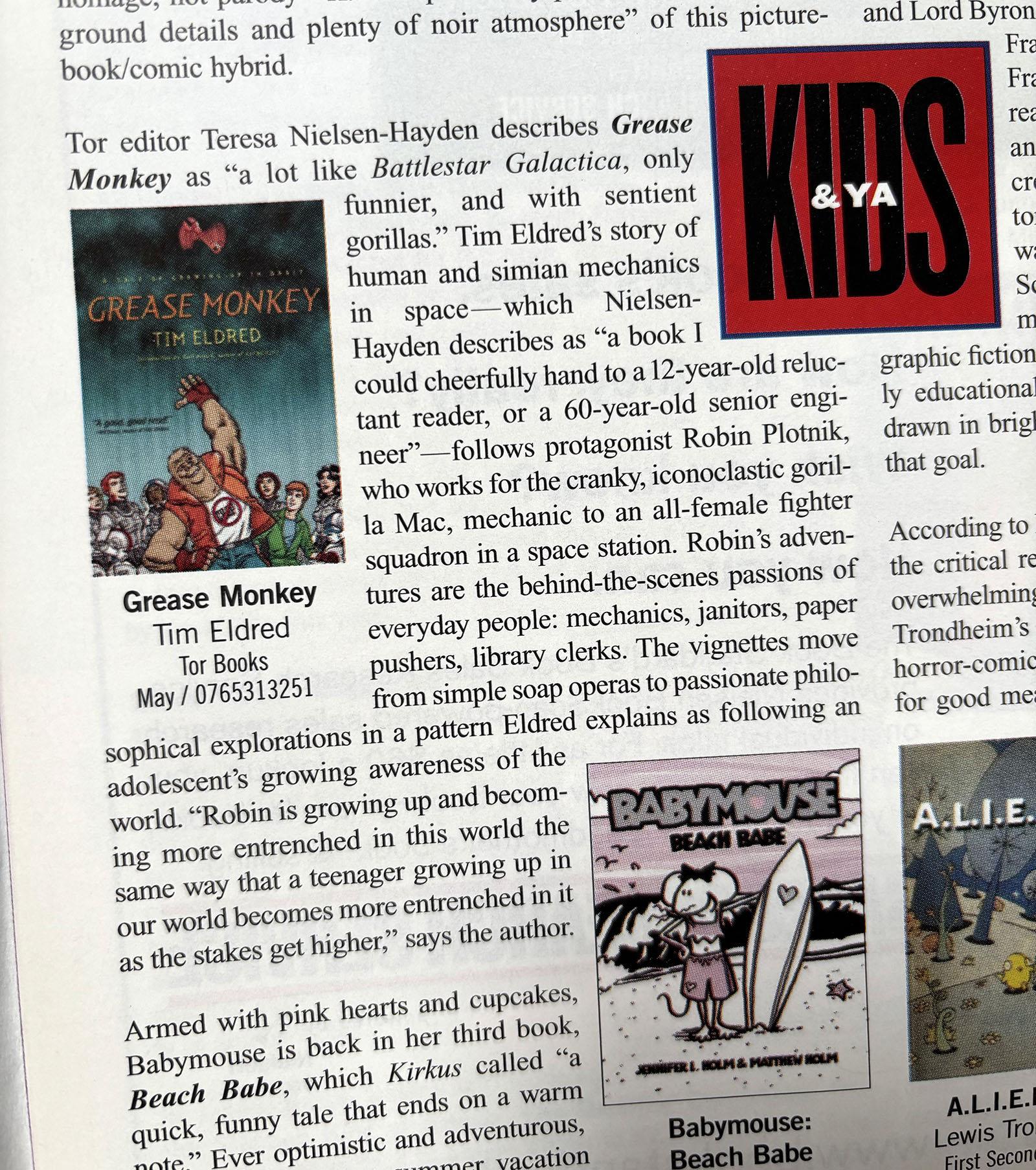
It’s no exaggeration to say that finding this book in my local library when I was a kid was one of the best things to ever happen to me. I sincerely think a love for character development, deep relationships, and talking apes stems directly from Grease Monkey. Keep up the great work!
Thank you SO much for the compliment. I truly appreciate it.