
Comics go to the movies: Jaws, 1975
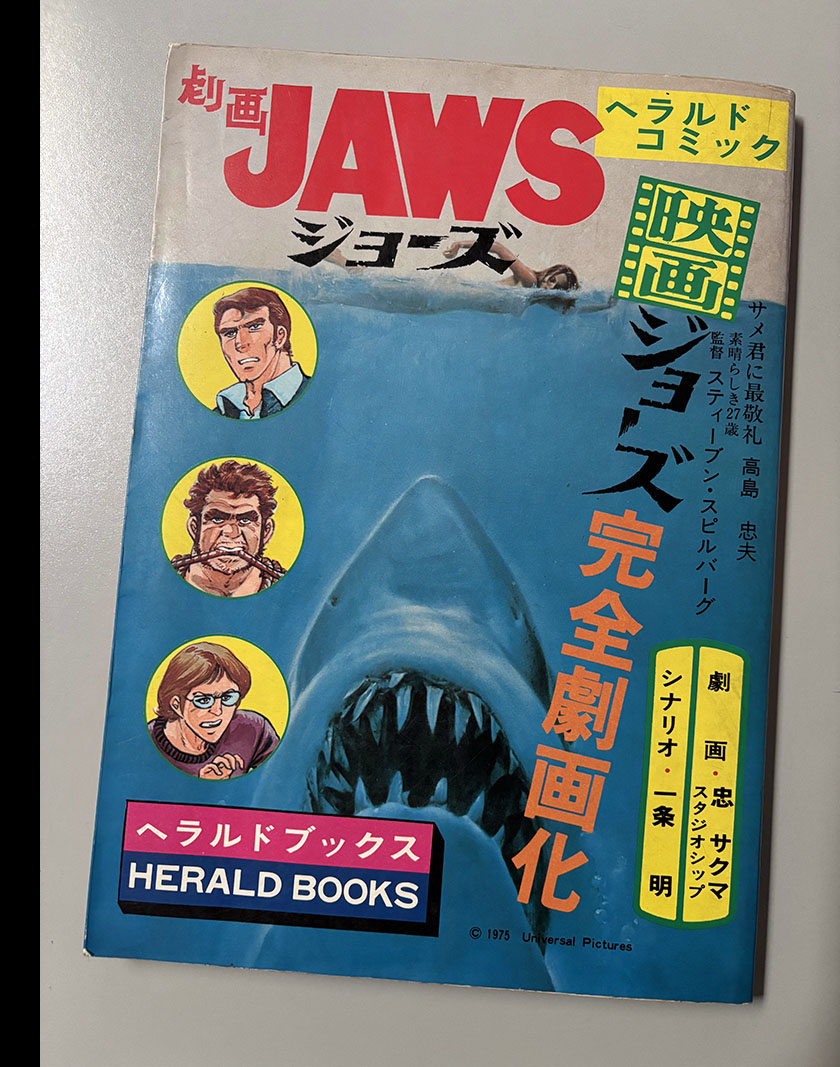
SURPRISE! Your eyes aren’t lying. Jaws was adapted into comics in 1975, and even if you’re a hardcore Jaws fan, you might not have heard about it. Why? Because it happened in Japan. It was published by a company called Nippon Herald Film Publishing Bureau, it ran a little over 100 pages, and it covered the entire movie. The actual title was Gekiga Jaws, and it was never reprinted.
You know what Jaws is, or you wouldn’t be here. But do you know what “Gekiga” is?
If yes, feel free to skip ahead. If no, here’s a primer…
You’ve probably heard the word “Manga.” It’s what Japanese comics are called, and it translates to either “irresponsible pictures” or “whimsical pictures,” depending on who you talk to. In the beginning, it was descriptive of comics created primarily for kids, and therefore equates the word “comics” as it was originally coined in the west.
In the 1950s, the man who most prominently represented the art form was Osamu Tezuka, referred to (for well-deserved reasons) as the “God of Manga.” Remember Astro Boy? That was one of his. So was Kimba the White Lion and zillions of other titles.
Inspired by Walt Disney, Tezuka took an early lead in establishing the visual language and mechanics of storytelling on paper for Japanese readers. Also like Disney, his work had a soft touch that made just about everyone feel welcome. In short order, Osamu Tezuka became a culture-bearer. And wherever one of those pops up, a counter-culture isn’t far behind.
In 1957, an artist named Yoshihiro Tatsumi (one of many who had been mentored by Tezuka) came up with a new word to describe the kind of comics he wanted to make: “Gekiga.” It basically translates to “dramatic pictures” and describes something with a more realistic edge. As the 50s eased into the 60s, manga was evolving as creators pushed boundaries to attract older readers, much in the same way underground “comix” arose in the west in response to the restrictive Comics Code Authority.
It was as if the subversive spirit that had been locked out with the demise of EC Comics drifted around the world and found a new home with no preconceived ideas of what comics had to be. From this fertile ground came such iconoclasts as Star of the Giants (baseball), and Tomorrow’s Joe (boxing).
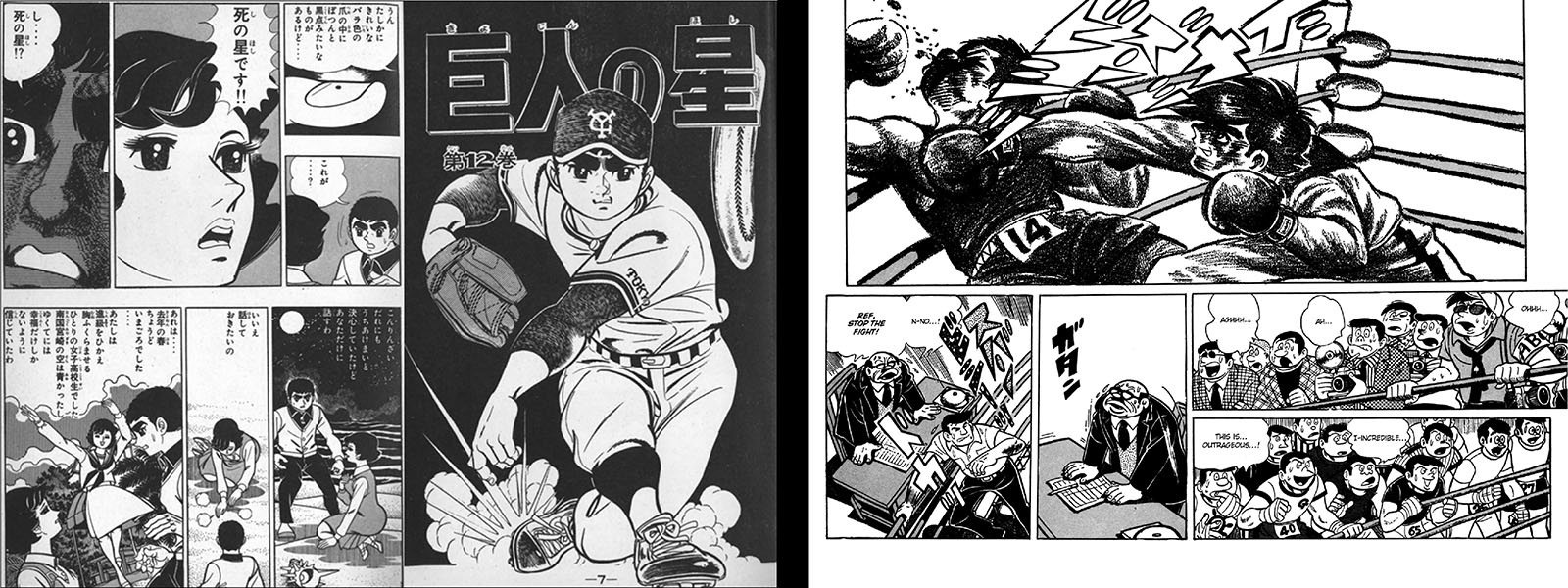
These titles, and many others like them, were aimed at the teenagers who needed comics to “graduate” into when their attraction to younger fare wore off. Joe went a step further to become a mascot of 1960s student movements protesting conservatism, which turned gekiga into the stuff of rebellion.
Even more rebellious were comics oriented toward adult men. In this genre, the comparatively reserved Tezuka style was counter-pointed by gritty, graphic, hard-boiled nihilism. A typical story from this category drags you through the world of criminals, gangsters, bent cops, and crooked politicians. It smells like cigarette smoke, tastes like whisky, sounds like dirty jazz, and feels like ossified angst. The characters can look carved out of wood or chiseled from stone, often representing those on the bottom rung of society. And it’s hard to like any of them at first glance.
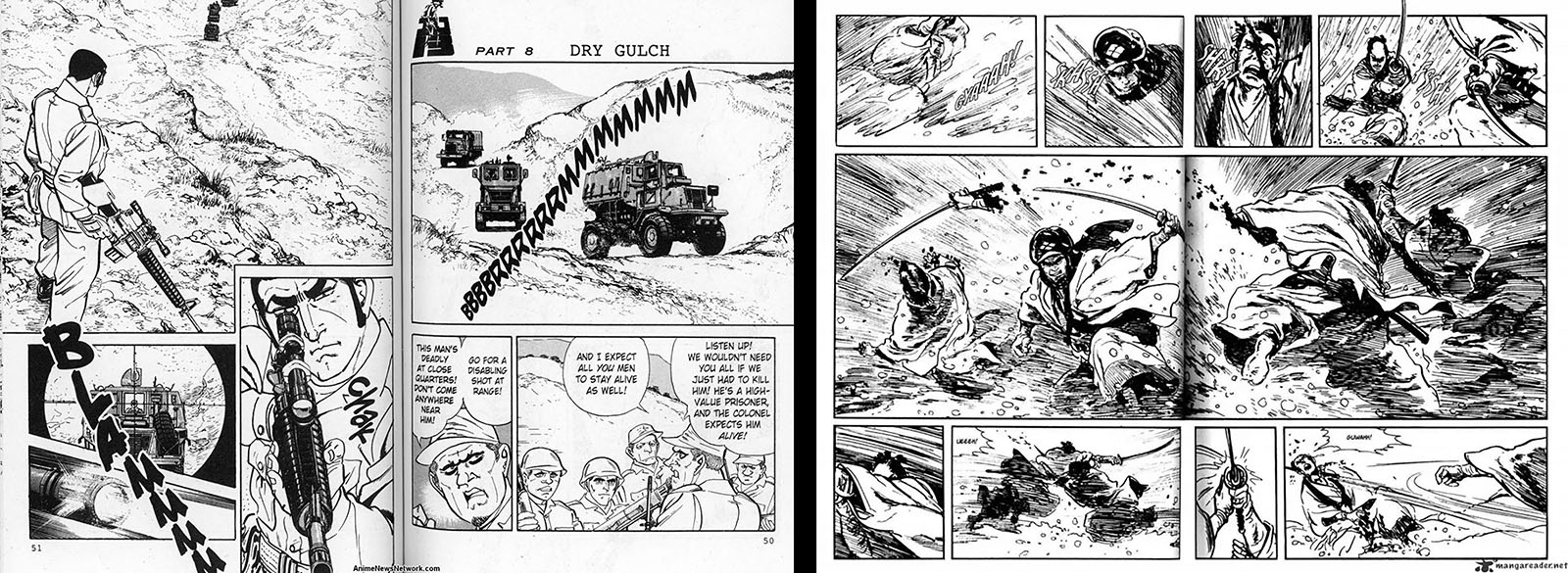
At its darkest, it’s an illustrated cousin of grindhouse cinema. A storytelling style almost devoid of empathy, depicting a world of agressors and victims. A showcase for trauma with little thought of consequences or recovery, eager to declare “the end” before things get too introspective. Sometimes, the goal is simply to be lurid and provocative, like an urban myth that ends with revulsion. If there is any grief or regret to be endured, it happens off the page.
Whether dark or light, gekiga stories usually confined themselves to the real world, but like any truly progressive style it continued to progress even as the word “gekiga” itself evolved into anachronism. When fantasy was spliced into its DNA, we got breakthroughs like Space Adventure Cobra, Fist of the North Star, and Attack on Titan. When you look for gekiga’s influence in modern manga, you’ll see it everywhere.
Obviously, we don’t have the word in western media, but if we did it would be perfectly descriptive of a certain Shark-centric 1974 potboiler written by Peter Benchley. And if the movie version had been directed by someone other than Steven Spielberg, it might have fallen into the same pot.
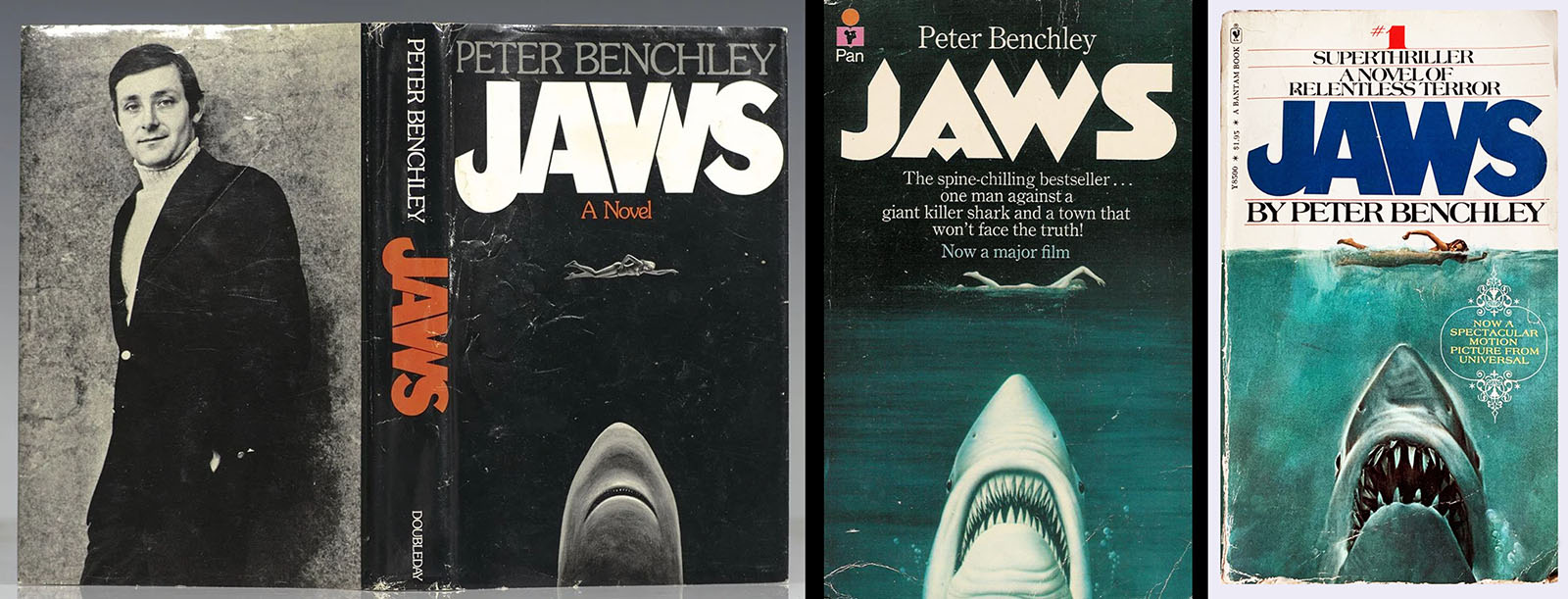
At last, this account brings us to Gekiga Jaws: a Japanese adaptation perfectly suited to its subject.
In 1975, Jaws premiered in America on June 20 and followed two weeks later in Japan, on July 4th weekend (talk about perfect timing). It redefined the word “blockbuster” and began the process of modernizing cinema itself. This didn’t quite extend to the merchandising machine that would be created two years later by Star Wars, but it certainly supercharged the world of publishing.
Newspapers and magazines were the quickest to respond to the phenomenon, then book publishers rushed out anything they could think of that said Jaws on it. The fervor was there in Japan, too, but it took Gekiga Jaws five months to appear owing to production time.
Once the licensing agreement was struck, it would have taken 3-4 months to write and draw, and it was published on December 15. There appears to have been only one print run, and it’s become an exceedingly rare collectible in the time since then. It took years of searching and losing online auctions, but I finally managed to land this fish. Let’s open it up and see everything it ate.
Oh, and save some room for dessert afterward.
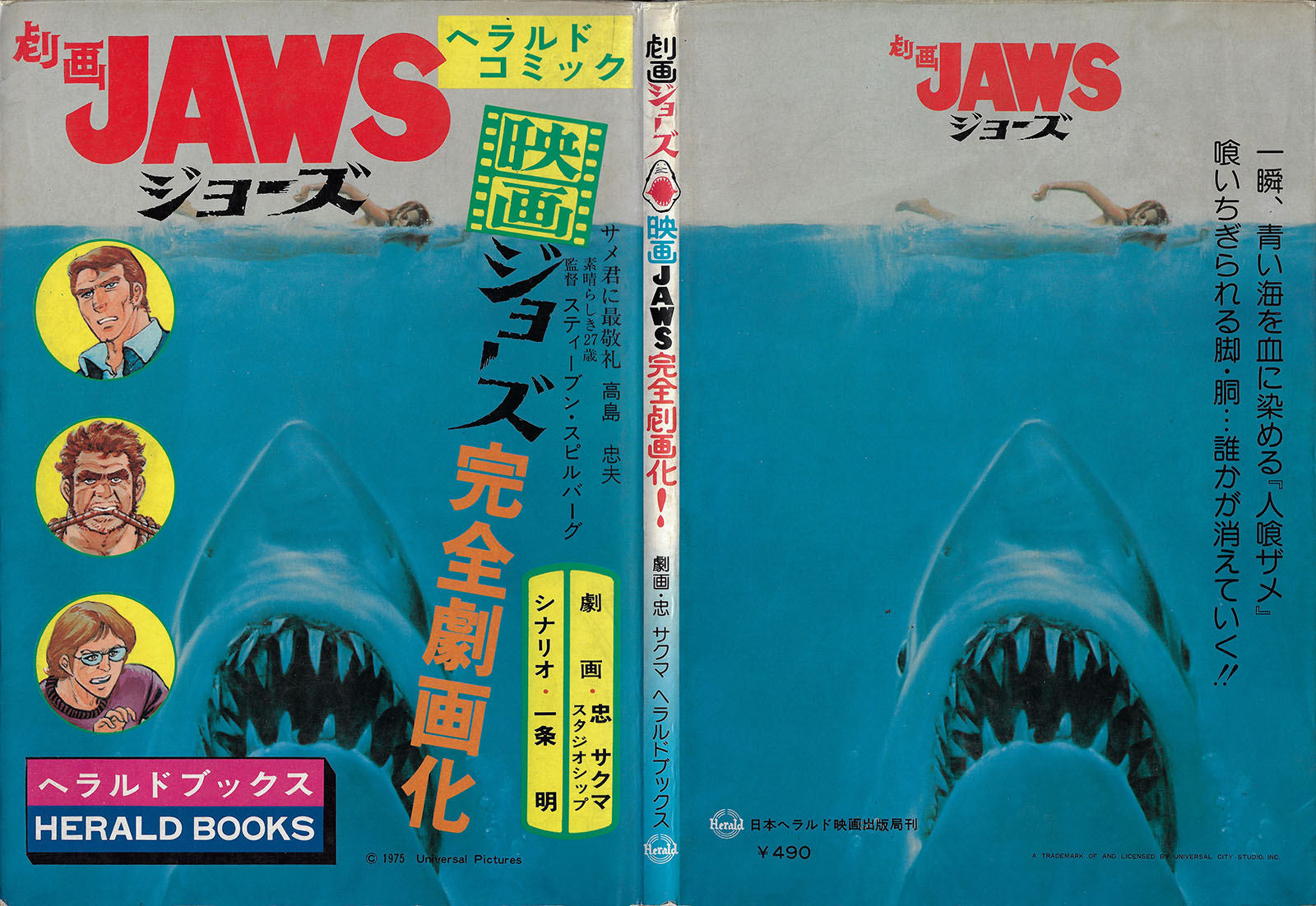
Gekiga Jaws
Movie Jaws fully illustrated
Art by Tadashi Sakuma/Studio Ship • Script by Akira Ichijo
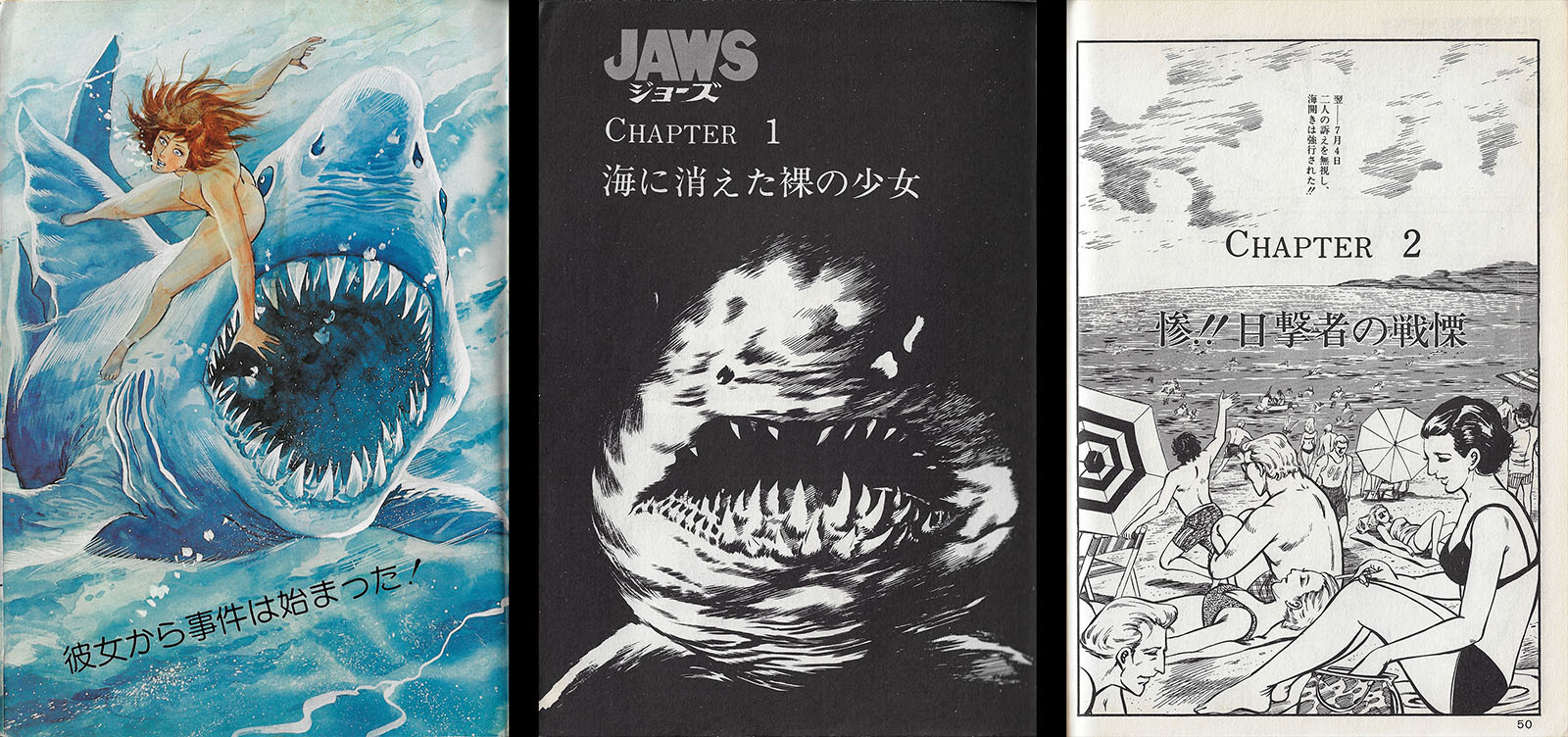
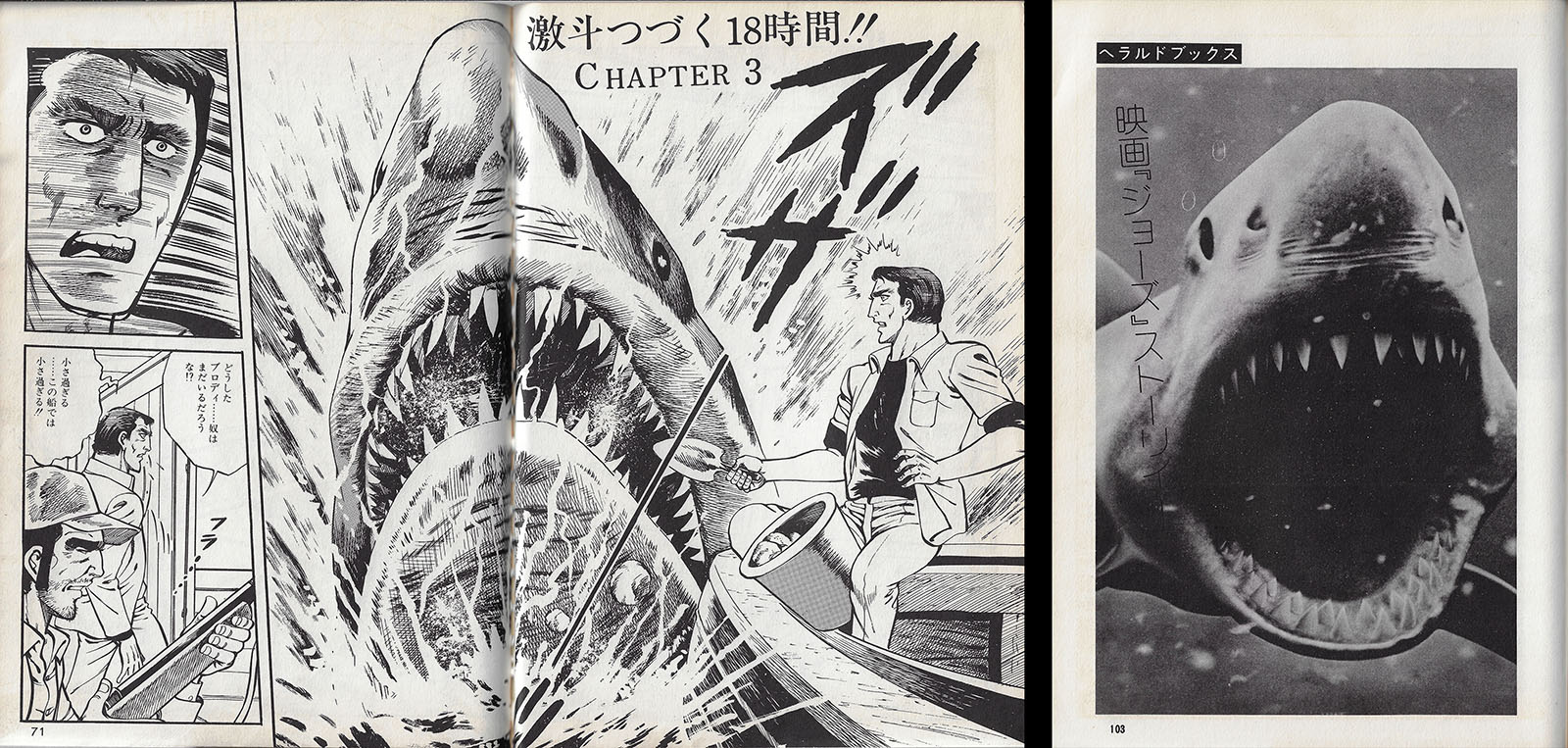
Lucky Special Bonus
Here’s where it gets even kookier. Gekiga Jaws wasn’t the only adaptation. It wasn’t even the first.
Now we look into another aspect of Japanese publishing, specifically the lack of exclusivity that made it such a madhouse in the 70s. Back then, it was not at all uncommon for rival publishers to go after the same IP. Big franchise titles like Ultraman, Kamen Rider, and Space Battleship Yamato were found in multiple books and magazines on the same shelves at the same time. It was often hard to tell they were competing until you looked at where they came from.
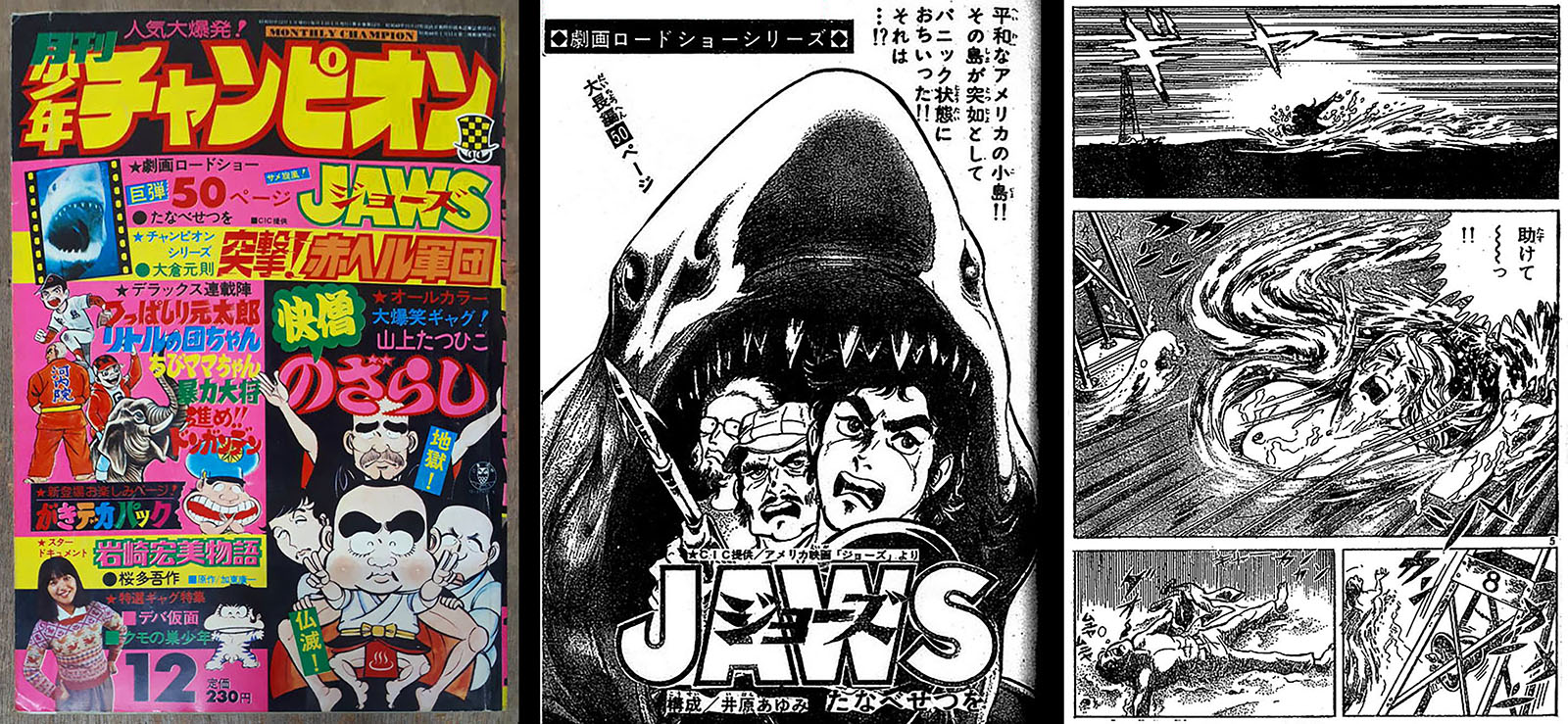
And so it was with Jaws in 1975. One month before Gekiga Jaws, there was a whole other Gekiga Jaws from a publisher named Akita Shoten. Their manga anthology magazine Weekly Shonen Champion debuted in 1969 and is still going today. In 1970, they added a companion called Monthly Shonen Champion (Shonen means Boy, in case you didn’t know). And when the December 1975 issue appeared (published in November), Jaws was the first item on the front cover.
Inside was a highly compressed 50-page adaptation by artist Setsuo Tanabe, the 23rd installment in a series called Gekiga Roadshow. Other titles in this series included Enter the Dragon, Dirty Harry, The Towering Inferno, and even Blazing Saddles. Ideal gekiga subjects all.
This Jaws was also drawn in a typically sensationalist style, rushing through the film with little time for (or interest in) character development. Copies of the magazine are still around, but are just as rare as Gekiga Jaws, so the search for this one continues.
However, the concluding 17 pages were photographed and posted online by a generous collector, and can be seen here.
Gekiga Jaws 2
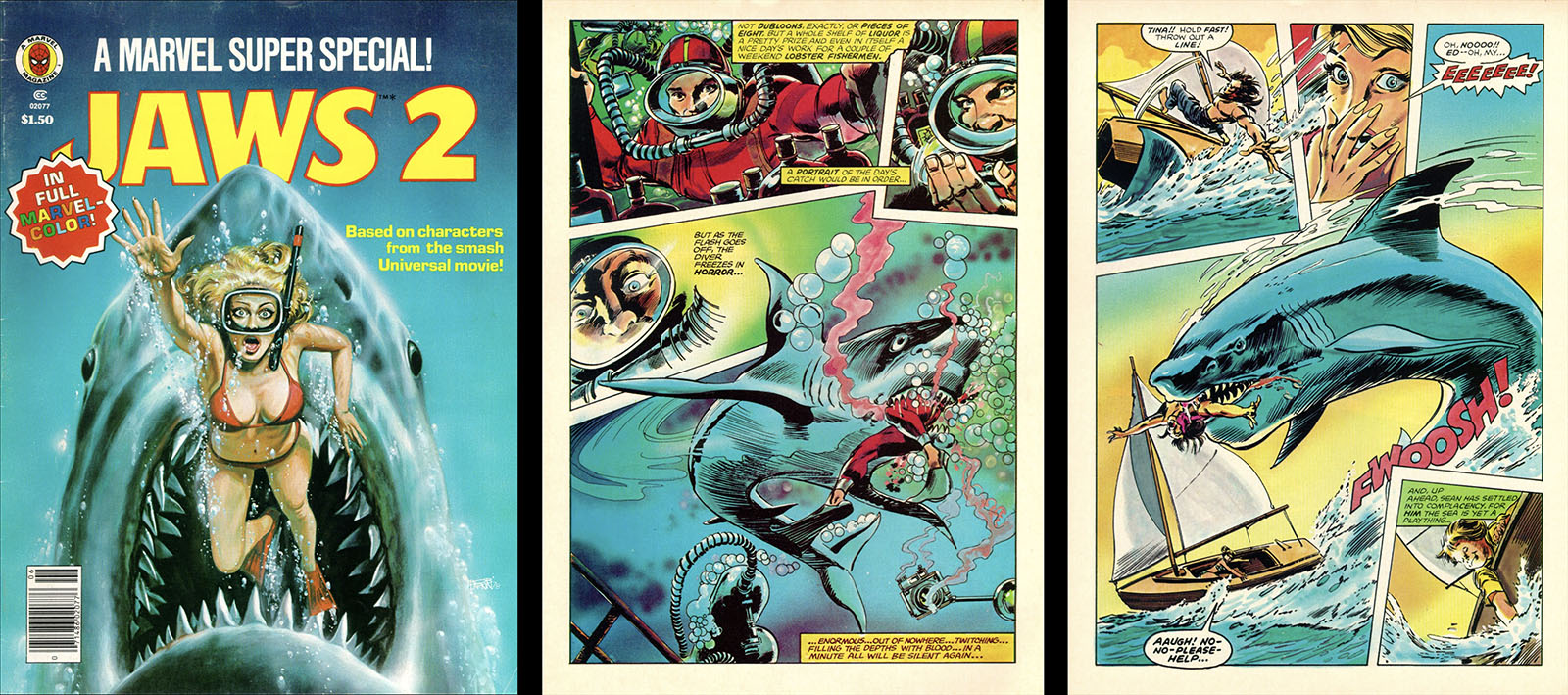
Ever the afterthought, the sequel to Jaws also got to chew its way through the pages of a comic book. This one didn’t come from Japan, though. Marvel Comics launched its Super Special series two years too late to do Jaws, but it was fully in place to cover Jaws 2 in 1978.
Marvel Super Special #6 contained a full-color, 48-page adaptation written by Rick Marschall, drawn by penciler Gene Colan and inker Tom Palmer. The end product is what it is, but here’s the thing: if you had to pick one Marvel artist from the 70s to slap a “gekiga” label on, there was no better candidate than Gene Colan with all his distorted, sinewy angst. Once you see it, you can’t unsee it.
Read Jaws 2 from cover to cover here
Read a review of the Jaws 2 comic here