
Comics go to the movies: The Empire Strikes Back (1980)
It’s hard to say anything about Empire that hasn’t been said already. Star Wars pretty much owned my life from 1977 onward, and when Episode V landed on all of us in 1980 there was no going back. It was a rising tide that set the quality bar much higher than before. You could feel that shift in Star Wars merchandising. What used to be a “wild west” of wacky, homespun takes became more focused. More guided. For me, that shift was most obvious – and most welcome – in the Star Wars comic books from Marvel.
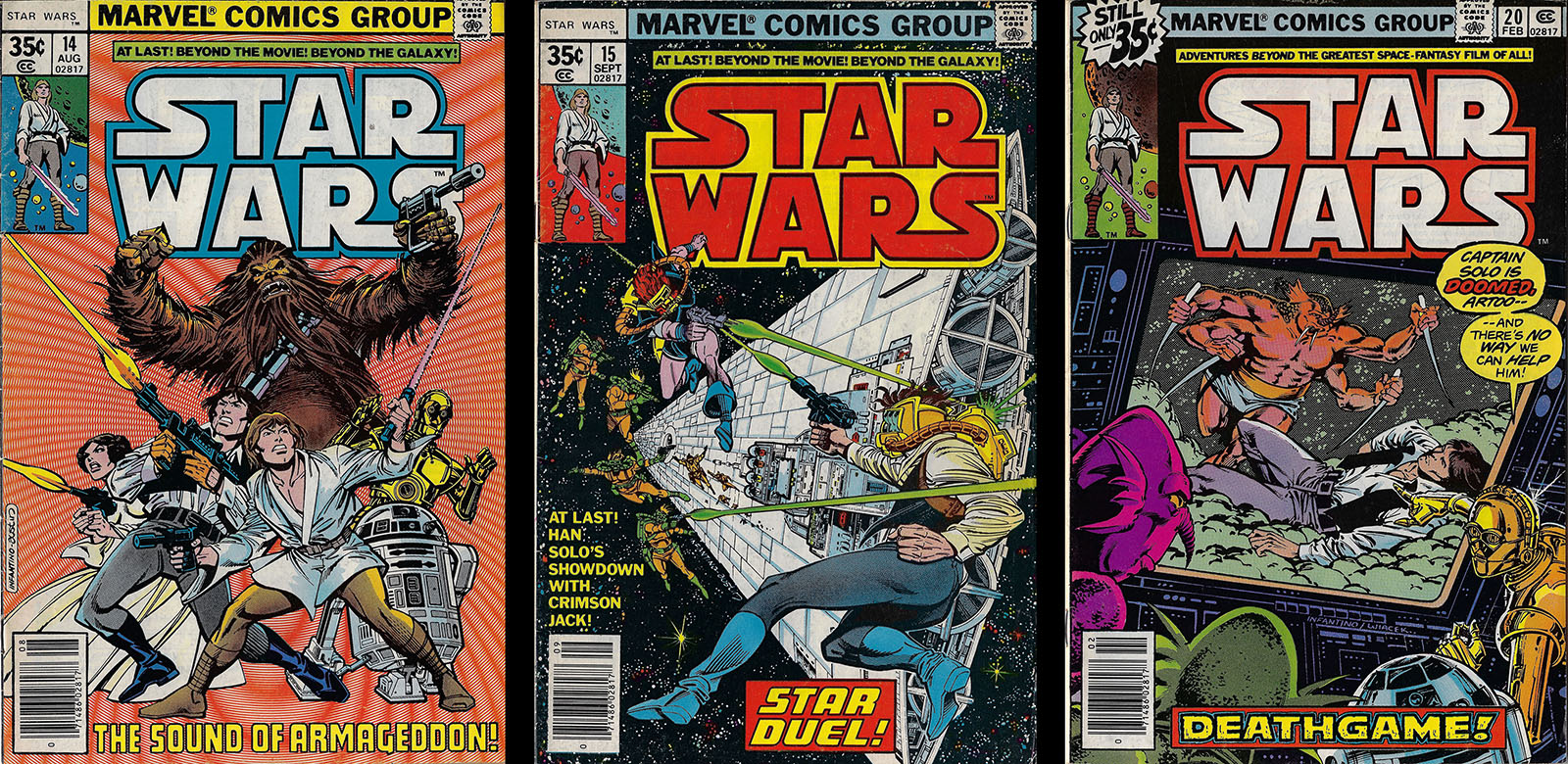
I’d been a reader since the beginning, and though the writing usually hit the marks, the same was not true of the art. Starting with issue 11 (May ’78), the regular penciller on the series was Carmine Infantino, whose career went all the way back to the 1940s. He made his biggest mark at DC, where he rose from penciler to editor to publisher before returning to pencilling as a freelancer in 1976. He was on Marvel’s Star Wars through issue 37, taking just two issues off.
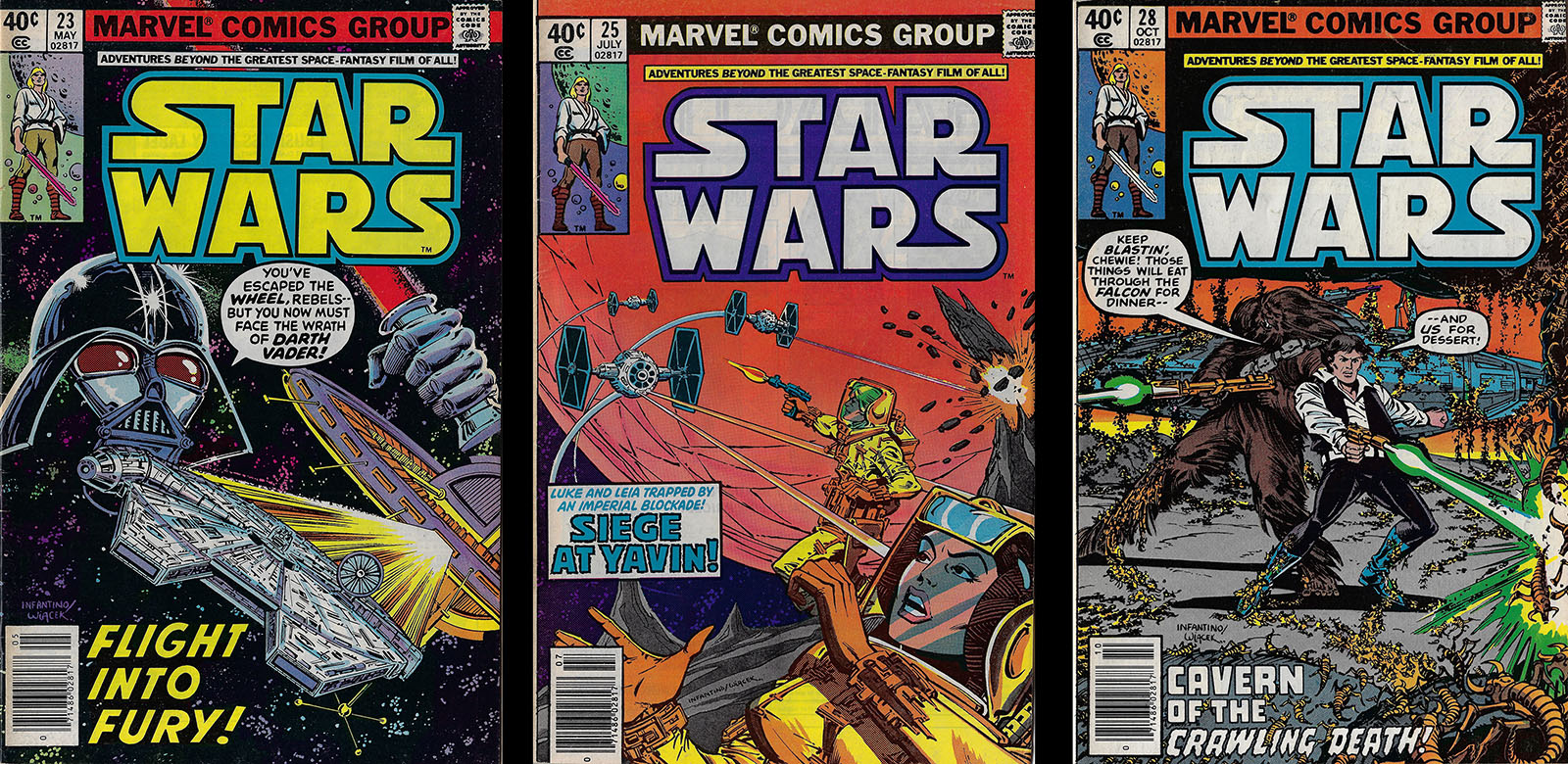
From the very beginning, I knew Carmine and I weren’t gonna get along. I was drawing my own homemade Star Wars comics back then (see them in the Kid Comics section), and despite being a rank amateur with no training, I knew where I wanted to be one day. I had already determined that if you were going to draw Star Wars, the first thing you had to do was study Star Wars. You had to get your hands on as much reference as possible and pay your respects to the designers and filmmakers by representing their craftsmanship on the page. And it was painfully obvious that Carmine Infantino had little interest in doing that.
Page after page, issue after issue, month after month, I only got angrier at what I was seeing. The books and magazines and model kits on my own shelves contained everything necessary to get it right. These things weren’t hard to get. But the only reference Carmine evidently had was the Star Wars Sketchbook. The problem was, that book only contained work-in-progress designs, not the finished ones. He started out drawing those, then just drifted to wherever the hell he wanted. Adding insult to injury, whenever he came up with something original it showed no understanding of the Star Wars design aesthetic. It could have come from anywhere. And yes, I took it personally.
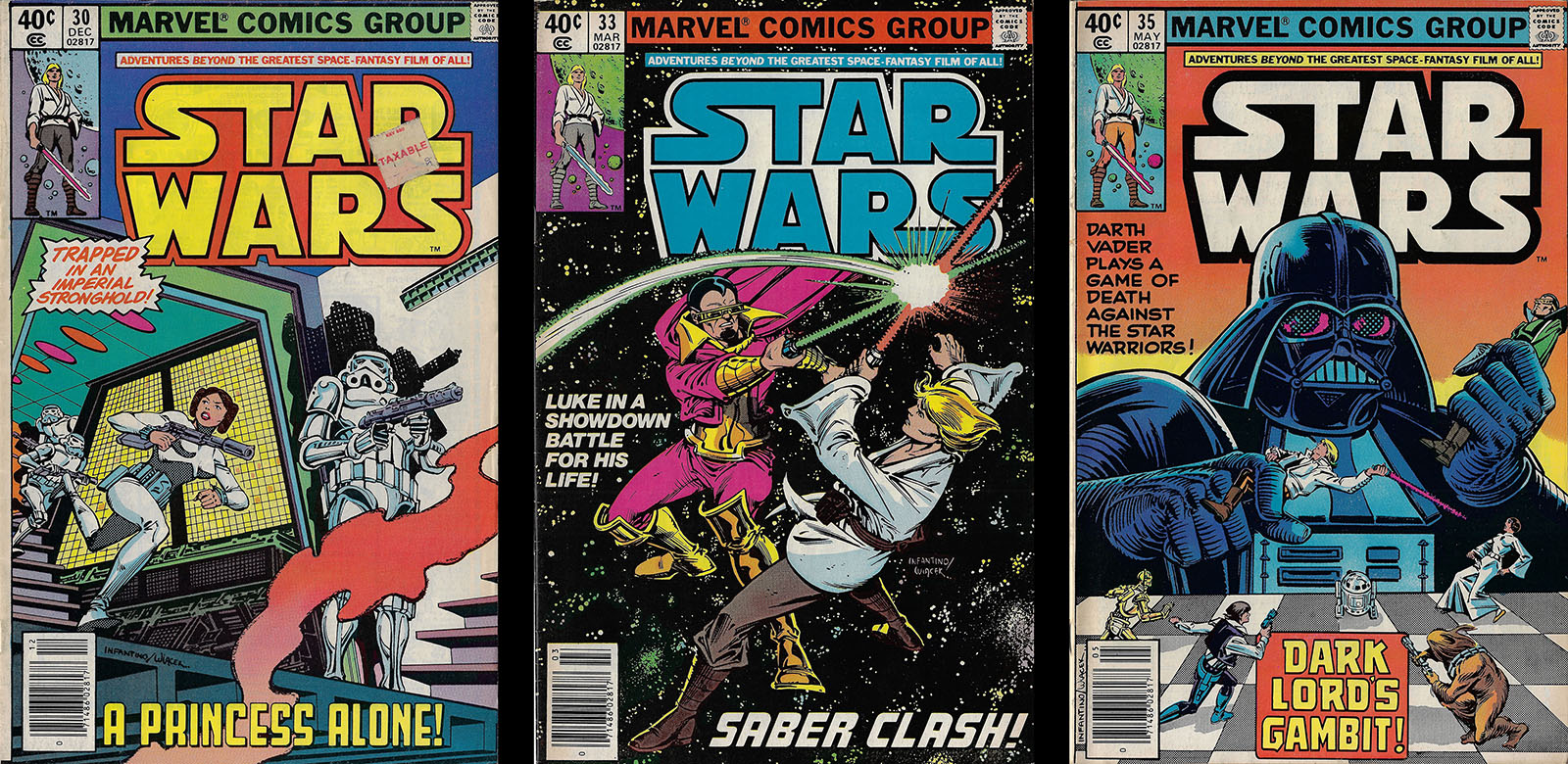
The character art was worse. There was no attempt to make them look anything like the actors who portrayed them. The figure drawing was wonky and angular in ways that once worked for superheroes, but definitely not for a comic based on a film. The alien designs were cheap and lazy, invented on the spot. Did this Carmine guy think he was above it all? Did he think he could just draw Star Wars as if it was any other comic? Star Wars was special to me, and this sure wasn’t the way I wanted it to be treated. It was the supreme example of the “wild west” approach I mentioned above.
I griped about it to the one comic book pro I knew at the time (who taught a class in drawing comics) and his response was, “but he’s a great storyteller.” This referred to the choice of images, camera angles, panel shapes, etc. that communicate action and continuity. This was something I never had to struggle with. It just made intuitive sense to me. But it reminded me of the many levels of expertise you need to be successful in this game. Sure, Carmine was a good storyteller. I never questioned what I was looking at or what was happening. But compared the terrible drawings themselves, it seemed like he was just meeting the minimum requirement.
What kept me coming back was the writing (mainly by the great Archie Goodwin) and the hope that somehow, against all odds, it might get better. Maybe next issue I could actually kick that football before Carmine pulled it away again. This happened only three times during the Carmine era, only because there were three issues Carmine didn’t draw.
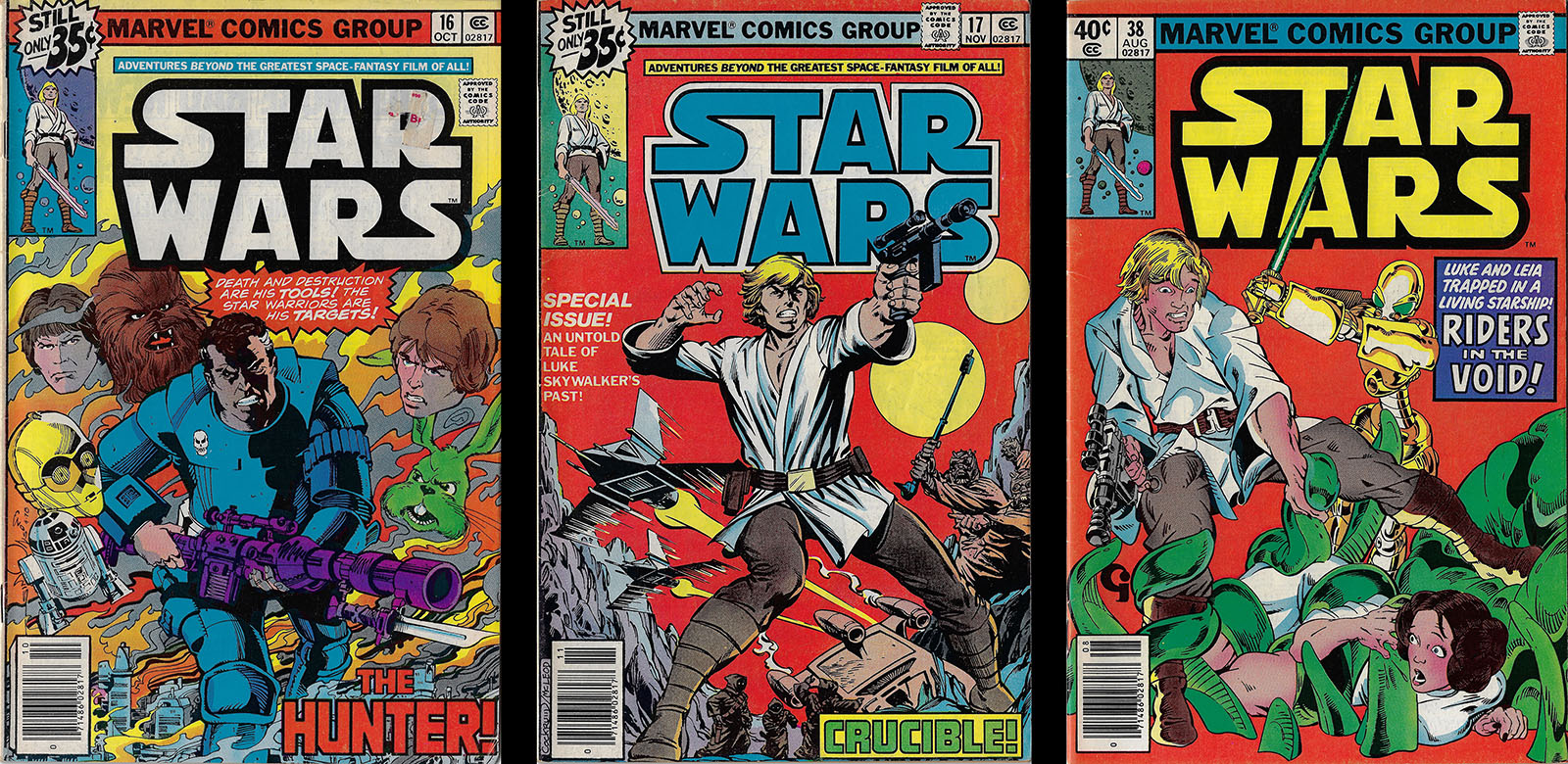
The first was issue 16, The Hunter, drawn by Walt Simonson. Walt was, is, and always will be a genius. A master of page design and impact. He would later become a regular artist on Star Wars in the post-Empire years, and I loved everything he did. Next came issue 17, Crucible (a Tattooine flashback) drawn by Herb Trimpe. I liked his work on Hulk and Godzilla, and he was merely okay on Star Wars, but certainly better than Carmine. It was refreshing.
The third was issue 38, Riders in the Void, drawn by Michael Golden. This one was a revelation. Even today, it’s one of the best-looking Star Wars comics ever published. Golden was the polar opposite of Carmine, capturing the visual flavor of the films in a way I’d been desperate to see. This single issue proved to me that I wasn’t crazy. That it COULD be done right if the artist simply cared enough to put in the effort.
Fortunately for me and all those like me, we were not alone in wanting Marvel to treat Star Wars better. Someone else wanted the same thing, and that someone was named George Lucas. I don’t remember where I read the quote, but apparently at one point he made Marvel aware that “he didn’t like the art.” And he wanted to see a change.
And oh, what a change we got…
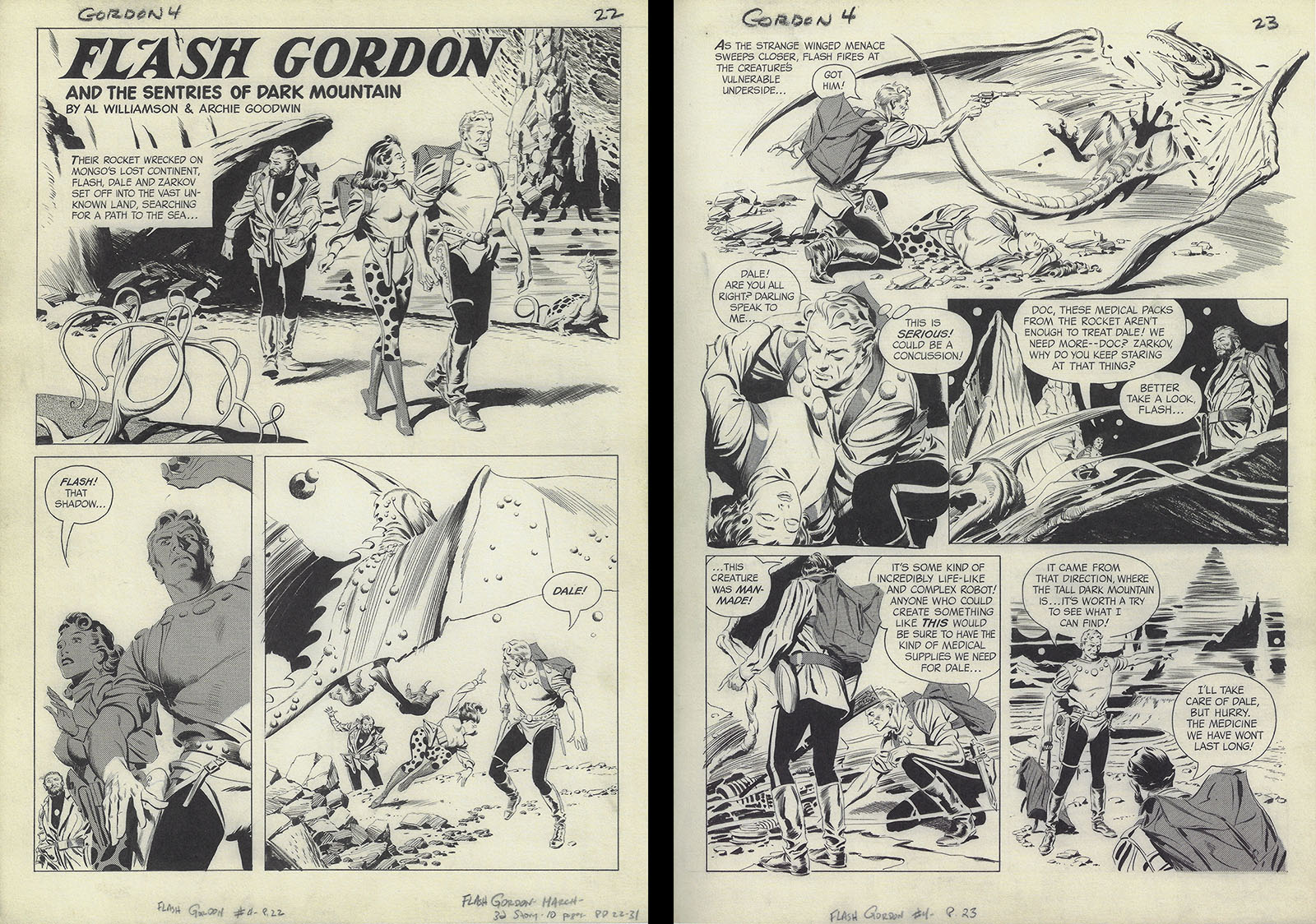
All that was the windup, and now here’s the pitch: Marvel’s 6-issue adaptation of The Empire Strikes Back changed EVERYTHING. I’d never seen or heard of the artist before he commenced with issue 39, but his work electrified me from the moment I laid eyes on it.
Al Williamson started his career a few years after Carmine Infantino and went in a very different direction, learning his craft from classic illustration and thriving on Flash Gordon (just like George Lucas). He cut his teeth on SF and fantasy strips for EC Comics and rendered Flash Gordon himself in the 60s, becoming the heir apparent to his idol Alex Raymond. George Lucas was very familiar with Al’s work and requested that Marvel hire him for Empire. Al took to it like they were made for each other.
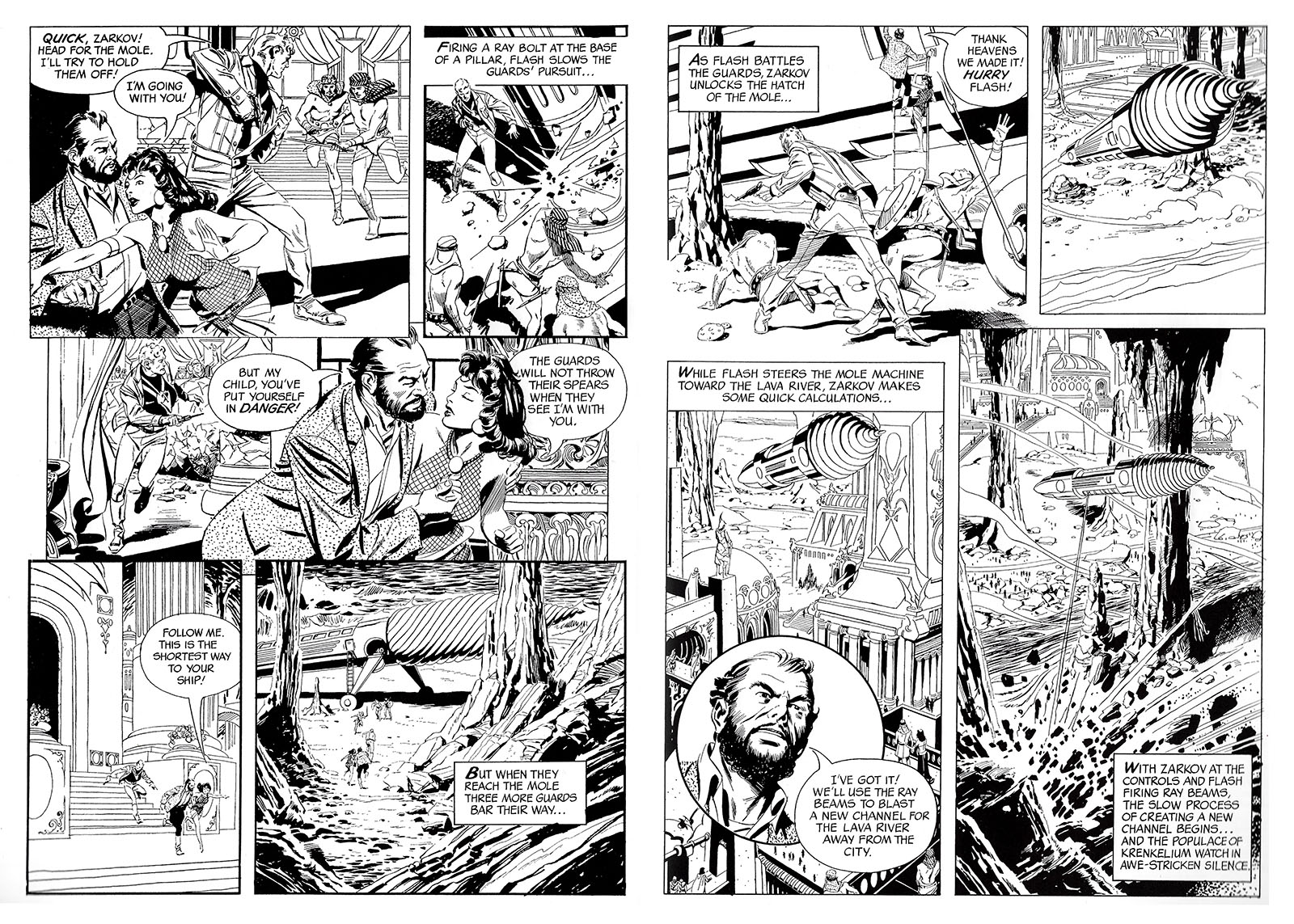
Brought up on a steady diet of Marvel superheroes, I’d never seen work like his and it was dazzling. It was clear he relied heavily on photo reference, but he was accomplished enough to fuse it seamlessly into his own style. He didn’t hesitate to bring pulp sci-fi flair to the environments, so I can’t in good faith say it all looked exactly like a Star Wars movie, but it wasn’t subtractive like Carmine’s style. Al was intimate with the cloth Star Wars was cut from, and wove the two together like a master tailor. With him at the helm, bringing the realism the series demanded, Marvel produced an exquisite, world-class Empire adaptation that would see print in multiple formats.
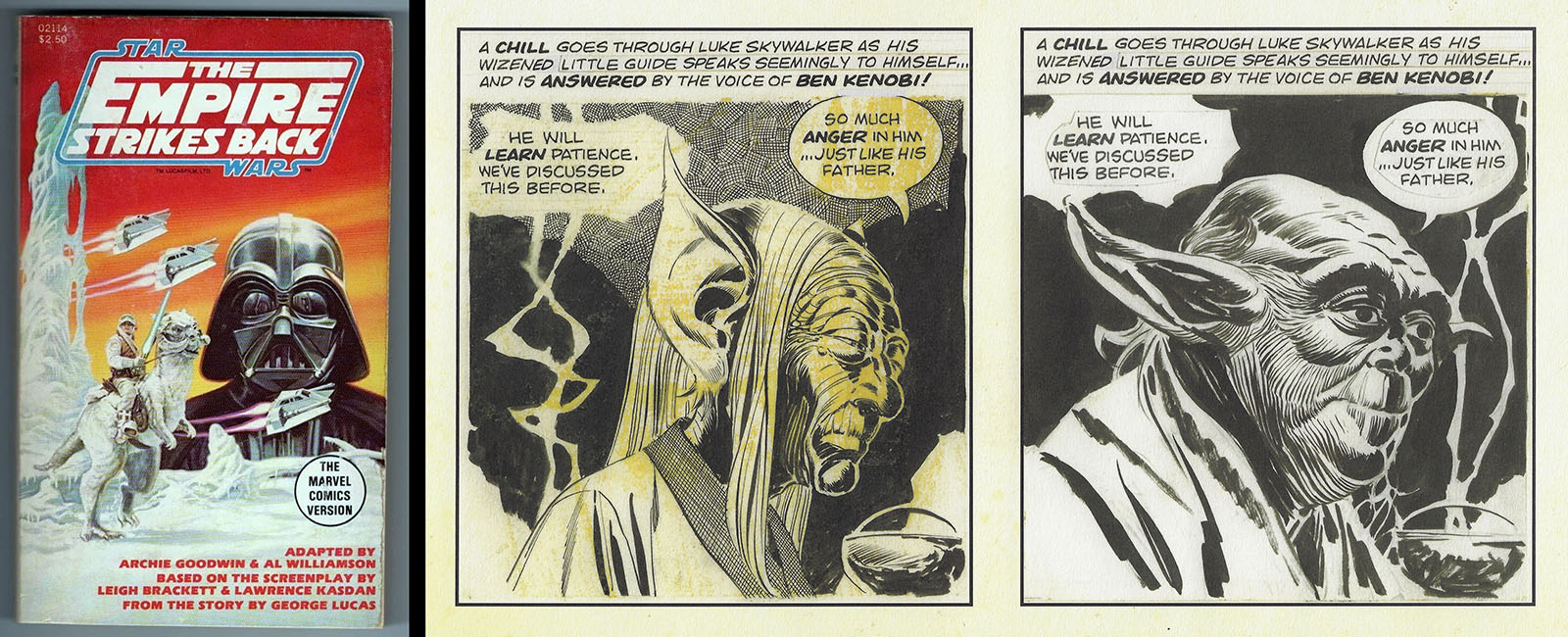
Oddly, it actually debuted in paperback form, all the panels sliced apart in a sort of scrapbook style. It came out ahead of the movie, inadvertently preserving a “first draft” that depicted a very different Yoda based on an early design by Ralph McQuarrie. The need for Williamson to start drawing before he could actually see the film resulted in plenty of artifacts like this, including lines from the screenplay that changed during filming.
I bought and read the paperback before seeing the movie, but I’d already bought and read the novelization so all the spoilers were in my head by then. I still remember the jolt I felt when reading THAT line of dialogue. You know the one. I read it in the novelization before seeing it on screen, but it still froze me in my seat.
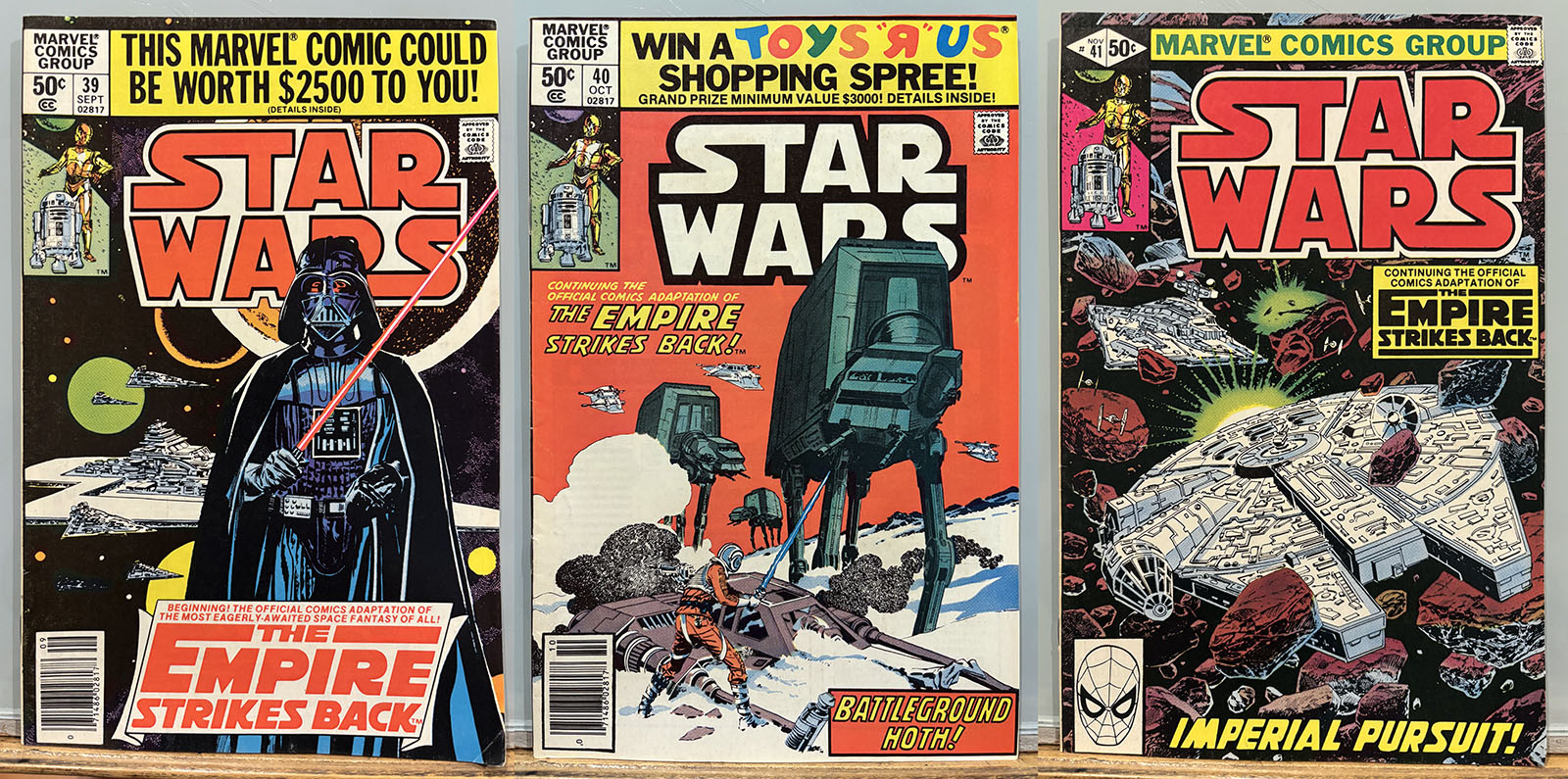
The Empire adaptation began in issue 39 of Star Wars (June ’80), and I appreciated the simplicity of this. With such a big shift, you might expect the series to restart with a new first issue and maybe even a new title, but instead Marvel “merged” into it with no rebranding. For me, it kept things in proper perspective. Empire was a huge event movie, but it was also part of a larger, ongoing story.
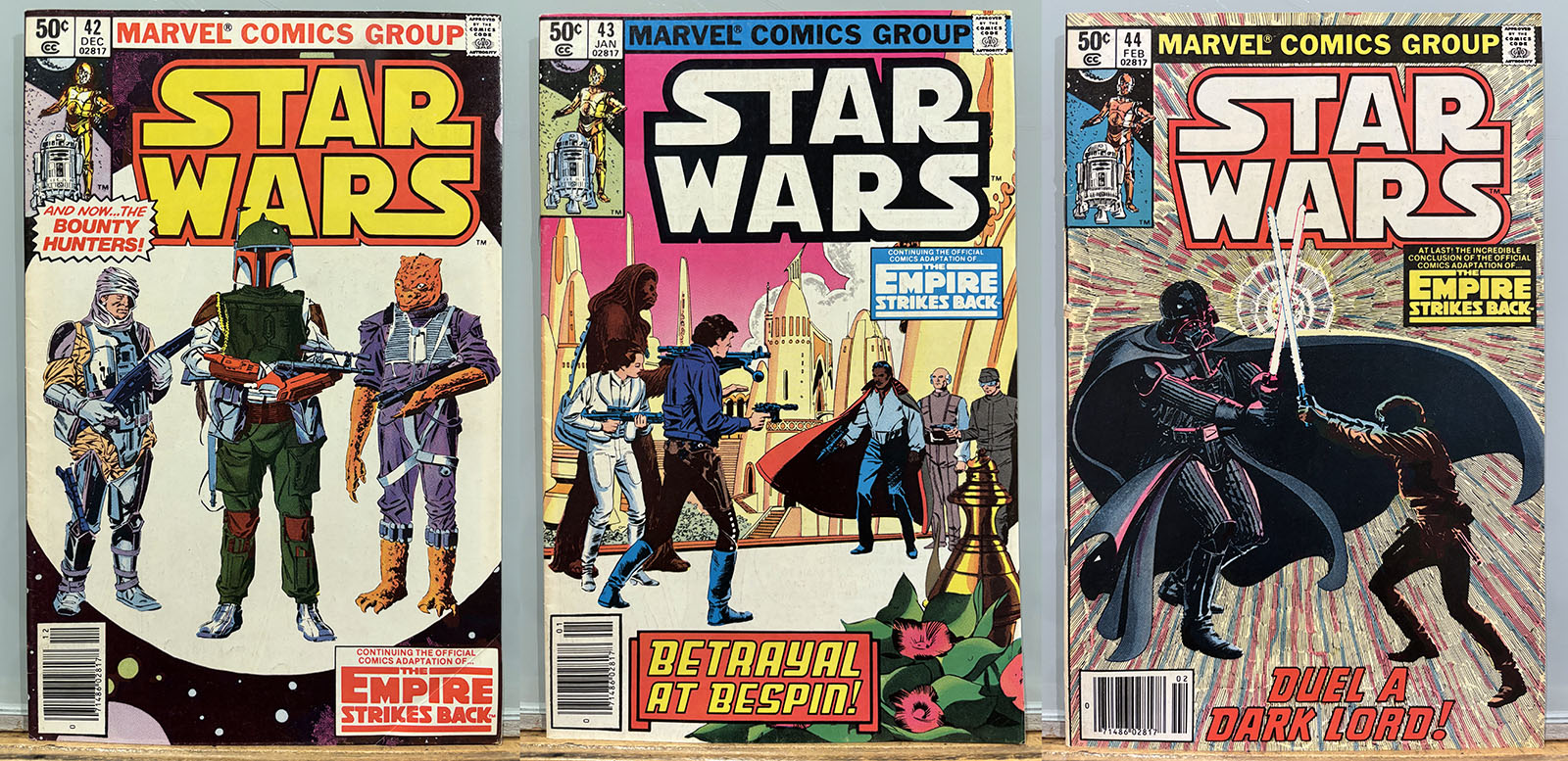
By the time Yoda appeared in issue 42, all his drawings had been revised to match his onscreen look. And as soon as the art for all six issues was completed, Marvel wasted no time in issuing reprints.
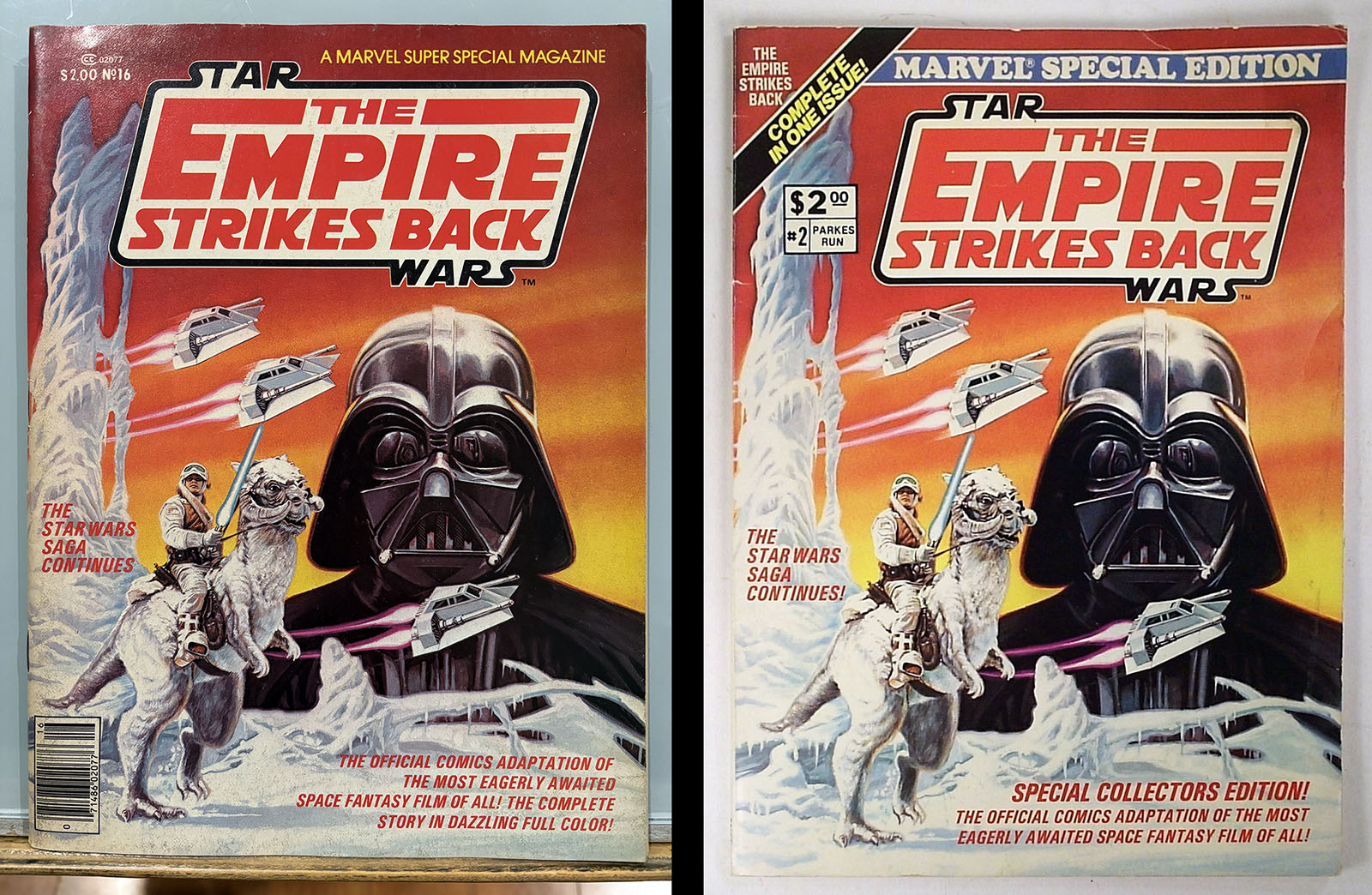
A magazine-size Super Special and a treasury-size Special Edition each put the entire adaptation into one package, both using the same cover art as the paperback (by Bob Layton). The only drawback was the primitive (by today’s standards) color techniques, which looked sloppy and simplistic over Williamson’s intricate artwork.
Nevertheless, If you kept up with everything in 1980, you’d end up with four editions, each published in a different size.
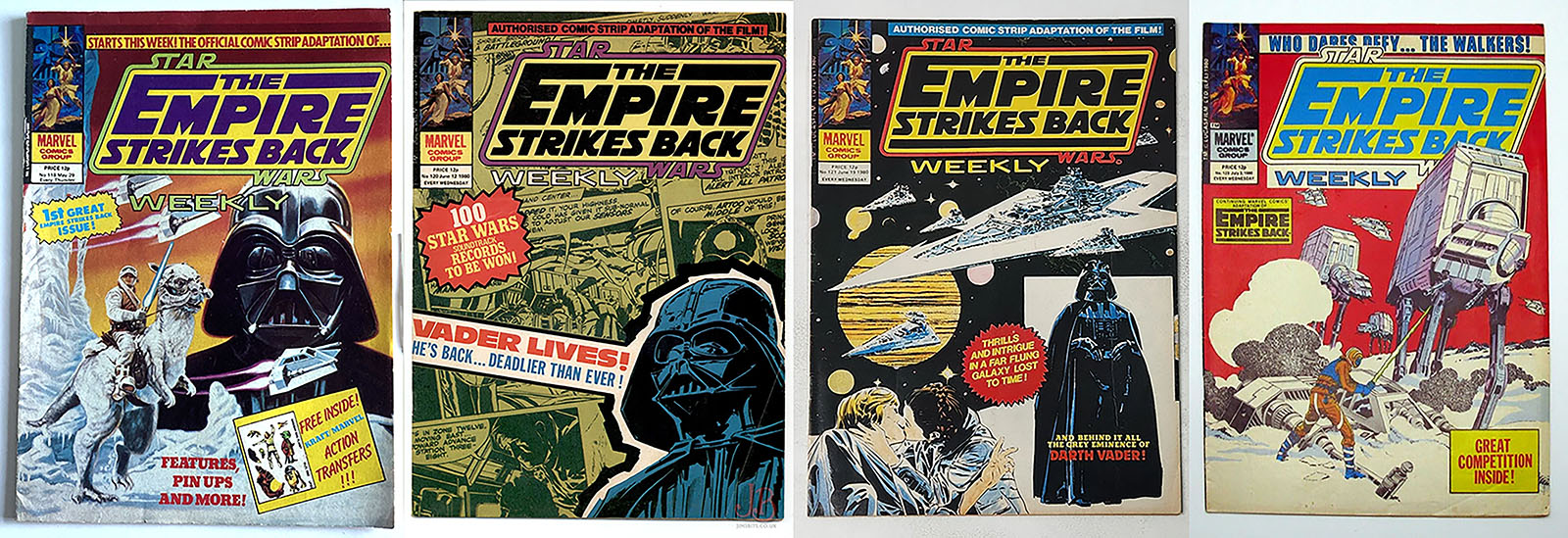
The UK edition started around the same time as the US edition. Since it was published weekly, the story was split up into shorter pieces. It commenced in issue 118 of Star Wars Weekly (with a title change) and went into the 130s. The UK Star Wars comic needed more content than the US version, and much of it was drawn by Carmine. Impossible as it seemed, it looked even worse than the stuff we saw in America. It’s been reprinted in recent years, and is (in my opinion) utterly unreadable.
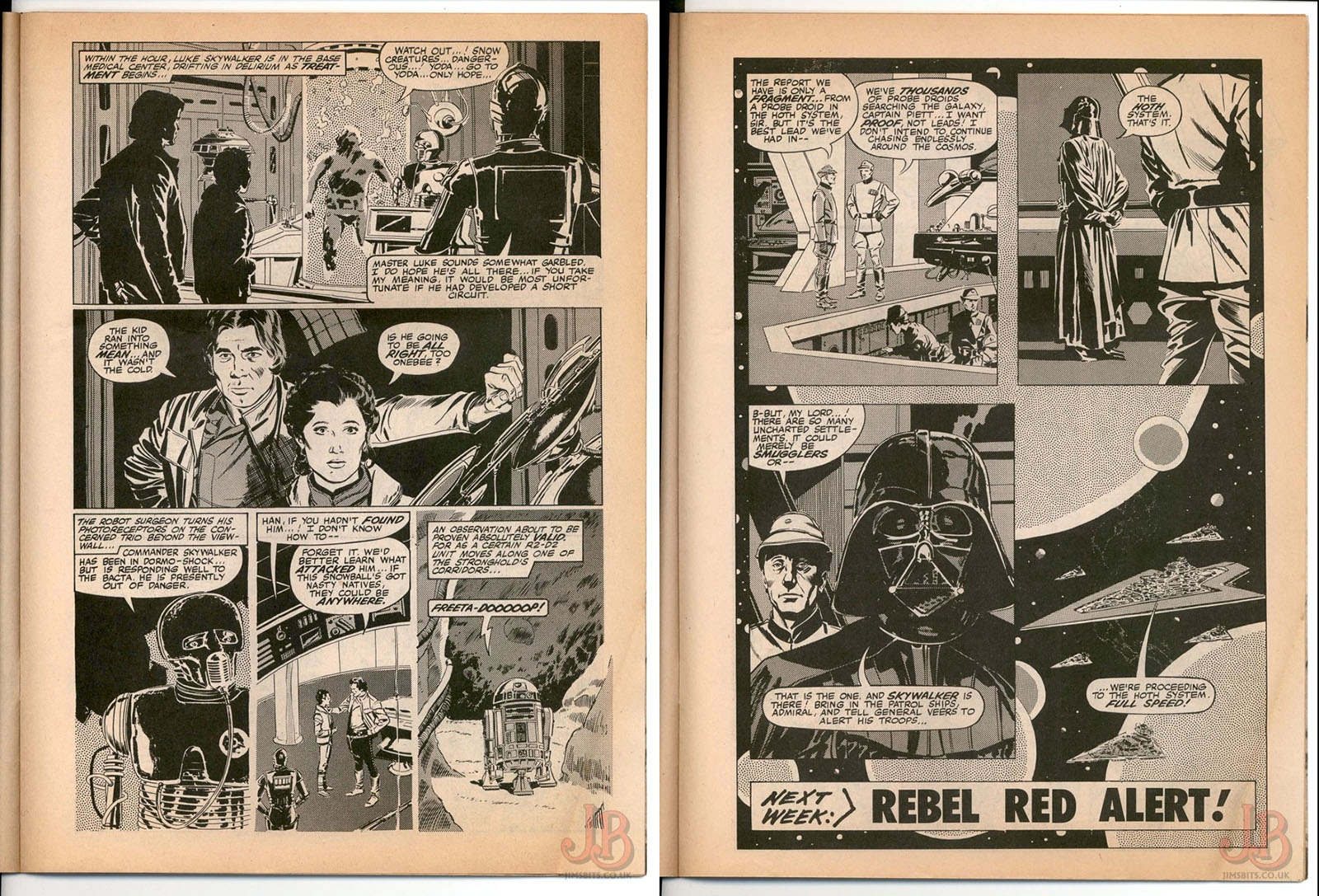
British readers dodged the primitive color bullet, since the art appeared in black and white with some grey tones. Al’s style was perfectly suited to this, thanks to his many years spent drawing newspaper strips such as Secret Agent Corrigan. In the wake of Empire, he shifted over to the Star Wars newspaper strip and made it shine.
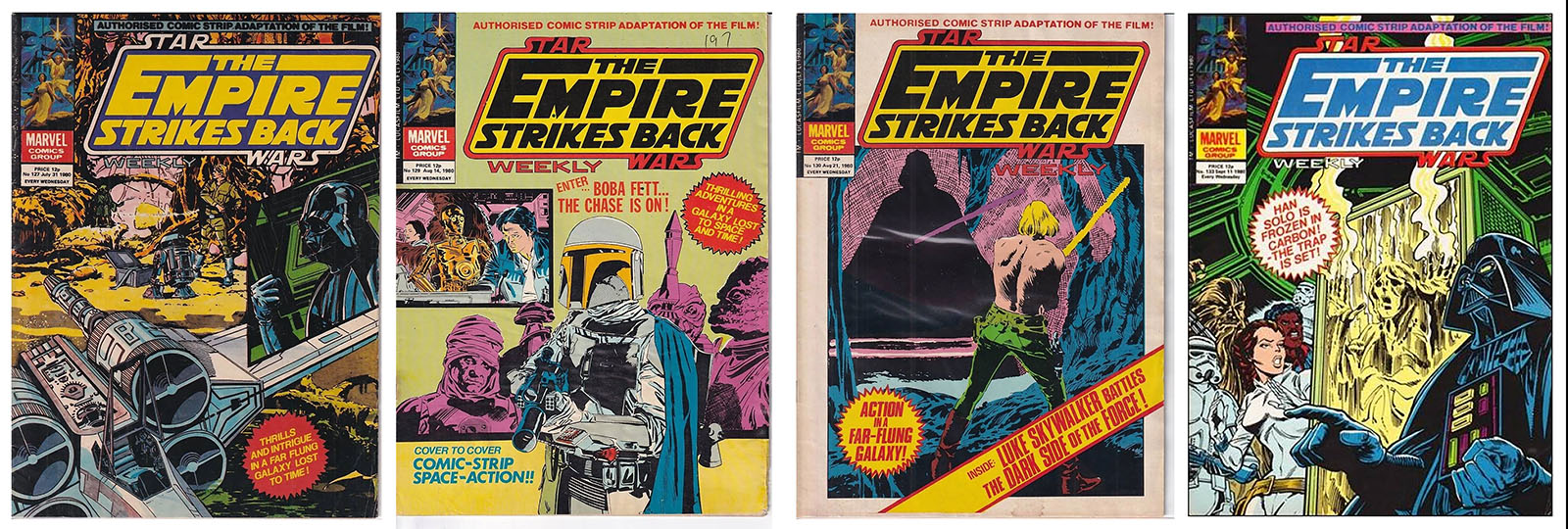
Most of the covers for the UK edition were constructed out of Al’s art, but Carmine somehow snuck in at least one image (far right). This is the only proof I need that if he had been the one to adapt Empire, the results would have been embarrassing.
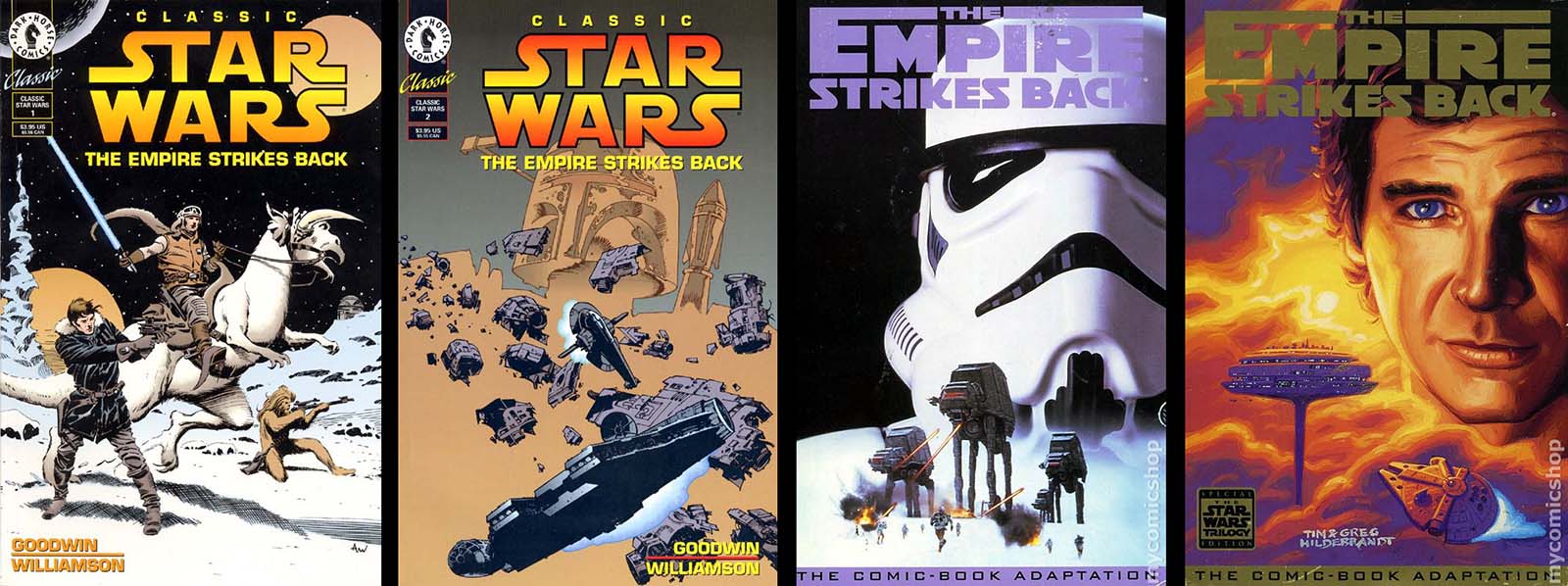
After Marvel decided not to renew the Star Wars license in 1986, it was briefly picked up by a smaller publisher named Blackthorne, and then by Dark Horse in 1991. This came with reprint rights for the entire Marvel library, leading to three new versions of Empire: a 2-volume Classic Star Wars edition in 1994, then a pair of single-volume editions in 1995 and 1997 to tie in with theatrical releases.
See the 2-volume edition in its entirety here: Volume 1 | Volume 2
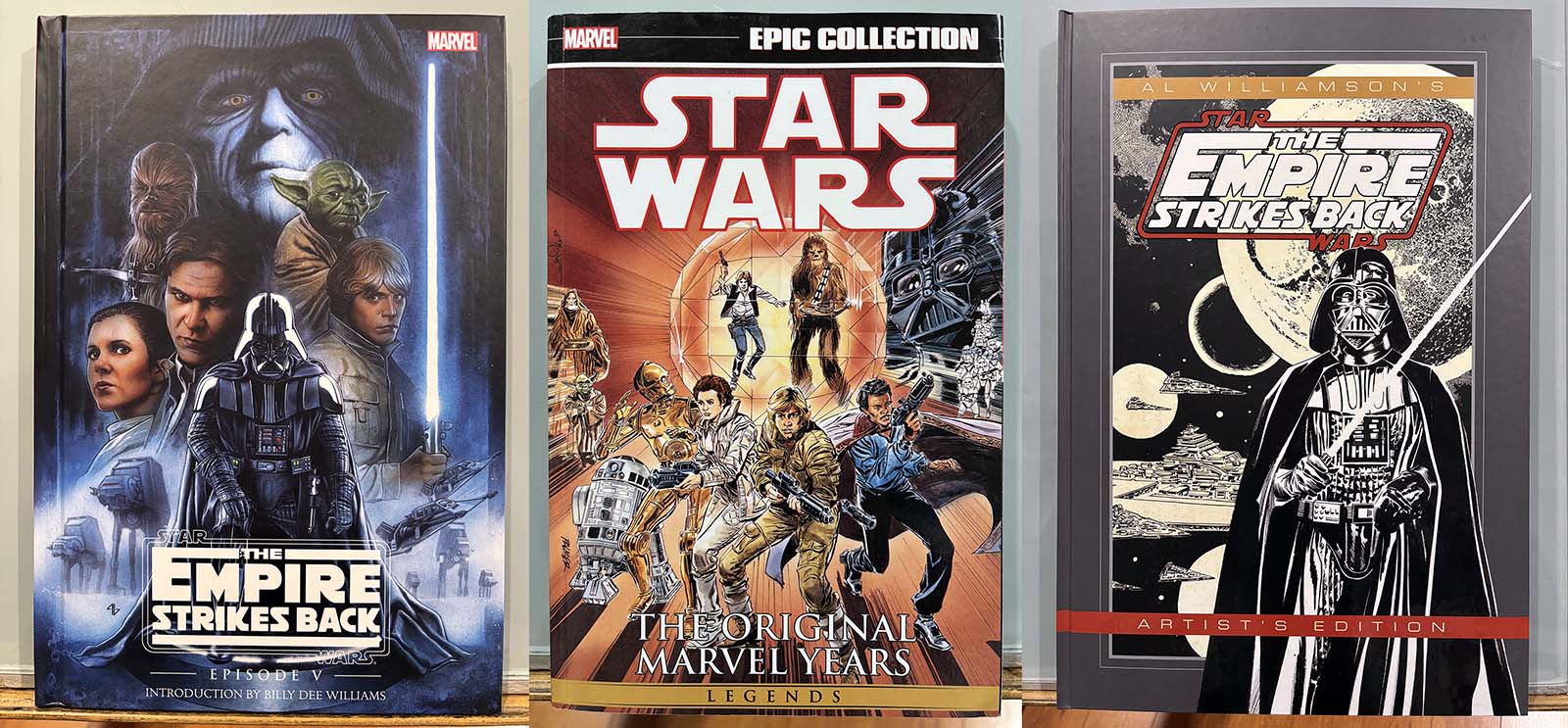
The lightsaber was passed back to Marvel in 2015, and new reprints quickly followed. It started with a hardcover (above left) in which the crude 1980 color was completely redone with modern digital techniques. A 2018 Epic Collection (The Original Marvel Years Vol. 3) returned to the original color plates but with far better printing and adjusted for less saturation.
For those who wanted to skip the color altogether (since Al’s work looks just fine without it), IDW Publishing graced us with a hardcover Artist’s Edition in 2016. This is as good as it gets, reprinting each page at the size it was drawn (a massive 14″ x 21″), scanned at hi-rez to preserve every aspect of the original art. All six issues (with covers) are reproduced along with more Williamson art from later Star Wars comics.
I can’t imagine what else can be done with this body of work, but if somebody thinks of a new way to repackage it, I’ll probably buy that one too. Meanwhile, I have to thank everyone involved for the grudging education I received from enduring the Carmine Infantino era to get to Al Williamson. It put me in a position to truly appreciate what a gift it was. I took the opportunity to explore Al’s other work and expand that appreciation further.
Read more about the history of Star Wars comics here
Other books by Al Williamson
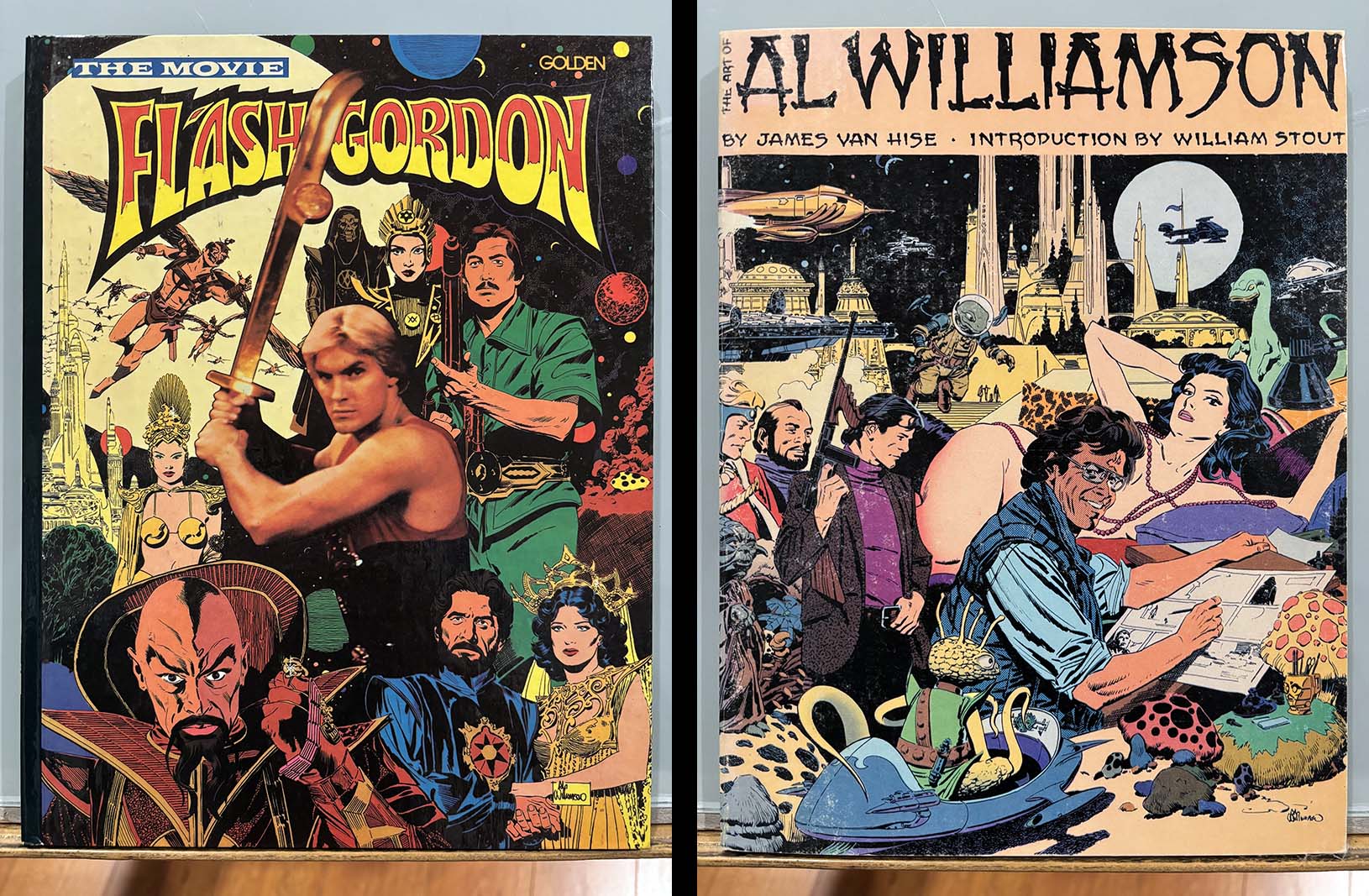
Flash Gordon movie adaptation
Western Publishing, 1980
Al’s next big project after Empire. He didn’t like the movie, so he didn’t like working on it, but he was still the perfect artist to capture it all. The color was uniformly terrible, though.
The Art of Al Williamson
Blue Dolphin Enterprises, 1983
This was the first book I found that focused on Al’s life and career, and it was a multi-course feast of everything I wanted to see and learn.
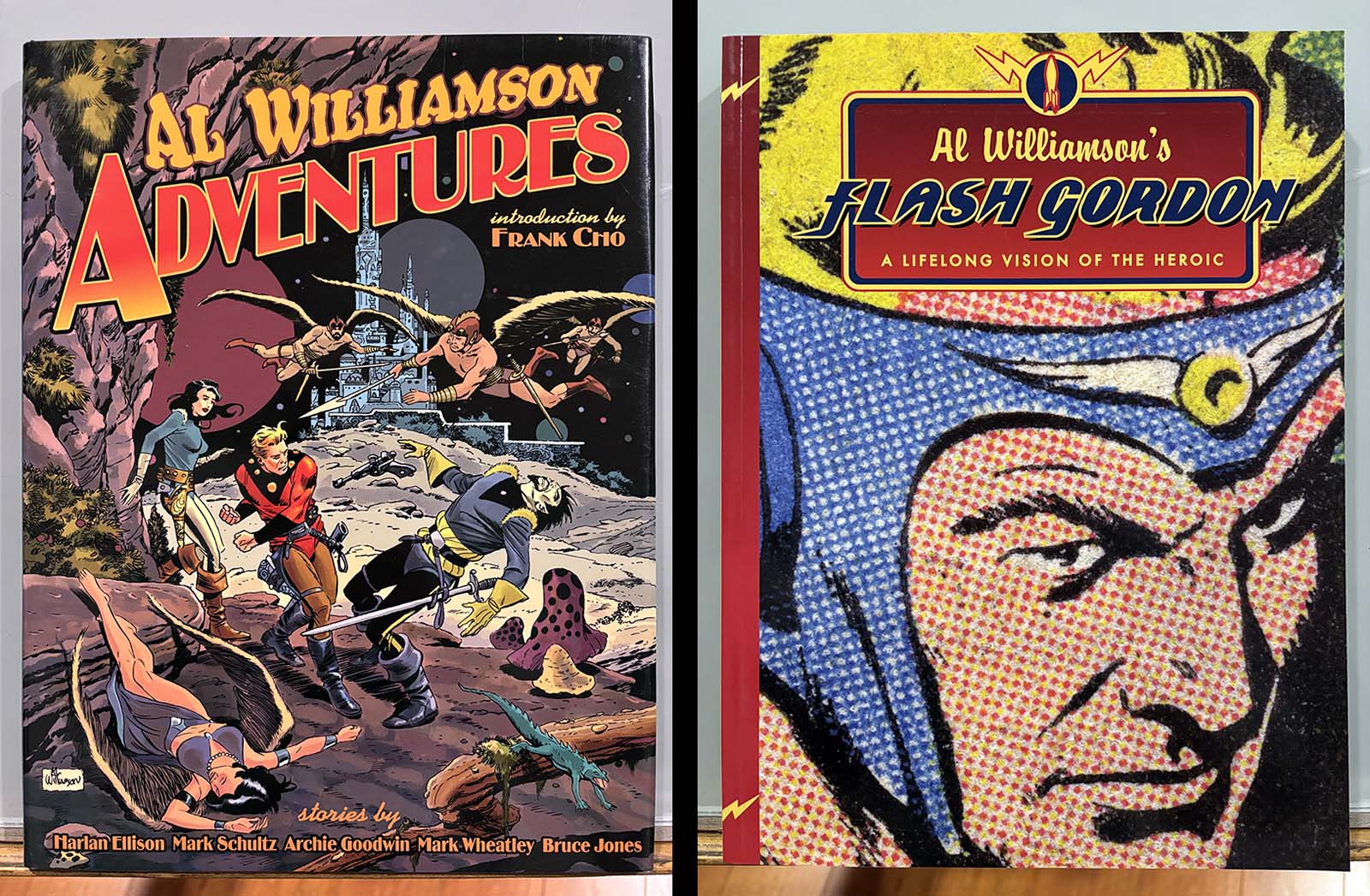
Al Williamson Adventures
Insight Studios Group, 2003
96-page hardcover collection of some of Al’s best work in the 1980s (specific dates are not given).
Al Williamson’s Flash Gordon
Flesk Publications, 2009
A 250-plus page collection of Al’s work from the 1950s all the way through 1995. Includes the entire movie adaptation in black & white.

Al Williamson Archives (2 volumes)
Flesk Publications, 2010 & 2011
64 pages each, collections of sketches and studies from various genres.
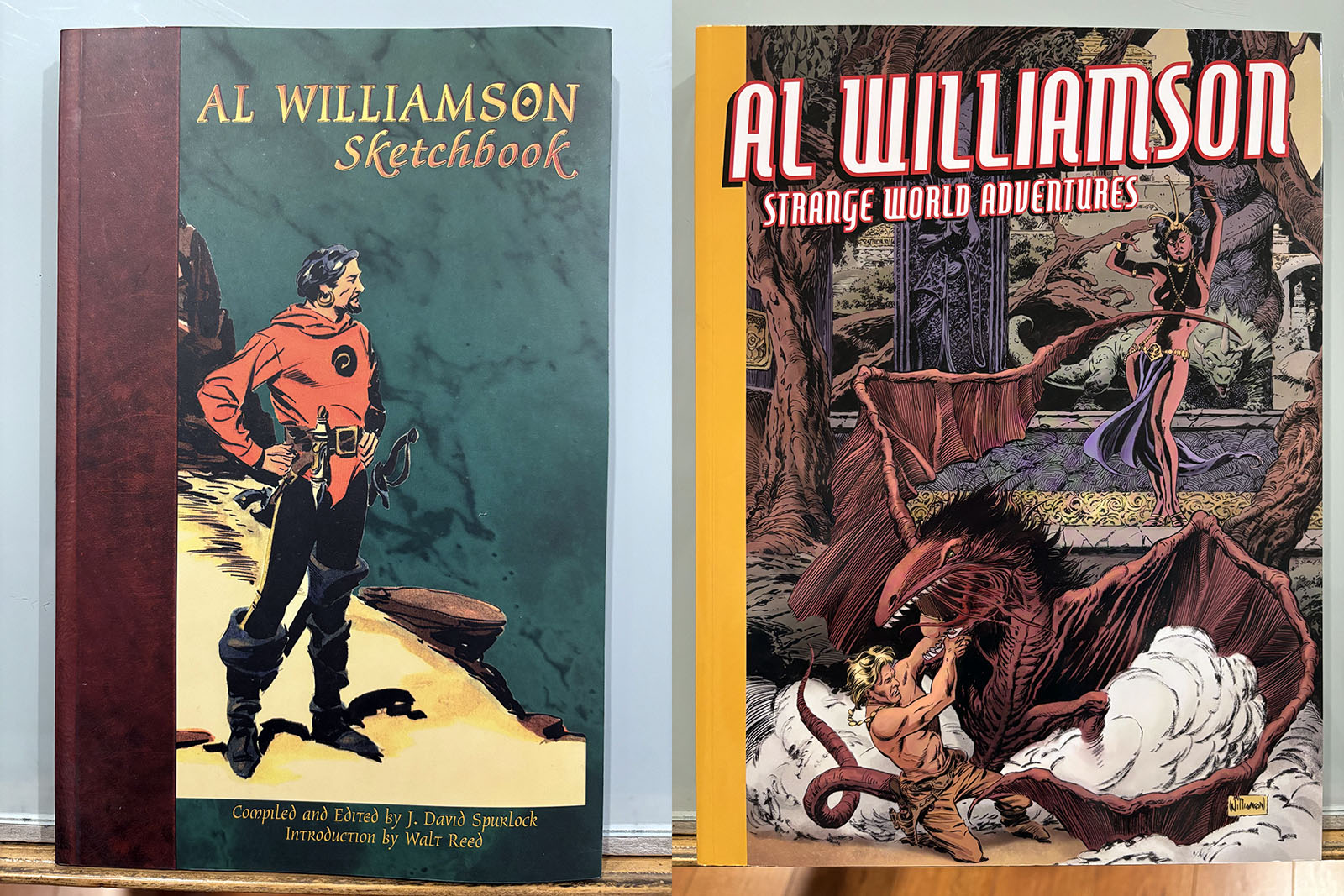
Al Williamson Sketchbook
Vanguard Productions, 1998
96 pages of black & white sketches, including some Star Wars material, accompanied by an interview.
Al Williamson Strange World Adventures
Flesk Publications, 2021
A wide-ranging compendium of art from the 50s all the way up to 2000. Includes work for Star Wars and DC Comics, 128 pages.
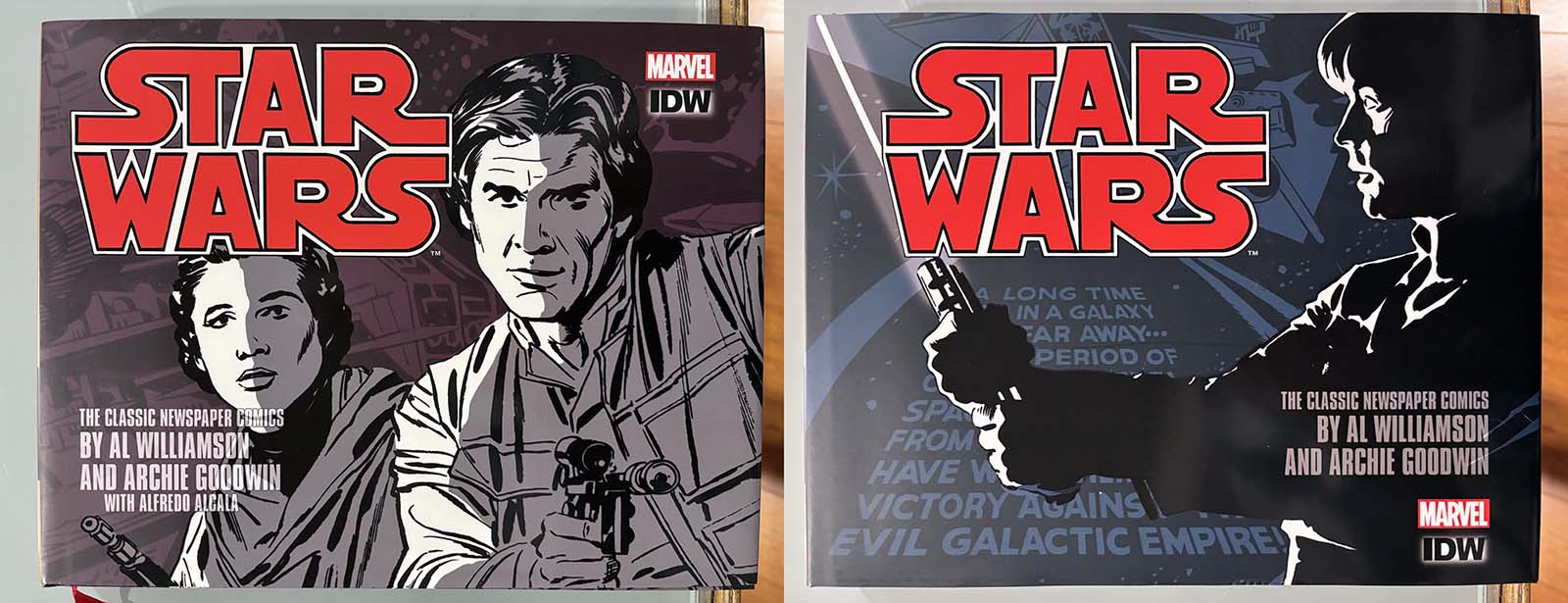
Star Wars, the Classic Newspaper Comics
Marvel & IDW Publishing, 2017 & 2018
Al drew the newspaper strip for three full years (early ’81 to early ’84), and all of it appears in volumes 2 & 3 of this series with Sunday strips in color. It was preceded by a 1991 black & white hardcover edition published by Russ Cochran Enterprises.
Part 2: Empire in Japan
Oh, no, we’re not done. Did you think we were done? Because we’re not.
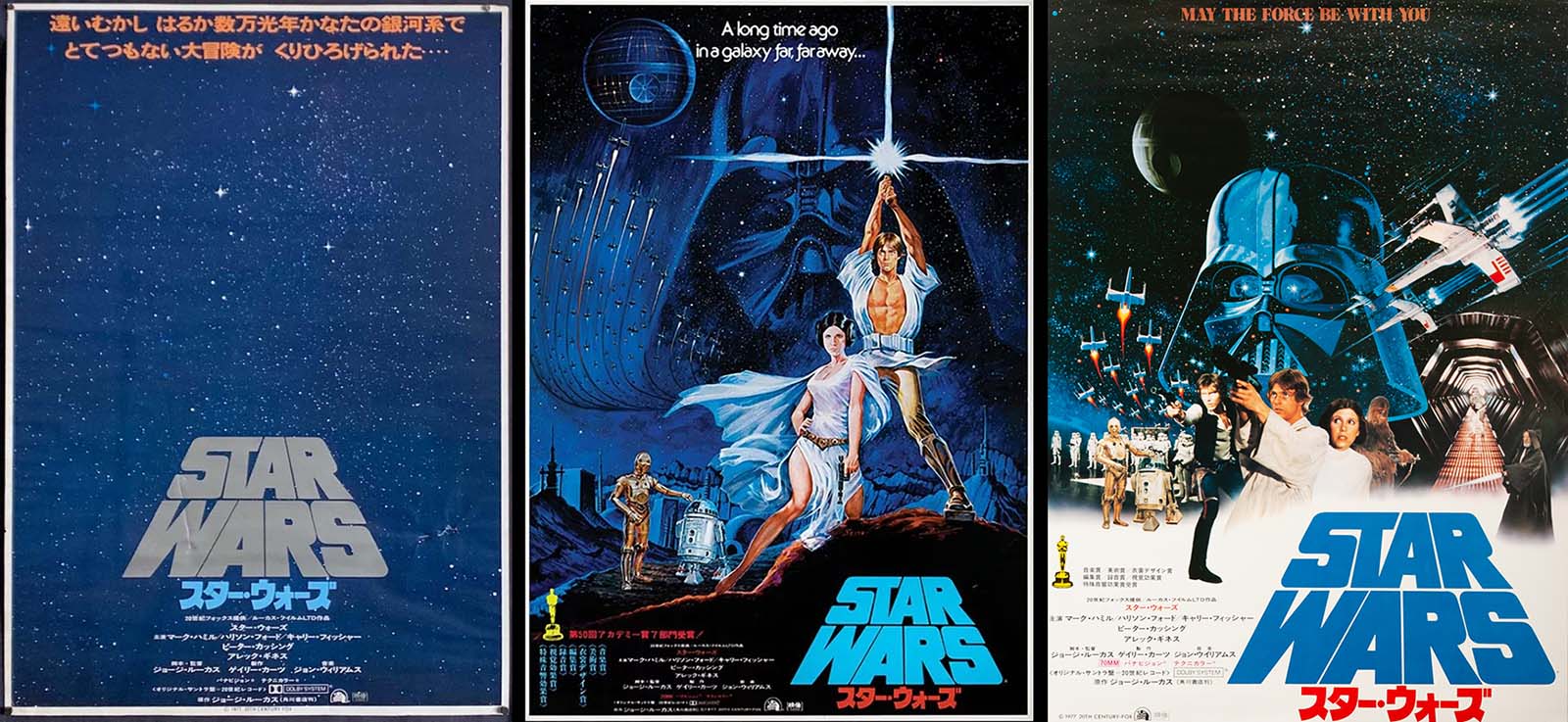
Star Wars hit Japan like a typhoon, partially due to the fact that it took over a year to arrive there. They heard about it when it burst into the English-speaking world, a sci-fi phenomenon so massive that the mere breath of it enlivened sci-fi anime at home. Japan didn’t get to see Star Wars in the summer of 1977, but when a homegrown film titled Space Battleship Yamato emerged instead, the appetite for sci-fi made it an unprecedented blockbuster and revolutionized anime. I’ve devoted an entire website to the legacy of Yamato, so I won’t go into it here.
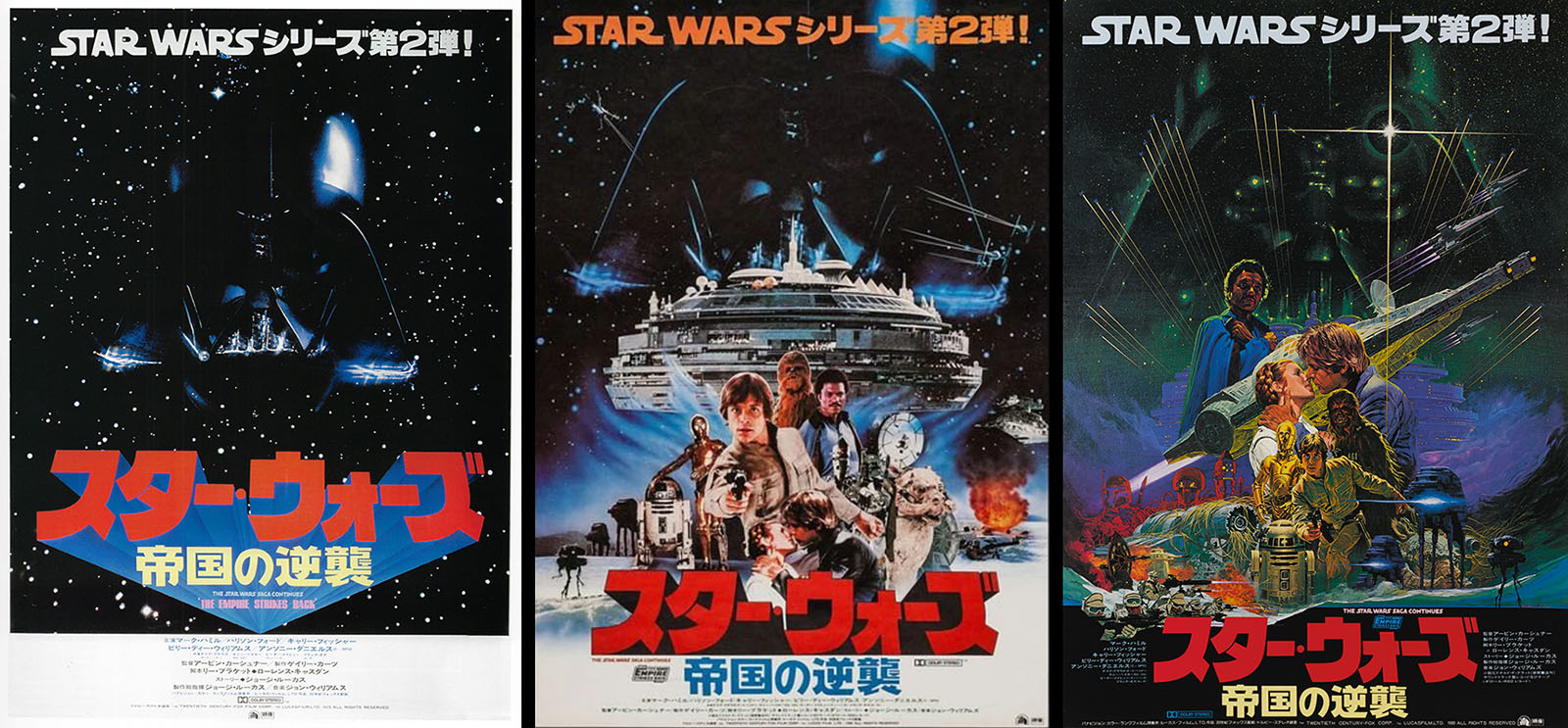
Suffice to say, Japan was in the unique position of seeing Star Wars in print long before they saw it on a movie screen, with loads of magazine and book coverage promoting it at every turn. When they finally did get the film in the summer of ’78, the mania came with it and Japanese licensors lined up to partake. When Empire followed in 1980 (only a couple months late this time), comics came with it.
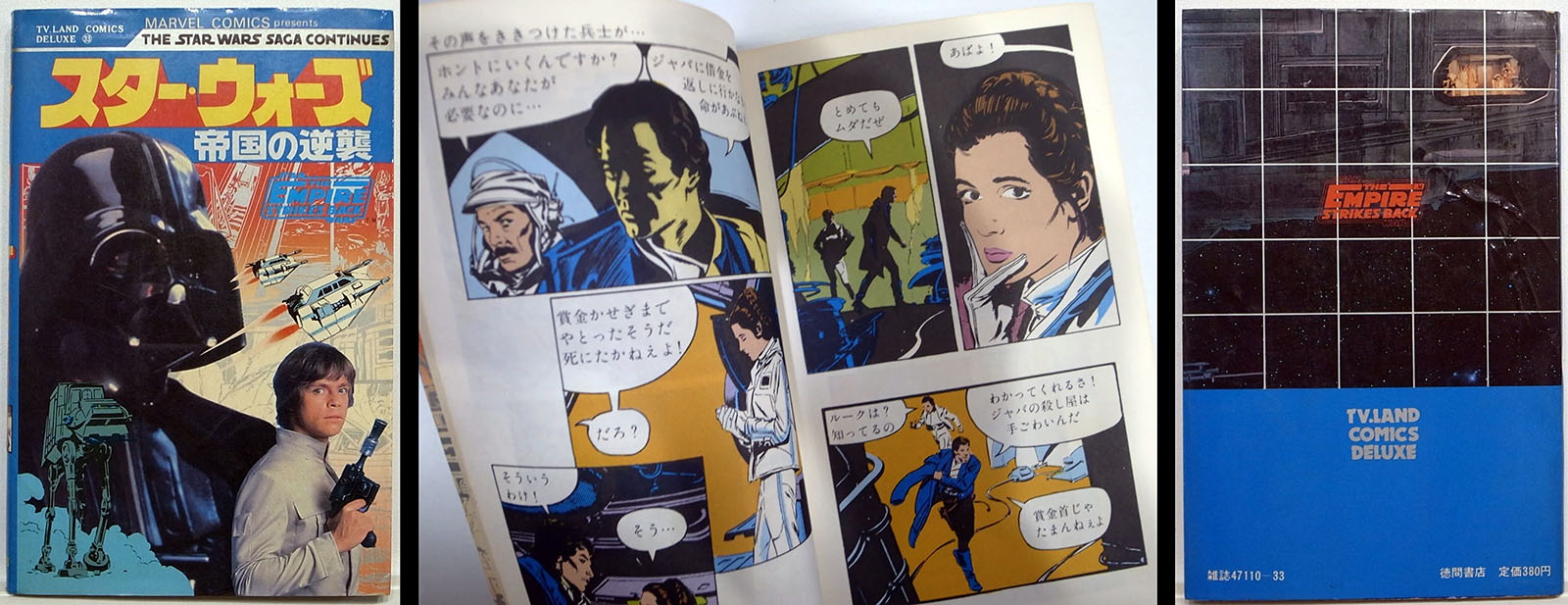
Tokuma Shoten [Publishing] brought Marvel’s version of Empire to Japanese readers in the same paperback format that preceded the film in America (though this one was partially in black and white). It was published as a spinoff of Terebi [TV] Land, a monthly manga magazine. But this was just part of the campaign.
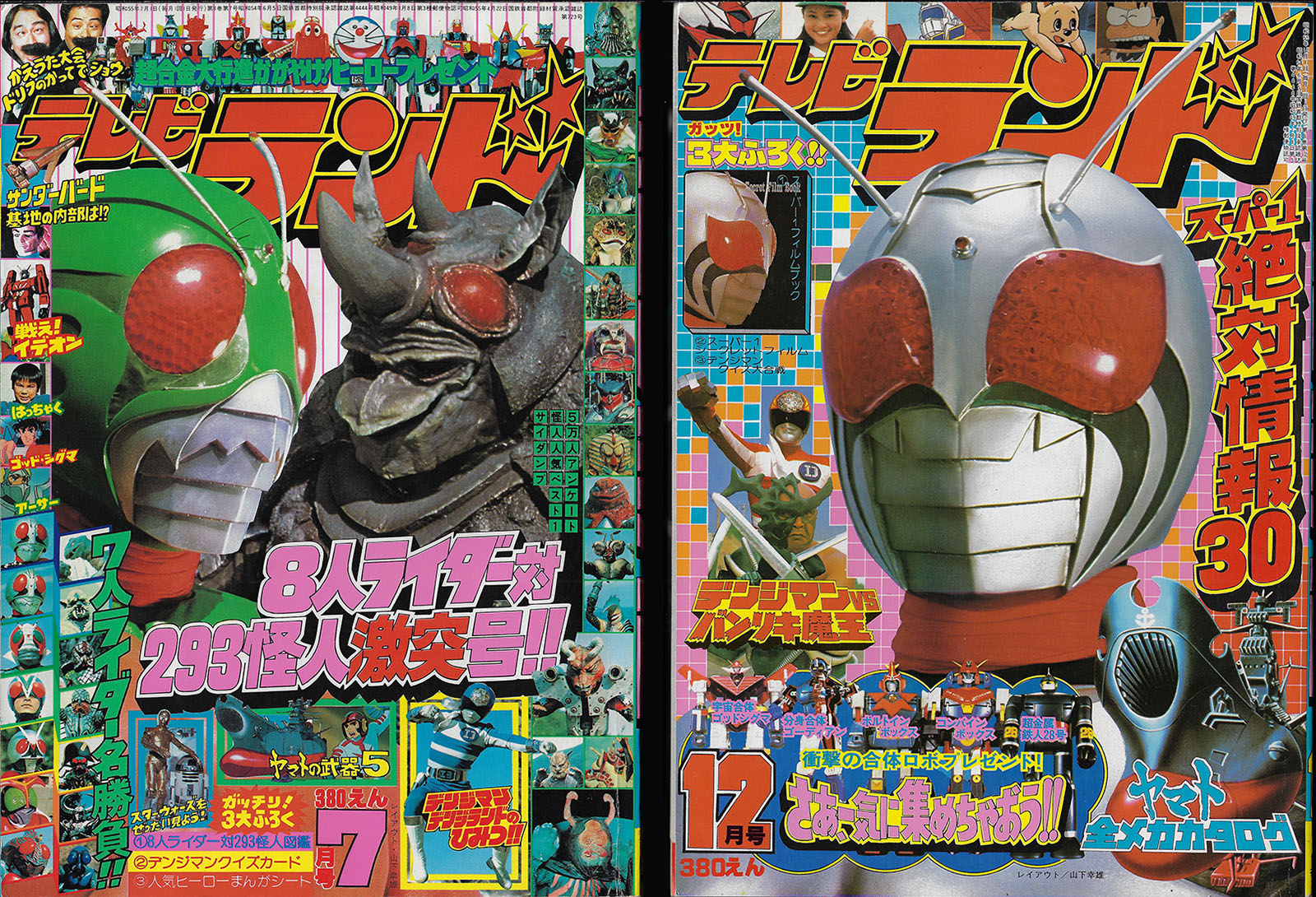
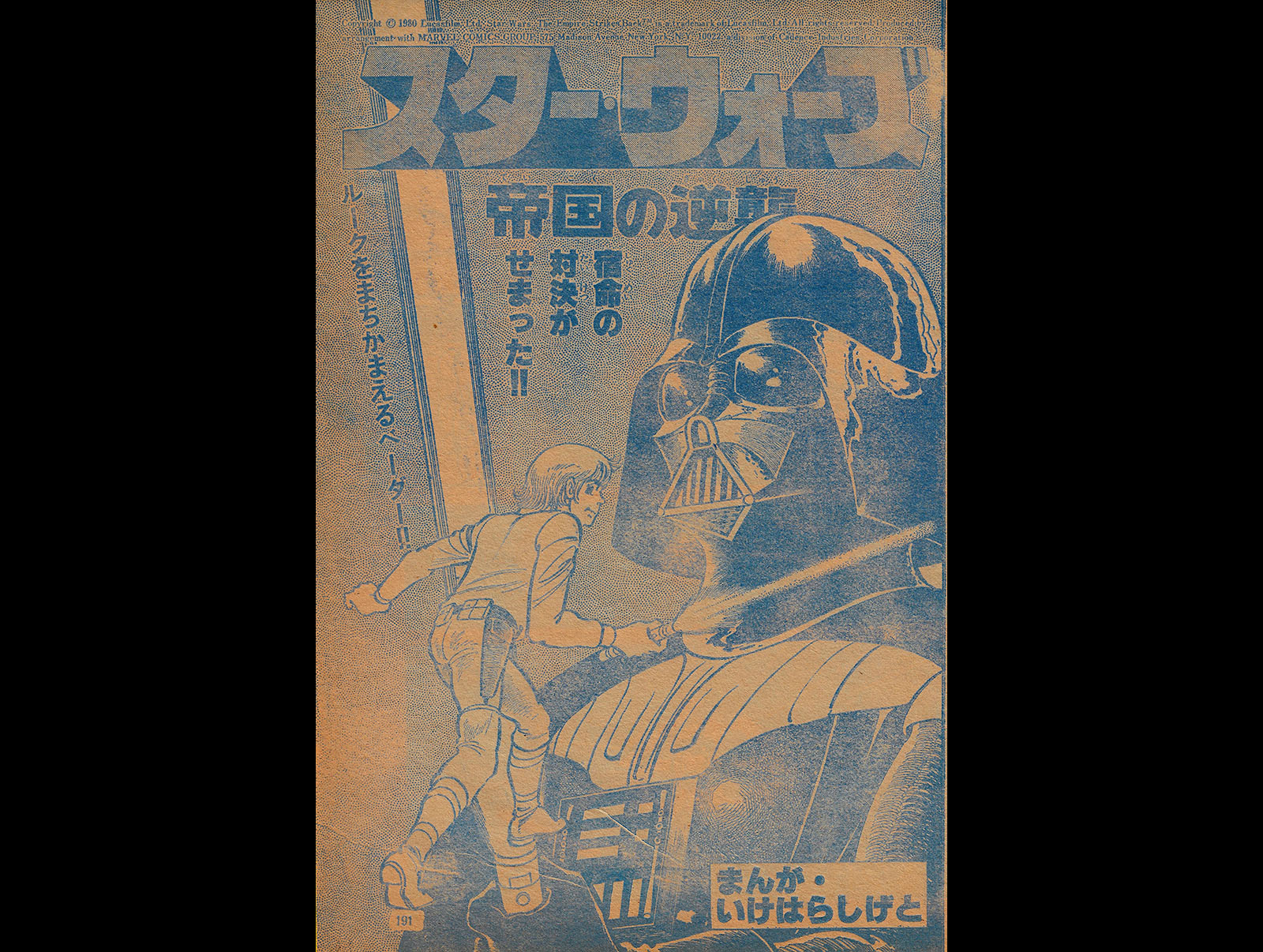
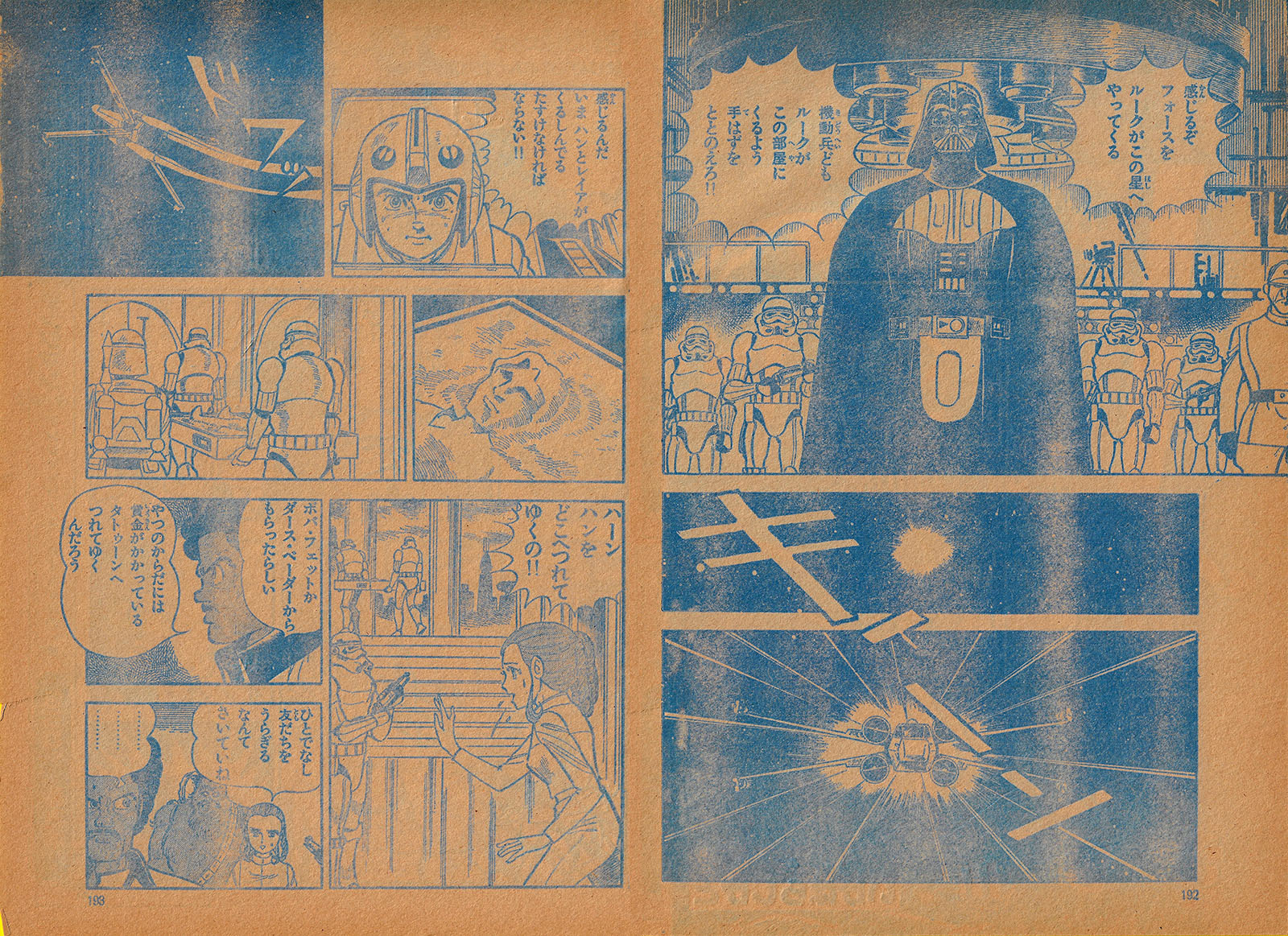
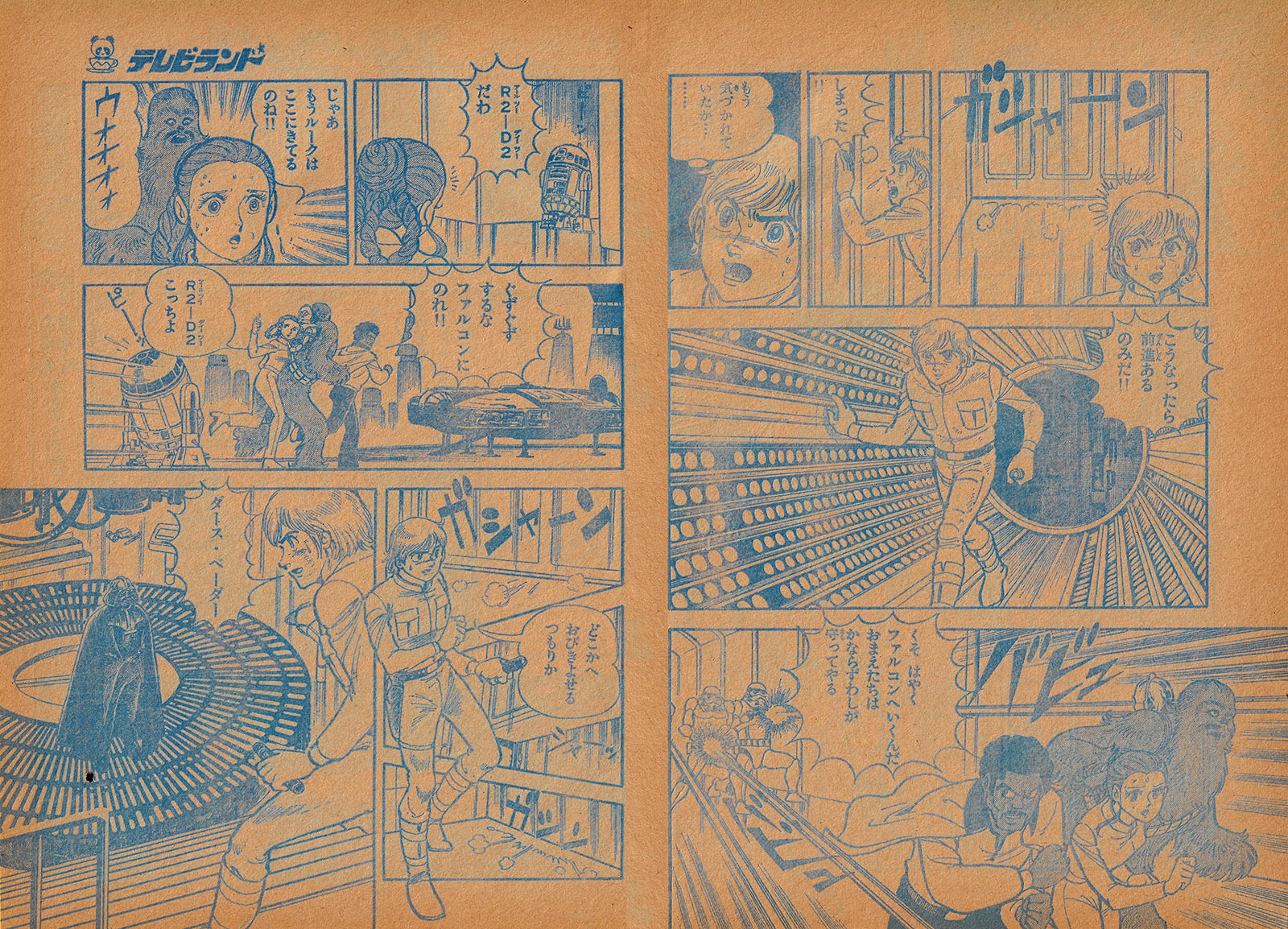
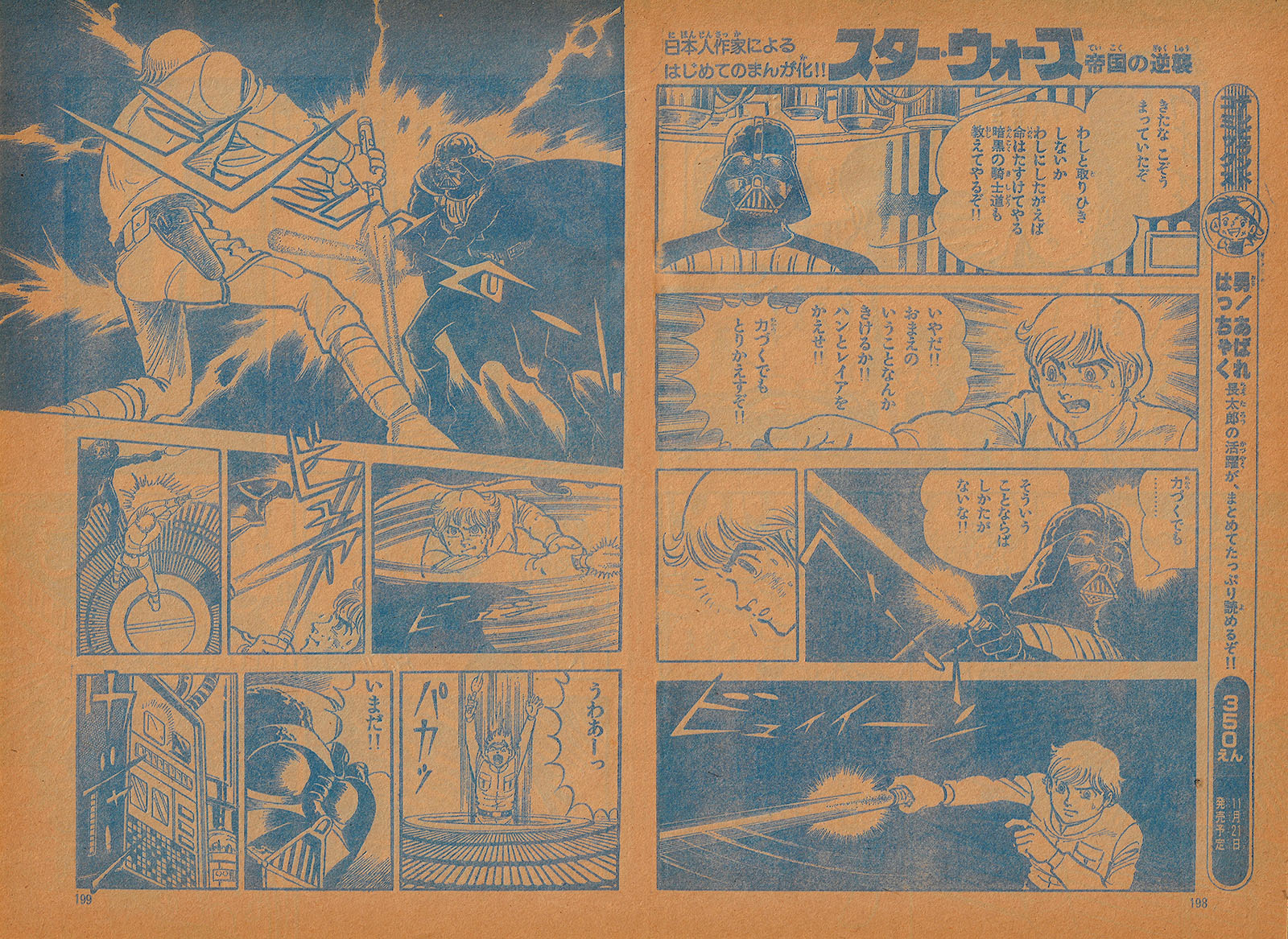
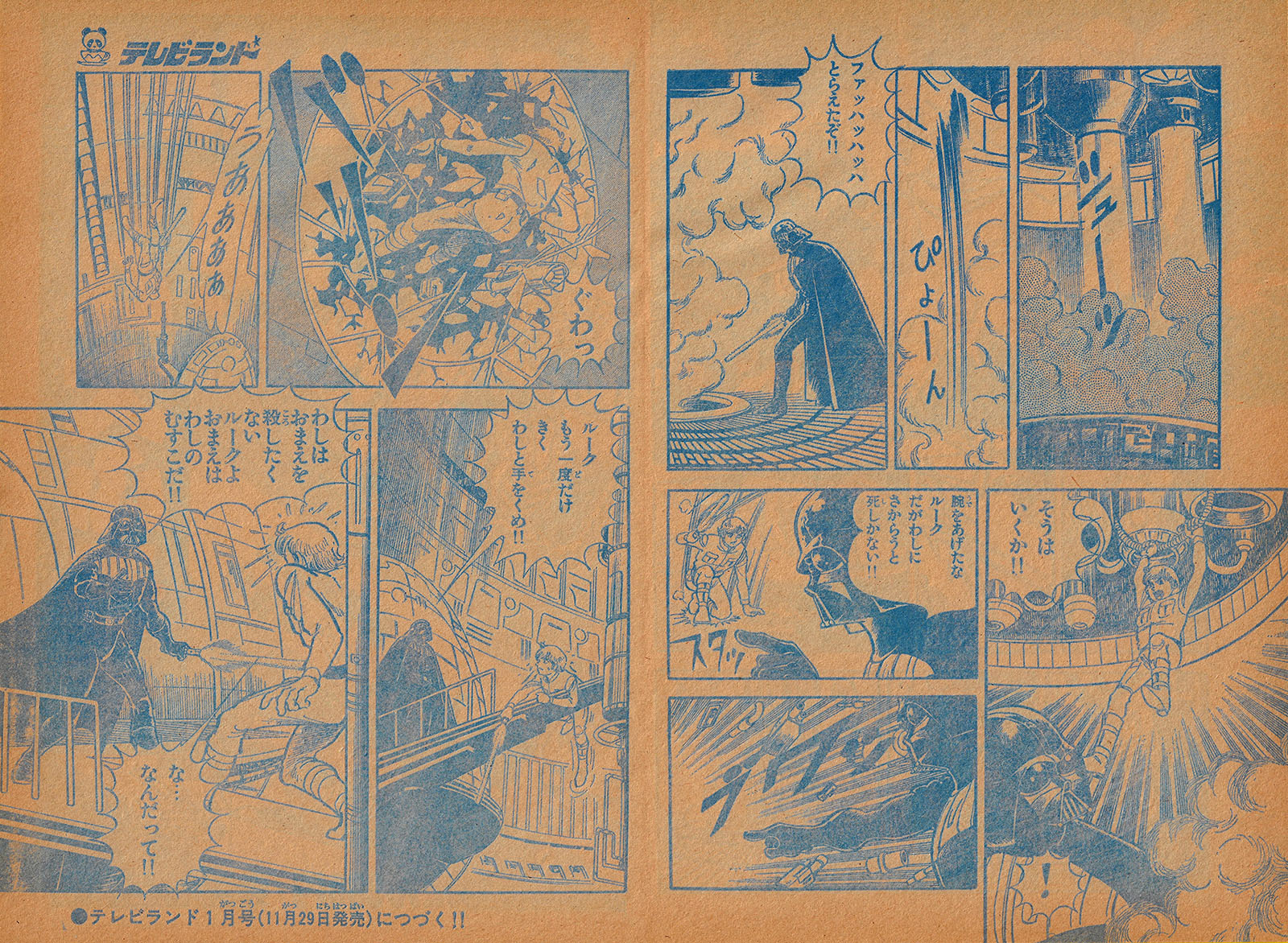
In addition to Al Williamson’s version, Terebi Land came up with its own. Licensed by Marvel, it was drawn by manga artist Shigeto Ikehara, a student of manga legend Osamu Tezuka. Counterattack of the Empire debuted in the July 1980 issue of Terebi Land (published in June). The serialized chapters ran for seven months, culminating in the January 1981 issue (published December 1982). It’s not clear how much reference material Ikehara had to work with, but his reliance on both publicity photos and Al’s adaptation are self-evident. Nevertheless, this version is distinctly different.
Unfortunately, it’s also very hard to collect. I’ve managed to secure only two issues from that run (containing chapters 1 and 6), and it was never collected into a paperback. But we take what we can get and enjoy it for what it is. Both chapters are shown in their entirety below.
Chapter 1 by Shigeto Ikehara


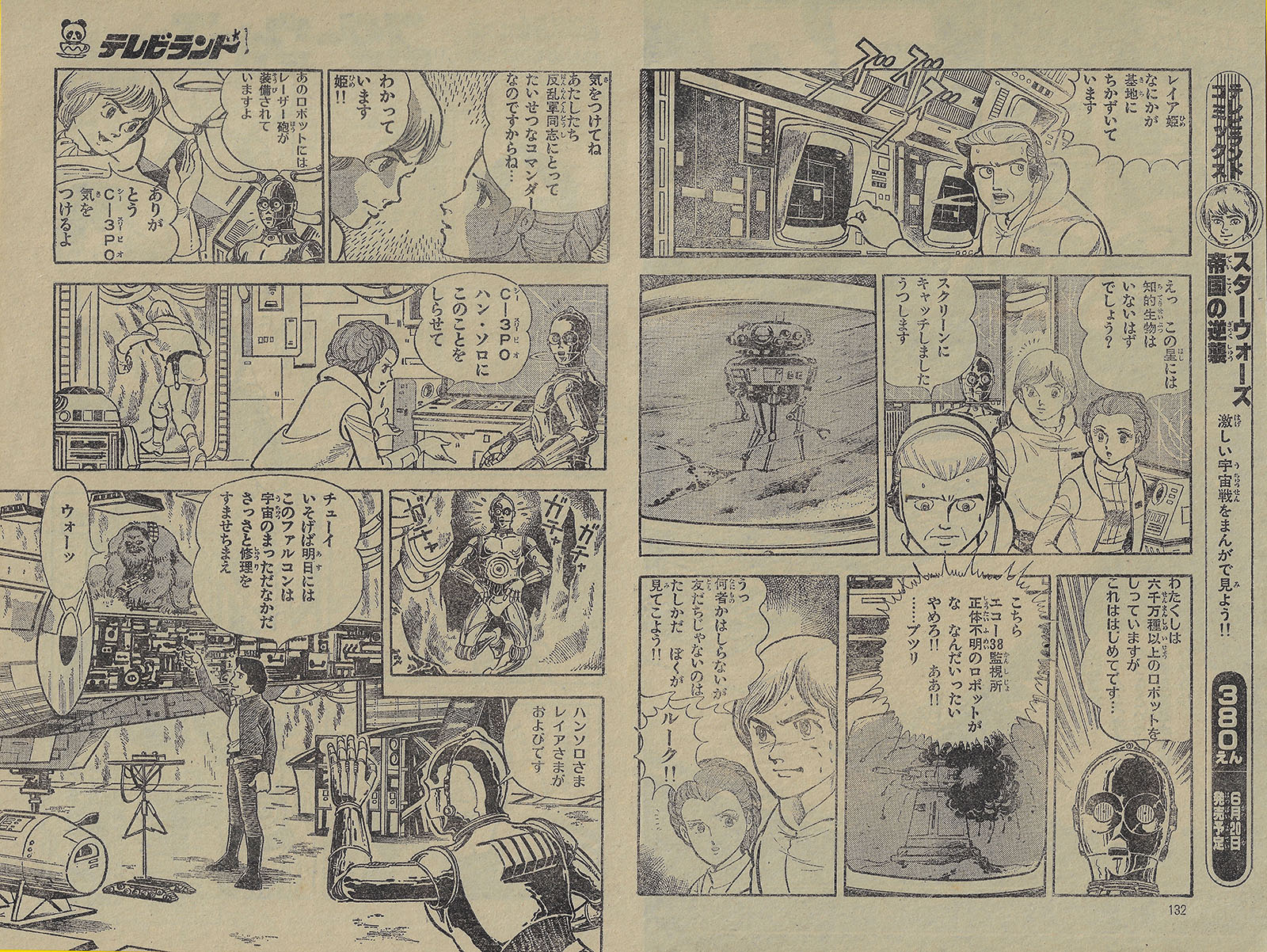
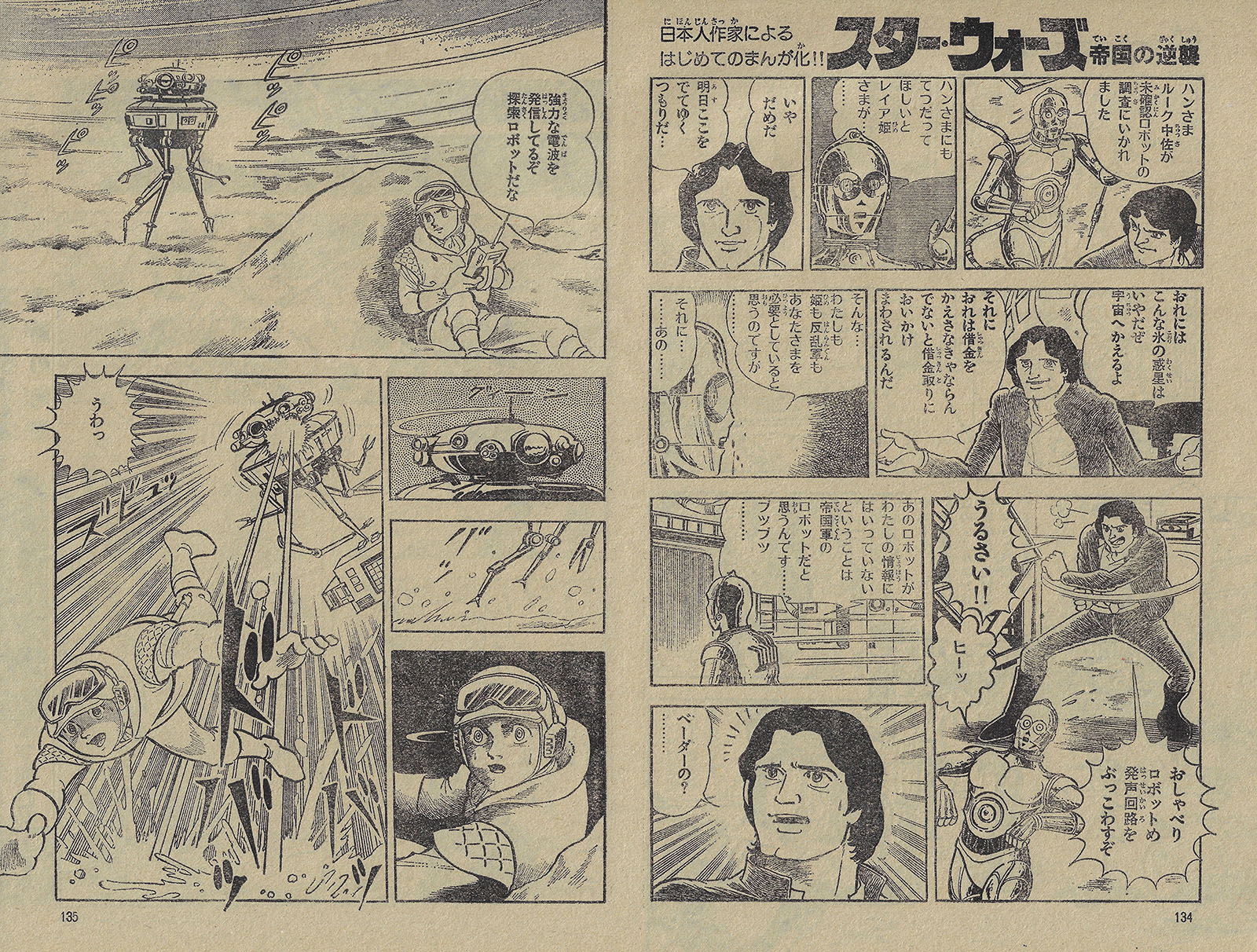
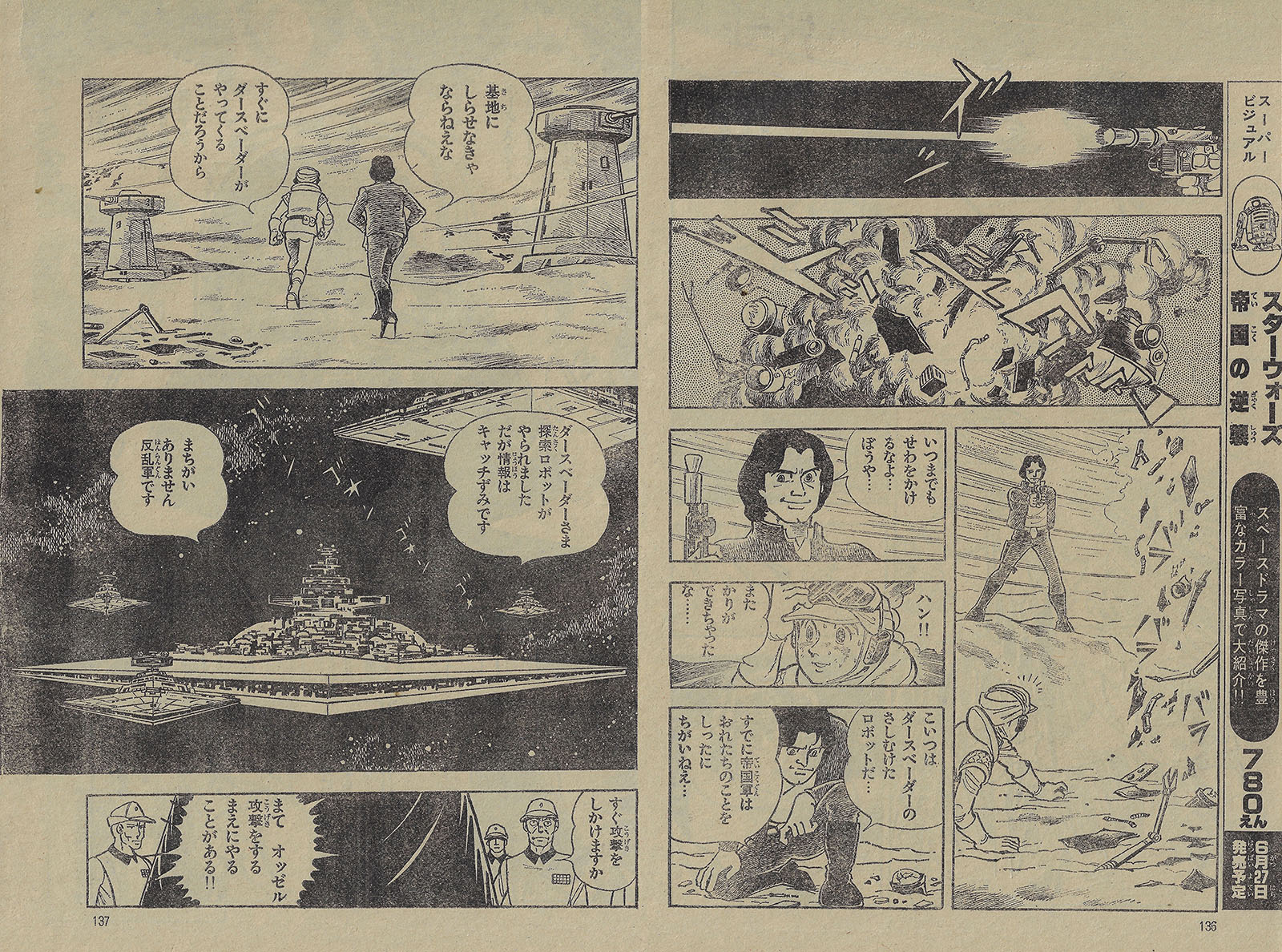
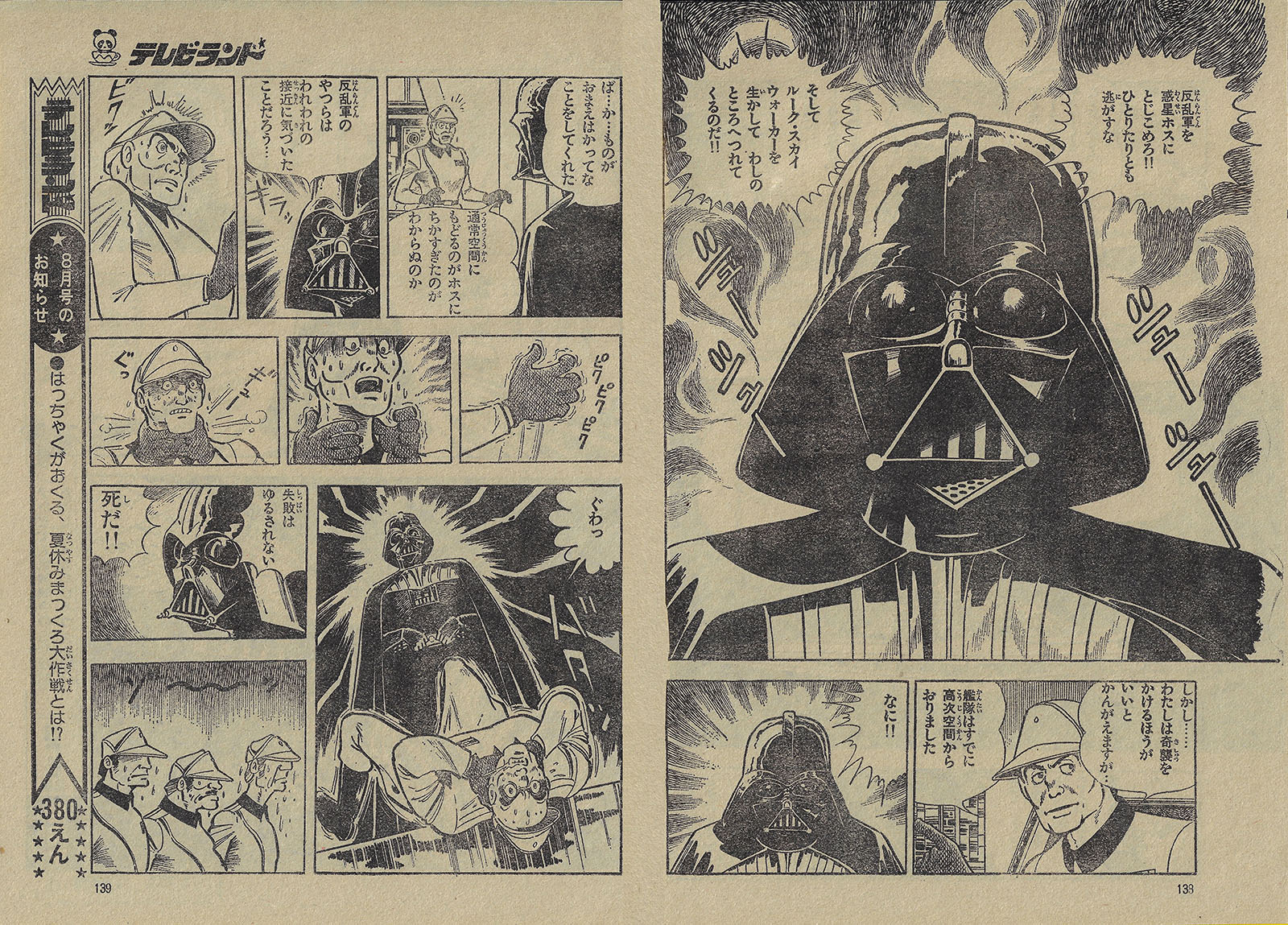


Chapter 6 (of 7) by Shigeto Ikehara

Addendum
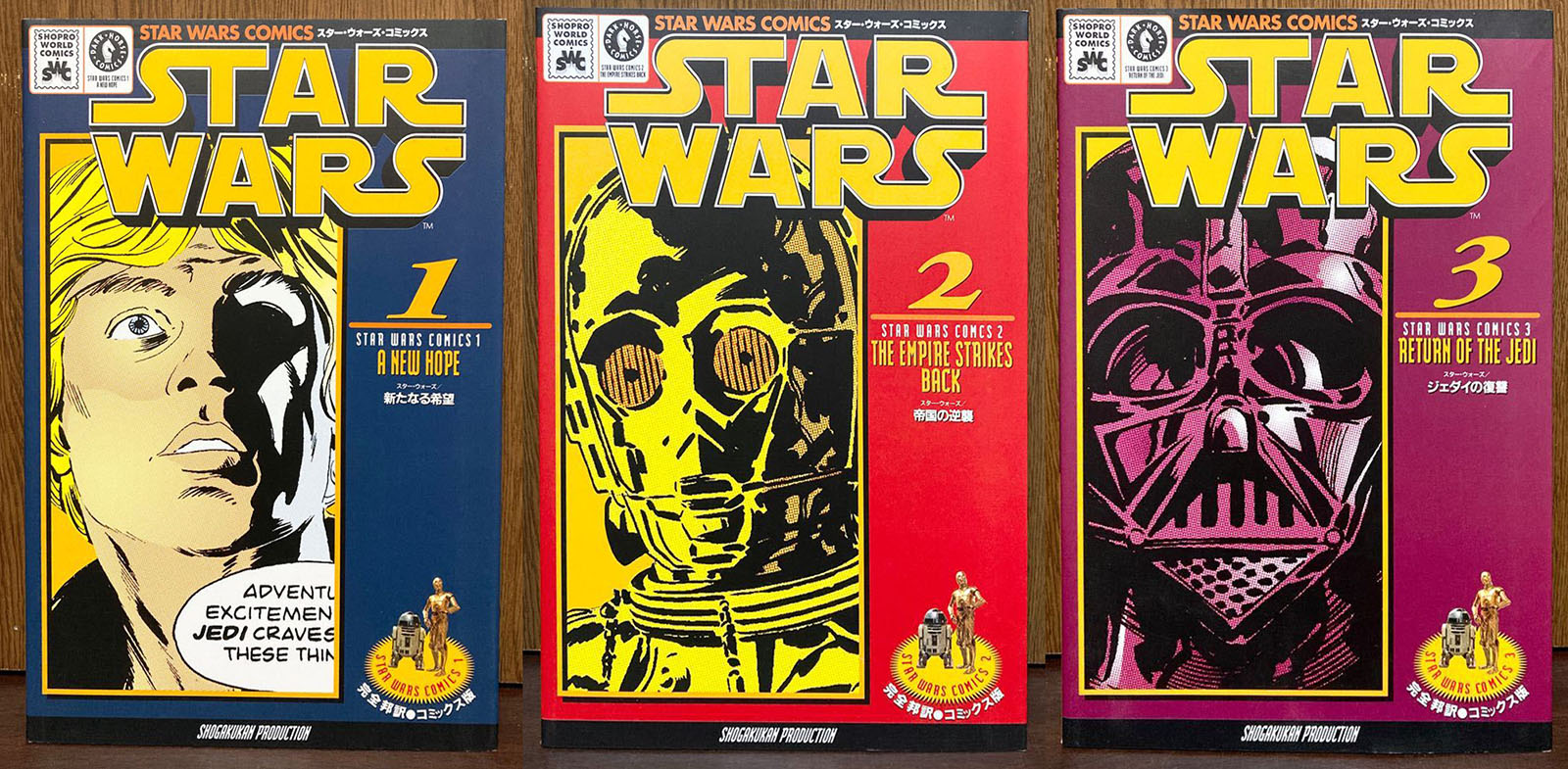
During Dark Horse’s tenure as Star Wars comic publisher, two interesting things happened with regard to Empire in Japan. First, they sub-licensed publisher Shogakukan the rights to reprint all three of Marvel’s original Star Wars adaptations. They were released in three volumes (dates unknown) with Al Williamson art on the covers.
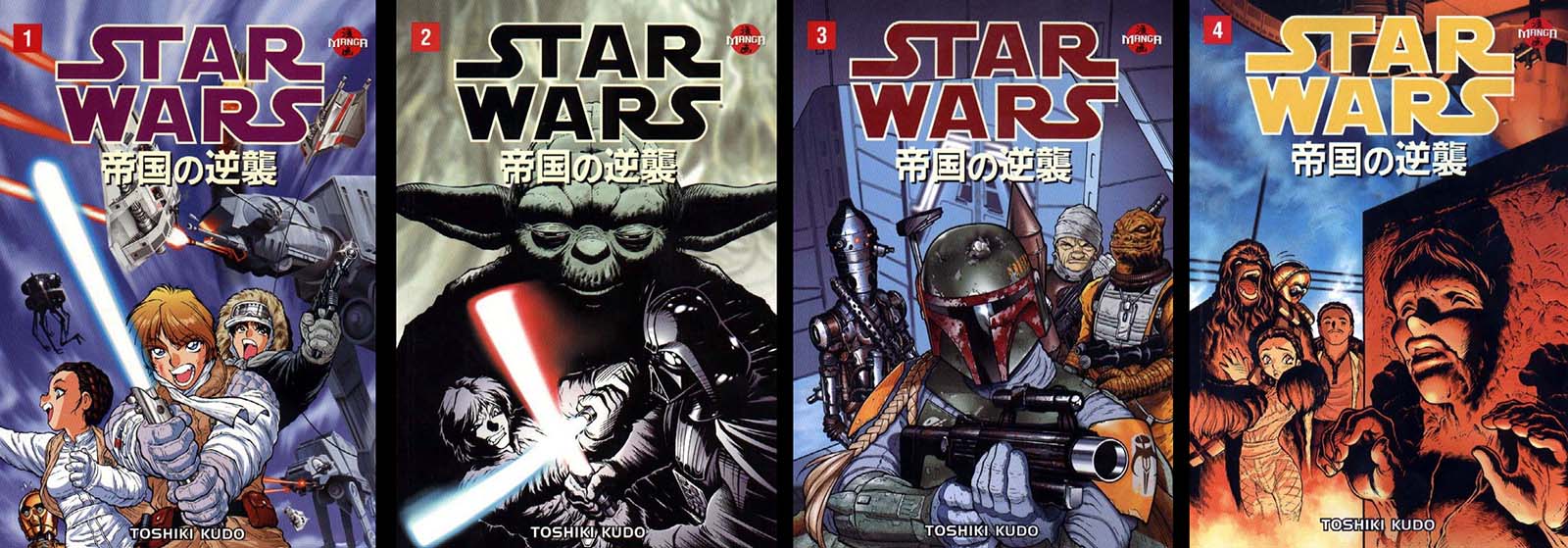
In exchange, Dark Horse imported a new 4-volume manga adaptation of Empire by artist Toshiki Kudo. Each of the Star Wars films had been adapted by a different Japanese artist, and all three were published under the Dark Horse manga label in 1999. Cover art was by Adam Warren.
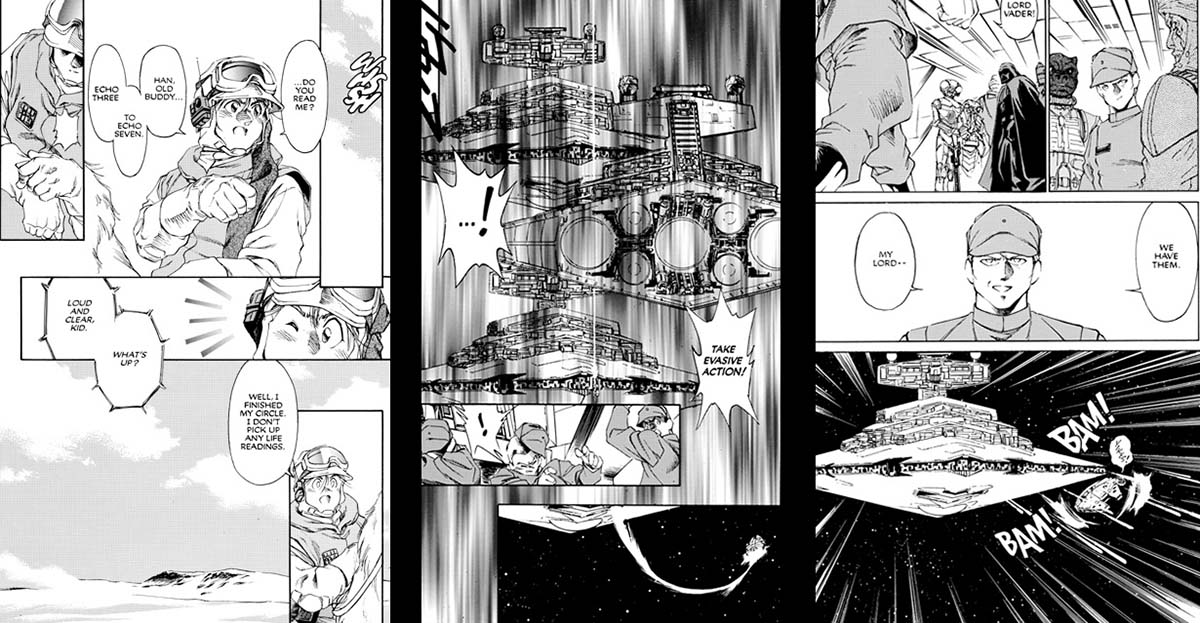
The art was flipped for western reading, but I believe Marvel re-released it later (perhaps digital only) in the original right-to-left config. (Citation needed.)
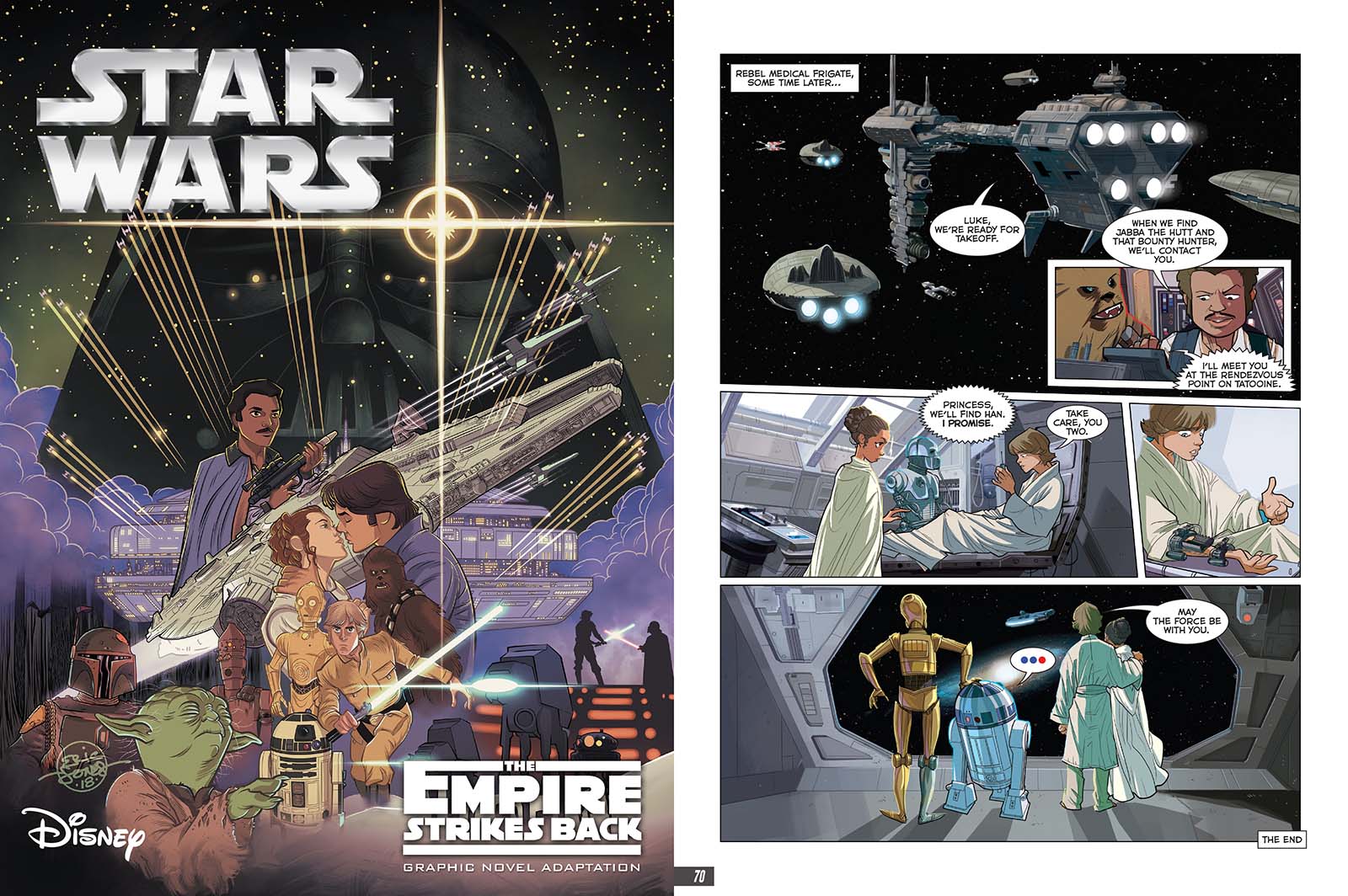
Believe it or not, I found still another adaptation of Empire while researching this article. It’s the most recent as of this writing (published in 2019) and was a co-production of Disney and IDW, energetically drawn by artist Eric Jones. Just to complete an interesting circle of influence, the cover art was based on the Japanese one-sheet painted by Noriyoshi Ohrai (seen higher up the page).
See it in its entirety here