
Star Blazers: the end of the trail, 1997
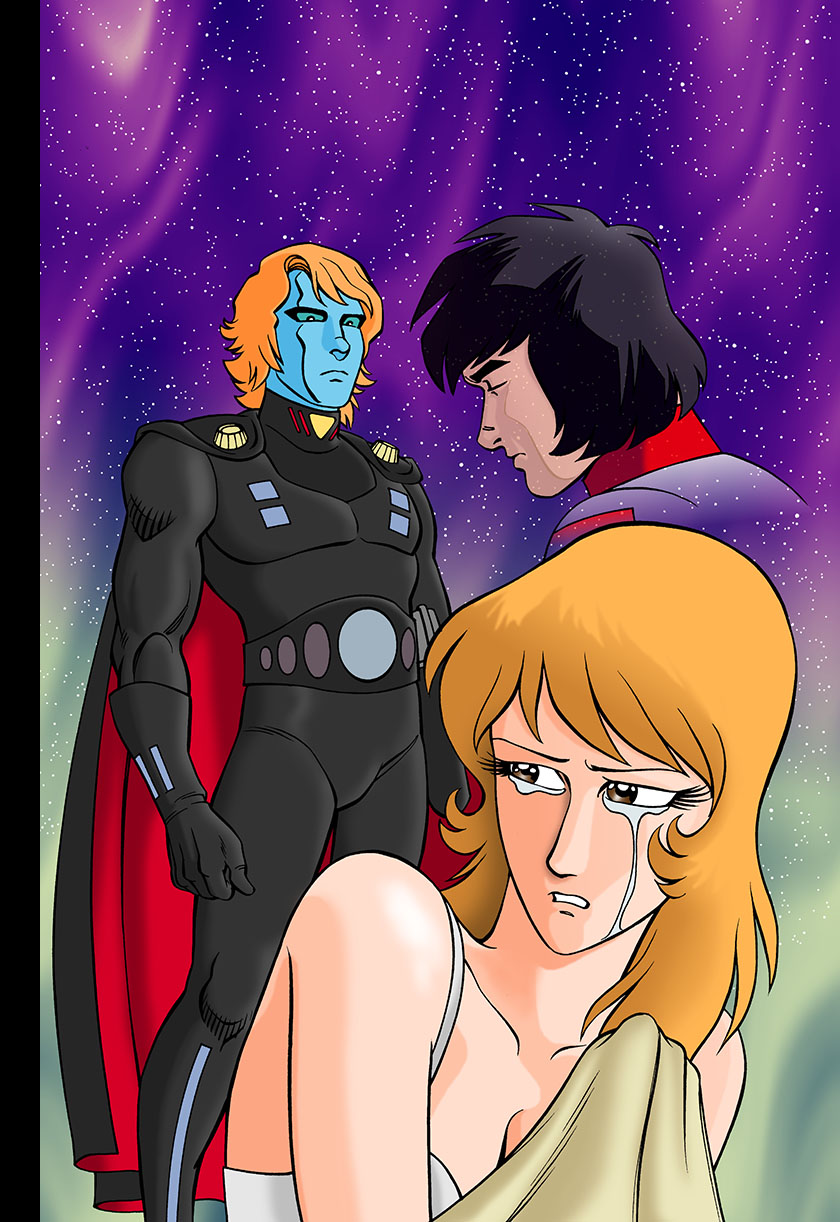
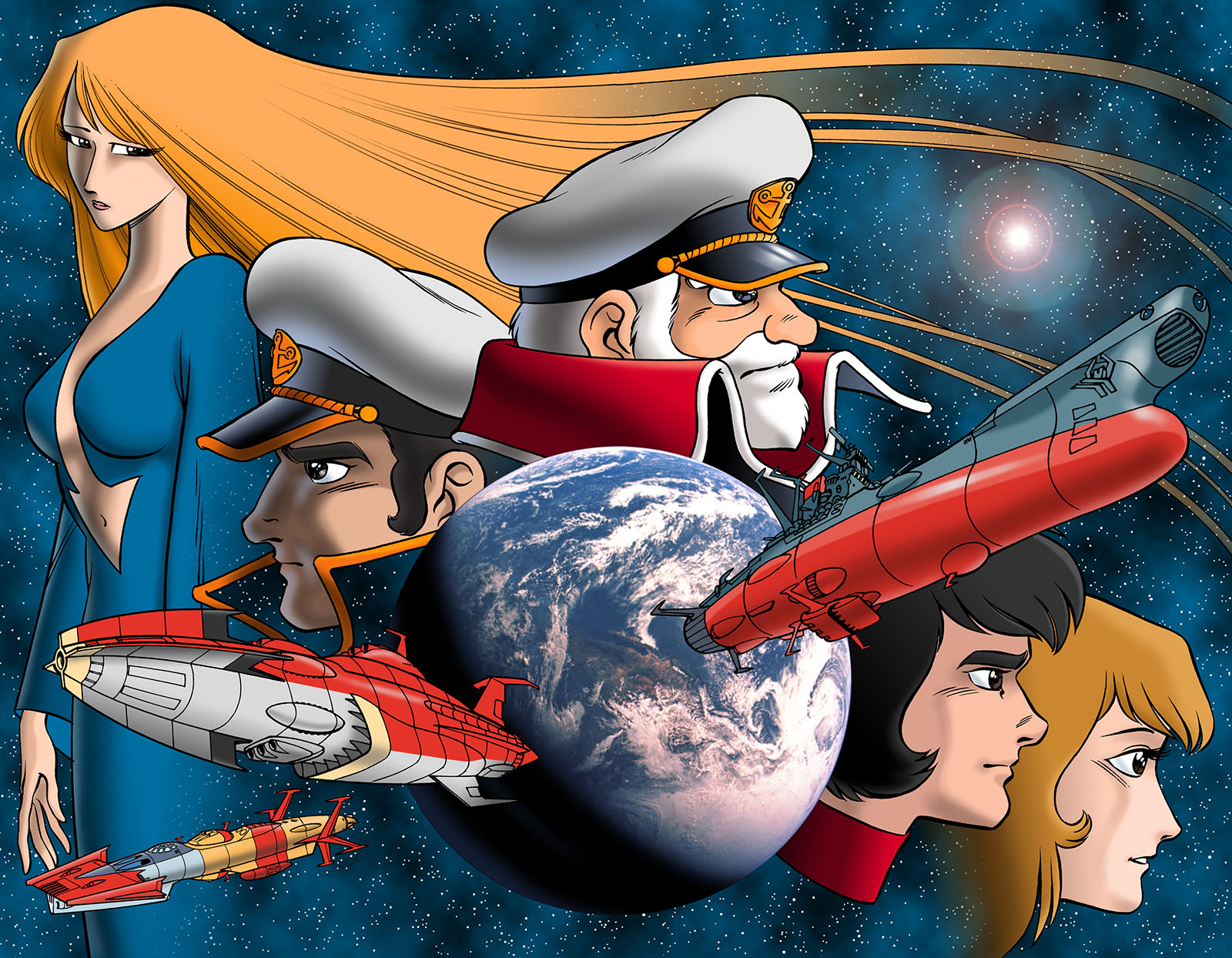
My cover art for the unpublished issue #12
It was April. While I was drawing Star Blazers #11, Bruce Lewis dove into the script for #12. The plan was for him to finish the first half at the same time I turned over #11 to John Ott for color and shipping to the printer. That’s how the three of us at Studio Go! operated, like a well-oiled machine. If everything stayed on track, issue #12 would be published in July and we’d already be on to #13.
But everything didn’t stay on track. And it had nothing to do with us. Outside forces were warping the playing field, and we were about to become one of the many victims in their heartless game. The name of that game was “monopoly,” but not the one sold by Hasbro.
From this point I’m going to talk about the comic book business in 1997. If you only want to read about Star Blazers, skip down to the line break.
When I entered the comic business in 1988, it was a healthier organism. There were (and still are) three primary components: publishers, distributors, and retailers. Publishers made the comics. Retailers sold the comics. Distributors were the middle man who handled the commerce between them. Distributors would send monthly catalogs to stores, to tell retailers what was coming out. Retailers would order what they thought they could sell. Distributors provided that number to publishers, and publishers printed comics to fill the orders. Retailers handled shipping and collected payment, sending a percentage back to the publisher. (In the end, the publisher received about half the cover price for each issue.)
Notice that I indicated “distributors” as a plural. That’s because there were more than one. The biggest one was Diamond. The second biggest was Capital City. There were some smaller ones, but we’ll just focus on these two.
Having more than one distributor gave publishers a wider sales reach. The distributors had some overlap, but they also had their own turf. Some retailers preferred one over the other for personal or business reasons. But when Marvel started playing around with their own private distribution in 1995, it created some serious shockwaves. Business relationships shifted quickly, slowly edging Capital City toward bankruptcy. In the summer of ’96, Diamond moved in and bought them out, effectively landing a monopoly on the entire industry.
Smaller publishers (like Argo Press) started feeling the pinch when sales dropped. It wasn’t just because of Diamond, there were other factors like the bursting of the speculator bubble, but we don’t need to go that far into the weeds here. Star Blazers was selling enough copies to make a profit up to that point, but as the orders declined there was less money to support us. We first responded by cutting the extra content, but the decline continued.
That brings us to May 1997. Bruce had written and thumbnailed the first half of the script for #12 and I had started roughing it out. Then the fateful phone call came from our publisher, Barry Winston at Voyager Entertainment. He’d received the orders for #11 and the die was cast. Star Blazers was no longer profitable. Issue #12 would be canceled.
He’d already paid us our startup fee (half the cost of production), but would not be paying us a finishing fee. Our contract allowed for this, so there was no need for litigation. At this point, Barry relieved us of any obligation to continue working, but I wanted to at least finish off the art for the first half. If there was even the slightest chance of the comic picking back up again, it would give us a cleaner point to restart. Barry agreed, which is why I can now share with you the first half of the unpublished issue #12.
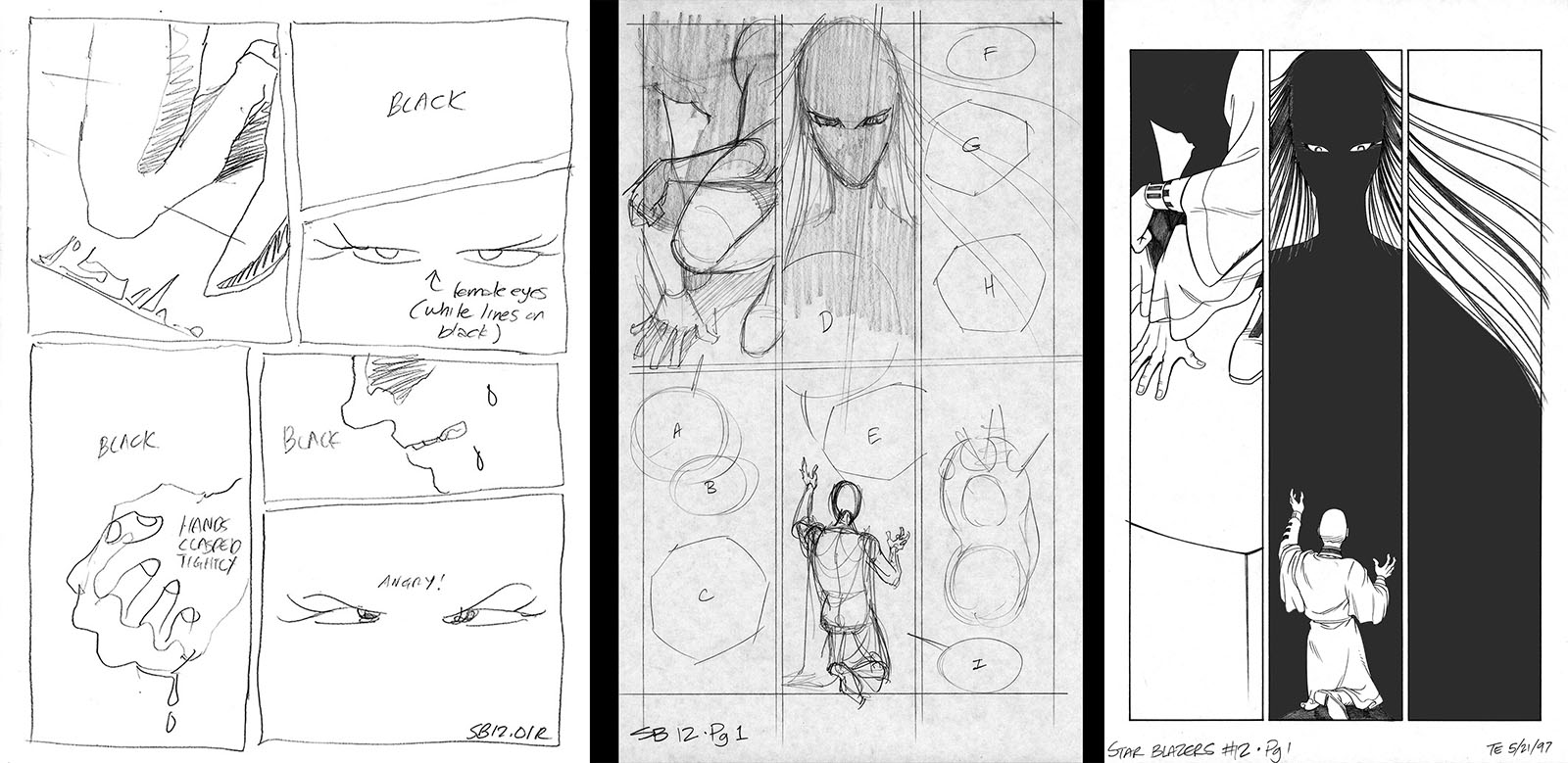
Obviously, this material never got to the lettering and coloring stage, so I can’t present it as a finished comic. But you can still see where we were going and how our version of Be Forever Yamato was shaping up with extra story material. It’s still fascinating to me how the modern remake, Space Battleship Yamato REBEL 3199, pulls on some of the same threads.
Bruce Lewis, John Ott, and I closed down Studio Go! after this and went our separate ways. Bruce has since departed for the sea of stars. But we lived a great dream during the two years we worked on Star Blazers, and we will always remember it with fondness. To those of you who supported us during that time, we were extraordinarily grateful to you for filling in the rest of the equation that made it all possible.
Happy ending
Three years later, I was approached by Voyager again and hired as a freelancer to help them convert their video line from VHS to DVD with all the trimmings. During the course of that very enjoyable project, they decided to launch a website with me as the writer/editor, kicking off in the summer of 2002. Over time, the site expanded far beyond anything I imagined at the start; thousands of pages, countless readers, webcomics, travelogues, interviews, you name it. I’m still at it today, and it’s now the biggest Space Battleship Yamato website in the world.
See it here and learn everything I’ve learned (so far) about this amazing series.
Other Star Blazers publishing
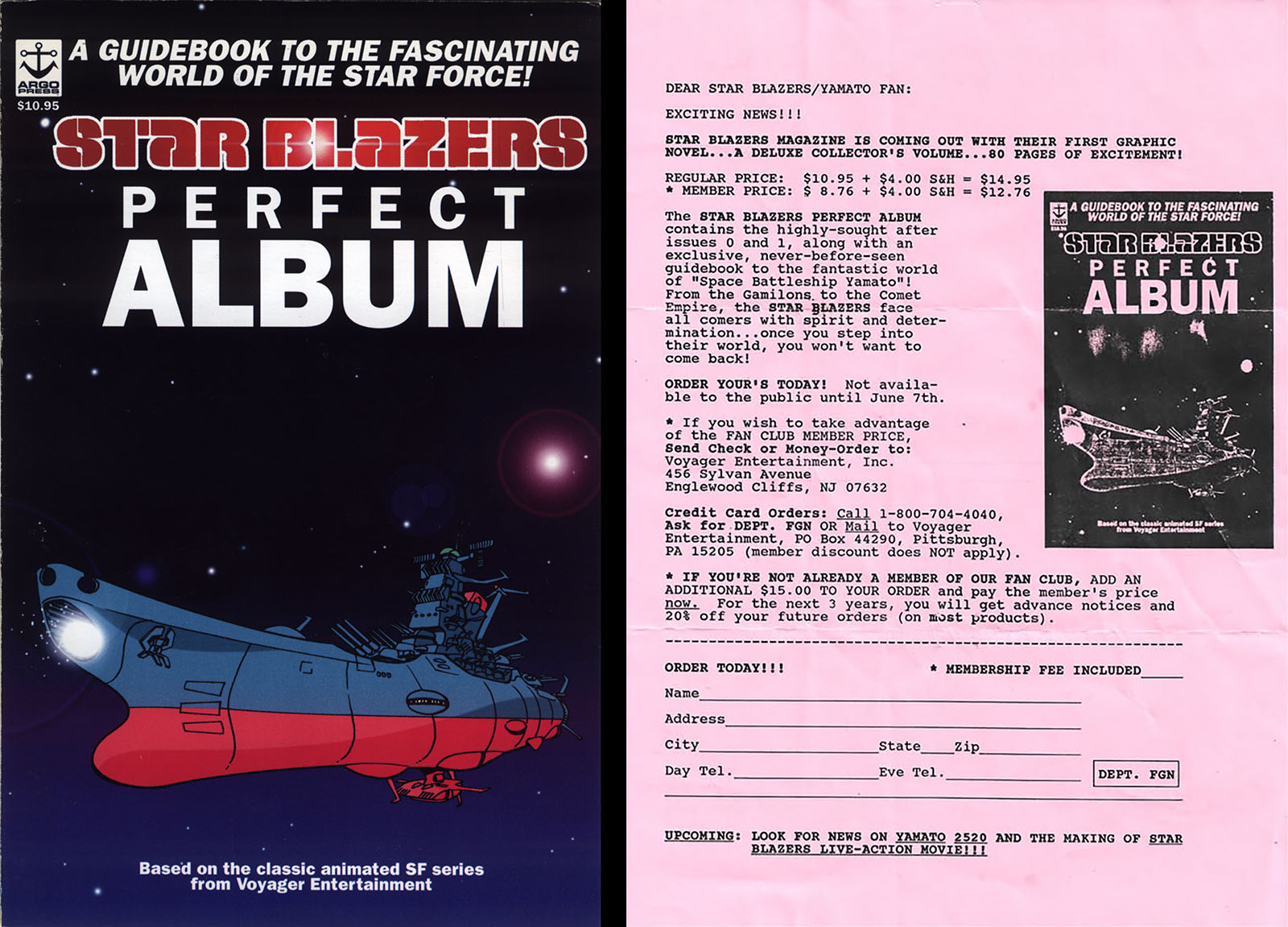
Perfect Album
June 1996
This 80-page graphic novel contained reprints of issues zero and 1, both of which were now sold out and had become difficult to find. This was augmented by a 27-page “World of Yamato” guidebook, which included story notes, character and mecha designs, and many other details. Since the comics in this book focused on the first two TV series, the guidebook did the same.

Special Edition
October 1996
This rarest of all issues came bundled with the first Star Blazers VHS tape, which contained episodes 1 and 2. We decided to devote this issue entirely to the timeframe of those episodes.
It was broken into three eight-page segments. The first was “World at War,” a historical photo album of the war with Gamilon. Following this was the “Yamato databook,” a brief guide to Earth’s mecha and characters seen at the very beginning of the TV series, along with specs on the Yamato. Wrapping up the package was an eight-page excerpt from issue zero that concluded with the launch of Yamato. The finishing touch to all this was a wraparound cover shown in full below.
Click here to open and read a PDF of the Special Edition.
Click here to see my art for the “World at War” feature.
Wow! this is so nostalgic!
PD: Excuse me, but do you worked in justice league and hulk and the agents of smash???
I worked on other DC cartoons, but not that one. (See the TV section.)
I did work on one episode of Agents of SMASH, however. It was very minor, so I haven’t written about it.